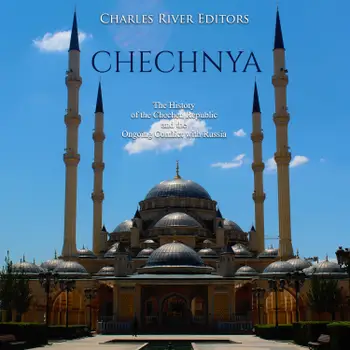
Chechnya: The History of the Chechen Republic and the Ongoing Conflict with Russia

“Troops assembled villagers and townspeople, loaded them onto trucks – many deportees remembered that they were Studebakers, fresh from Lend-Lease deliveries over the Iranian border – and delivered them at previously designated railheads. ...Those who could not be moved were shot. ...[A] few fighters aside, the entire Chechen and Ingush nations, 496,460 people, were deported from their homeland.” – Norman Naimark

Today, Chechnya is a republic with some degree of autonomy in the contemporary Russian Federation. Its population is just over a million people, and it stretches over an area of 17,000 square kilometers. The majority of Chechnya’s population is comprised of Sunni Muslims, meaning religion has played a key role in the territory’s development. In southwestern Russia, landlocked within 100 kilometers of the Caspian Sea, Chechnya is north of the Caucasian mountains, bordering other North Caucasus provinces such as North Ossetia, and Dagestan, and Georgia.

Russia itself is a well-established Slavic, Orthodox Christian country, though its majority Muslim provinces were not obvious to outsiders until the post-Soviet conflicts of the 1990s. The history of the Chechen people in the region is, nevertheless, long-established, and Chechnya has become synonymous with conflict, civil war, and discontent. While many people are aware of that, few understand how things reached that point. The area is complex and fascinating, representing one of the world’s true fault lines in terms of religion, empire, and geography.

To understand Chechen history, it is necessary to understand the region’s development, including invasion, settlement, emigration, and the various confrontations and conflicts that have transpired there. Chechnya: The History of the Chechen Republic and the Ongoing Conflict with Russia examines the history of one of the most controversial regions in the world.

Om denne bog

“Troops assembled villagers and townspeople, loaded them onto trucks – many deportees remembered that they were Studebakers, fresh from Lend-Lease deliveries over the Iranian border – and delivered them at previously designated railheads. ...Those who could not be moved were shot. ...[A] few fighters aside, the entire Chechen and Ingush nations, 496,460 people, were deported from their homeland.” – Norman Naimark

Today, Chechnya is a republic with some degree of autonomy in the contemporary Russian Federation. Its population is just over a million people, and it stretches over an area of 17,000 square kilometers. The majority of Chechnya’s population is comprised of Sunni Muslims, meaning religion has played a key role in the territory’s development. In southwestern Russia, landlocked within 100 kilometers of the Caspian Sea, Chechnya is north of the Caucasian mountains, bordering other North Caucasus provinces such as North Ossetia, and Dagestan, and Georgia.

Russia itself is a well-established Slavic, Orthodox Christian country, though its majority Muslim provinces were not obvious to outsiders until the post-Soviet conflicts of the 1990s. The history of the Chechen people in the region is, nevertheless, long-established, and Chechnya has become synonymous with conflict, civil war, and discontent. While many people are aware of that, few understand how things reached that point. The area is complex and fascinating, representing one of the world’s true fault lines in terms of religion, empire, and geography.

To understand Chechen history, it is necessary to understand the region’s development, including invasion, settlement, emigration, and the various confrontations and conflicts that have transpired there. Chechnya: The History of the Chechen Republic and the Ongoing Conflict with Russia examines the history of one of the most controversial regions in the world.

Kom i gang med denne bog i dag for 0 kr.

  • Få fuld adgang til alle bøger i appen i prøveperioden
  • Ingen forpligtelser, opsiges når som helst
Prøv gratis nu
Mere end 52.000 mennesker har givet Nextory fem stjerner i App Store og Google Play.

  1. British Intelligence in the World Wars: The History and Legacy of Britain’s Covert Activities during Both Conflicts

    Charles River Editors

  2. Ancient Egyptian Conspiracy Theories: The History of the Most Popular Conspiracy Theories about Egypt in Antiquity

    Charles River Editors

  3. The Worst Nuclear Meltdowns of the Cold War: The History of the Biggest Nuclear Disasters in the United States and Soviet Union

    Charles River Editors

  4. Real Pirates of the Caribbean

    Charles River Editors

  5. Napoleon’s Great Escapes: The History of Napoleon’s Escapes from Egypt and Elba

    Charles River Editors

  6. The Special Operations Executive and the Office of Strategic Services: The History of the British and American Intelligence Agencies during World War II

    Charles River Editors

  7. French Senegal: The History of the French Colony and Senegal’s Transition to Independence

    Charles River Editors

  8. General Douglas MacArthur and Admiral Chester W. Nimitz: The Lives and Careers of America’s Commanders-in-Chief in the Pacific Theater during World War II

    Charles River Editors

  9. 1.0

    The Battle of Ia Drang: The History and Legacy of the Vietnam War’s First Major Battle

    Charles River Editors

  10. Nazi Germany’s Conquest of Western Europe: The Negotiations and Campaigns that Let Hitler Conquer the Continent Before and During World War II

    Charles River Editors

  11. Colonial Vietnam: The History of the Division Between North and South Vietnam

    Charles River Editors

  12. Germany and the World Wars: The History and Legacy of the Germans’ Participation in History’s Biggest Conflicts

    Charles River Editors