Om denne bog

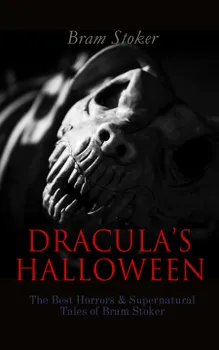
DRACULA'S HALLOWEEN – The Best Horrors & Supernatural Tales of Bram Stoker gathers the author's most atmospheric excursions into terror, superstition, and the uncanny. Framed by the Gothic inheritance of the nineteenth century and the emerging psychological anxieties of modernity, these tales combine melodramatic intensity, documentary realism, and folkloric dread. Stoker's prose delights in ominous settings, heightened sensation, and the intrusion of ancient evil into respectable Victorian life. Bram Stoker, the Irish writer best remembered for Dracula, was steeped in theatre, journalism, travel, and the intellectual currents of his age. His years as manager for the actor Henry Irving sharpened his instinct for dramatic pacing and spectacle, while his interest in folklore, science, and social change furnished the imaginative materials for his supernatural fiction. These influences helped him transform inherited legends into narratives of cultural unease. This collection is recommended for readers seeking more than a seasonal anthology of frights. It offers a concentrated view of Stoker's range beyond his famous vampire novel, revealing his command of suspense, atmosphere, and symbolic horror. Students of Gothic literature, lovers of classic supernatural fiction, and Halloween readers alike will find it both chilling and historically illuminating.

This enriched edition has been carefully crafted to add value to your reading experience.

- A comprehensive Introduction outlines these selected works' unifying features, themes, or stylistic evolutions.

- The Author Biography highlights personal milestones and literary influences that shape the entire body of writing.

- A Historical Context section situates the works in their broader era—social currents, cultural trends, and key events that underpin their creation.

- A concise Synopsis (Selection) offers an accessible overview of the included texts, helping readers navigate plotlines and main ideas without revealing critical twists.

- A unified Analysis examines recurring motifs and stylistic hallmarks across the collection, tying the stories together while spotlighting the different work's strengths.

- Reflection questions inspire deeper contemplation of the author's overarching message, inviting readers to draw connections among different texts and relate them to modern contexts.

- Lastly, our hand‐picked Memorable Quotes distill pivotal lines and turning points, serving as touchstones for the collection's central themes.

Kom i gang med denne bog i dag for 0 kr.

  • Få fuld adgang til alle bøger i appen i prøveperioden
  • Ingen forpligtelser, opsiges når som helst
Prøv gratis nu
Mere end 52.000 mennesker har givet Nextory fem stjerner i App Store og Google Play.

  1. 4.4

    Dracula

    Bram Stoker

  2. 4.3

    Dracula

    Bram Stoker

  3. Dracula

    Bram Stoker

  4. Dracula

    Bram Stoker

  5. Draculas gæst

    Jean-Baptiste de Boyer, Lord Byron, John Polidori, Bram Stoker

  6. Dracula

    Bram Stoker

  7. 4.3

    Dracula :

    Bram Stoker

  8. 60 Gothic Classics : Enriched edition. Exploring the Haunting Depths of Classic Gothic Literature

    Charles Dickens, Oscar Wilde, Robert Louis Stevenson, Edgar Allan Poe, William Hope Hodgson, Joseph Sheridan Fanu, Anna Katharine Green, George MacDonald, Bram Stoker, Charlotte Brontë, Emily Brontë, William Godwin, Henry James, Victor Hugo, Théophile Gautier, Arthur Conan Doyle, Jane Austen, John Meade Falkner, George Eliot, Robert Hugh Benson, Horace Walpole, Frederick Marryat, Thomas love Peacock, Washington Irving, Nathaniel Hawthorne, Gaston Leroux, Grant Allen, Arthur Machen, Wilkie Collins, Thomas Peckett Prest, James Malcolm Rymer, Charles Brockden Brown, James Hogg, Charlotte Perkins Gilman, Richard Marsh, Charles Robert Maturin, John William Polidori, H.G. Wells, W. W. Jacobs, H.P. Lovecraft, William Thomas Beckford, Nikolai Gogol, Mary Shelley, Ann Radcliffe, Matthew Gregory Lewis, Fitz-James O’Brien, Eliza Parsons

  9. 5.0

    The Power of Darkness : 560+ Gothic Ghost Stories, Occult Mysteries, Vampires & Weird Horror

    Wilhelm Hauff, Charles Dickens, Mark Twain, Harriet Beecher Stowe, Adelbert von Chamisso, Oscar Wilde, Robert Louis Stevenson, Edgar Allan Poe, William Hope Hodgson, Joseph Sheridan Fanu, John Buchan, Louis Tracy, Bram Stoker, Anatole France, Charlotte Brontë, Emily Brontë, Jack London, Henry James, Théophile Gautier, Arthur Conan Doyle, Richard Le Gallienne, Jane Austen, Ralph Adams Cram, Thomas De Quincey, John Meade Falkner, Guy De Maupassant, Thomas Hardy, William Archer, Daniel Defoe, John Kendrick Bangs, Cleveland Moffett, Brander Matthews, Marie Belloc Lowndes, Horace Walpole, Rudyard Kipling, Lafcadio Hearn, Hugh Walpole, Ambrose Bierce, Frederick Marryat, Ellis Parker Butler, Washington Irving, Leonid Andreyev, David Lindsay, Nathaniel Hawthorne, Grant Allen, Arthur Machen, Wilkie Collins, William Makepeace Thackeray, Thomas Peckett Prest, James Malcolm Rymer, Fergus Hume, Edward Bellamy, Walter Hubbell, Charlotte Perkins Gilman, Leopold Kompert, Richard Marsh, Florence Marryat, Catherine Crowe, John William Polidori, Vincent O'Sullivan, H.G. Wells, Robert W. Chambers, W. W. Jacobs, M.P. Shiel, E F Benson, Jerome K Jerome, M. R. James, E. T. Hoffmann, Stanley G. Weinbaum, George W. Reynolds, H.P. Lovecraft, Robert E. Howard, Edith Nesbit, Sabine Baring-Gould, William Thomas Beckford, Francis Marion Crawford, Lucy Maud Montgomery, Mary Elizabeth Braddon, Mary Louisa Molesworth, Mary E. Freeman, Nikolai Gogol, Mary Shelley, Elizabeth Gaskell, Edward Bulwer-Lytton, Frank R. Stockton, A. T. Quiller-Couch, Ann Radcliffe, Louisa M. Alcott, Amelia B. Edwards, Leonard Kip, Matthew Gregory Lewis, Fitz-James O’Brien, Katherine Rickford, Bithia Mary Croker, Catherine L. Pirkis, Émile Erckmann, Alexandre Chatrian, Pedro De Alarçon, H. H. (Saki), Pliny the Younger, Helena Blavatsky, Villiers de Adam, William F. Harvey, Fiona Macleod, William T. Stead, Gambier Bolton, Andrew Jackson Davis, Nizida, Walter F. Prince, Chester Bailey Fernando

  10. 4.3

    Dommerens hus

    Bram Stoker

  11. 50 Masterpieces you have to read

    Louisa May Alcott, Jane Austen, Joseph Conrad, D. H. Lawrence, George Eliot, Leo Tolstoy, James Joyce, Charles Dickens, Bram Stoker, Oscar Wilde, Honoré de Balzac, Edgar Rice Burroughs, Anne Brontë, Charlotte Brontë, Emily Brontë, Lewis Carroll, Willa Cather, Miguel de Cervantes, E. Cummings, Fyodor Dostoyevsky, Daniel Defoe, Arthur Conan Doyle, Alexandre Dumas, Gustave Flaubert, Henry James, Victor Hugo

  12. 4.3

    Dracula

    Bram Stoker