Om denne bog

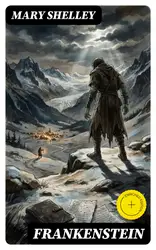
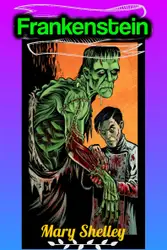
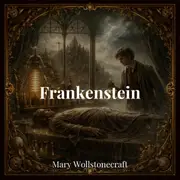
A forbidden experiment. A created being. A question that still haunts humanity.

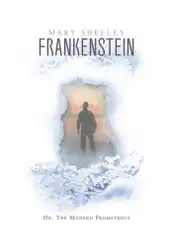
From the frozen silence of the Arctic to the shadowed laboratories of Europe, Frankenstein unfolds as a dark meditation on ambition, responsibility, and the fragile boundary between creation and destruction. Mary Wollstonecraft Shelley crafts a tale where scientific curiosity dares to rival nature—and pays a terrible price.

Written at the dawn of the 19th century, Shelley’s novel stands at the crossroads of Gothic fiction, early science fiction, and philosophical inquiry. Influenced by Enlightenment thought and Romantic anxieties, Frankenstein questions the limits of human knowledge, the ethics of creation, and the loneliness born of rejection.

Listeners follow Victor Frankenstein’s obsessive pursuit of forbidden knowledge, the momentous act that gives life to an unnamed being, and the creature’s anguished journey through a world that fears and abandons him. Each part of the novel deepens the moral tension, revealing shifting perspectives without ever resolving its central dilemma too easily.

More than a tale of horror, Frankenstein has left a permanent mark on global culture. Its themes—unchecked progress, moral accountability, and the human need for connection—remain strikingly relevant in an age of rapid technological advancement.

This audiobook offers an immersive listening experience, allowing Shelley’s layered narrative and atmospheric prose to resonate fully. The AI narration provides clarity, measured intensity, and consistency, making the complex structure and emotional depth accessible and compelling throughout.

Enter the shadows of a timeless masterpiece. Listen now and rediscover Frankenstein, a story that continues to challenge, disturb, and fascinate generations of listeners.

Kom i gang med denne bog i dag for 0 kr.

  • Få fuld adgang til alle bøger i appen i prøveperioden
  • Ingen forpligtelser, opsiges når som helst
Prøv gratis nu
Mere end 52.000 mennesker har givet Nextory fem stjerner i App Store og Google Play.

Mere af Mary Wollstonecraft

  1. Ny

    The Love Letters of Mary Wollstonecraft to Gilbert Imlay

    Mary Wollstonecraft

  2. 2.7

    A Vindication of the Rights of Woman

    Mary Wollstonecraft

  3. 2.7

    A Vindication of the Rights of Woman

    Mary Wollstonecraft

  4. Una doble vindicación : Textos seleccionados

    Mary Wollstonecraft

  5. 4.0

    Mary (Nórdica Clásicos)

    Mary Wollstonecraft

  6. Maria : or, The Wrongs of Woman

    Mary Wollstonecraft

  7. 2.7

    A Vindication of the Rights of Woman

    Mary Wollstonecraft

  8. A Vindication of the Rights of Woman : The 1792 Argument That Women Deserve an Education, Not Just Admiration

    Mary Wollstonecraft

  9. 2.7

    A Vindication of the Rights of Woman

    Mary Wollstonecraft

  10. 2.0

    A Vindication of the Rights of Woman

    Mary Wollstonecraft

  11. 100 Obras Maestras Que Debes Leer Antes De Morir

    Francis Scott Fitzgerald, Mary Shelley, Lyman Frank Baum, Edith Nesbit, Dante Alighieri, Jane Austen, Ambrose Bierce, Emily Brontë, Edgar Rice Burroughs, Lewis Carroll, Wilkie Collins, René Descartes, Charles Dickens, Emily Dickinson, Alexandre Dumas, Gustave Flaubert, Benito Pérez Galdós, Johann Wolfgang von Goethe, Thomas Hardy, E T A Hoffmann, Washington Irving, Henry James, James Joyce, Franz Kafka, Gaston Leroux, Federico García Lorca, H.P. Lovecraft, Publio Virgilio Marón, Lucy Maud Montgomery, John William Polidori, Marco Polo, Antoine de Saint-Exupéry, Emilio Salgari, Walter Scott, Mark Twain, Jules Verne, H.G. Wells, Edith Wharton, Mary Wollstonecraft, Fernando de Rojas

  12. 100 Clásicos de la Literatura Universal

    Francis Scott Fitzgerald, Mary Shelley, Lyman Frank Baum, Louisa May Alcott, Dante Alighieri, Jane Austen, Ambrose Bierce, Emily Brontë, Edgar Rice Burroughs, Lewis Carroll, Wilkie Collins, René Descartes, Charles Dickens, Emily Dickinson, Alexandre Dumas, Gustave Flaubert, Benito Pérez Galdós, Johann Wolfgang von Goethe, Thomas Hardy, E T A Hoffmann, Washington Irving, Henry James, James Joyce, Franz Kafka, Gaston Leroux, Federico García Lorca, H.P. Lovecraft, Publio Virgilio Marón, Lucy Maud Montgomery, John William Polidori, Marco Polo, Antoine de Saint-Exupéry, Emilio Salgari, Walter Scott, Mark Twain, Jules Verne, Julio Verne, H.G. Wells, Edith Wharton, Mary Wollstonecraft, Stefan Zweig, Sun Tzu, Bram Stoker, - Aristoteles, George Bernard Shaw, Henryk Sienkiewicz, Concepción Arenal, Charlotte Brontë, Miguel de Cervantes, G.K. Chesterton, Daniel Defoe, Fyodor Mikhailovich Dostoyevsky, Arthur Conan Doyle, Sigmund Freud, H. Rider Haggard, Homero, Immanuel Kant, Rudyard Kipling, Molière, Friedrich Nietzsche, Fernando de Rojas, Sófocles, William Makepeace Thackeray, León Tolstói, Voltaire, Ramón María del Valle-Inclán, Oscar Wilde, Virginia Woolf