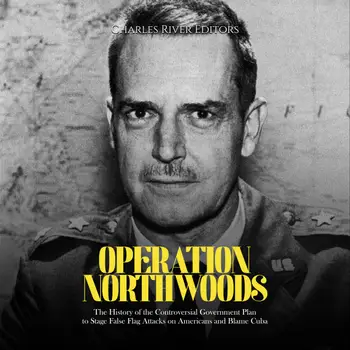
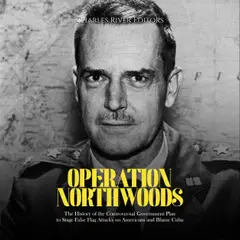
Throughout the history of warfare, the practice of placing blame on innocent parties in order to justify attacking them has been a constant feature. In the 20th century, this practice began to be commonly referred to as a “false flag” operation. The essence of a false flag scenario is that it is conducted by one party or government and “made to appear as though another party sponsored it.”[1] In informal legal terminology, the practice is commonly referred to as a “stitch up”[2] or “setup.”[3] The modern use of this action based on deceit originated in the 16th century, typically when ships displayed the flags of a neutral or enemy country to hide their identities.
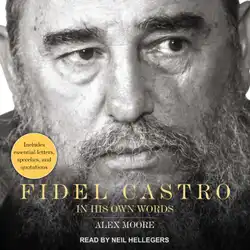
The severity of false flag operations moves in tandem with the perceived danger. In the late 20th century, the Soviet Union constituted an ongoing threat to the United States, ideologically and militarily. When Fidel Castro, a Soviet sympathizer, came to power in Cuba in 1959, the presence of a communist extension of Soviet influence so near American shores caused great discomfort to the U.S. government.
Some of the Cold War’s tensest moments involved Cuba, including the Bay of Pigs invasion and the Cuban Missile Crisis, amply demonstrating that throughout the early 1960s, alarmed individuals within the American government believed that the only way to handle Castro was by immediate elimination and a takeover of Cuba. They were pitted against more nuanced points of view held by others within the Kennedy administration. The Pentagon was of the general mind that in such a perilous environment, military decision-making should come to the front and civilians should withdraw, even the White House. Diplomacy was seen as being of little use by the Joint Chiefs of Staff against an encroaching Soviet superpower led by a political street fighter and his puppet situated just off the coast of Florida. This charged atmosphere would lead to one of the most controversial proposals in history.