Om denne bog

By the time the Pleistocene Epoch ended around 12,000 years ago, Homo sapiens had become one of the most significant species on the planet. It was also near the end of that period of time that modern humans began to gradually populate what would become Europe, Asia, and the Americas, eventually becoming the inheritors of the Paleolithic era and the only human species to make it into the Neolithic era. The process was long and difficult, and the survival of the species only happened through a combination of human tenacity and a fair amount of luck. As much as humans evolved during the Pleistocene, the topography, geography, and environment changed even more.

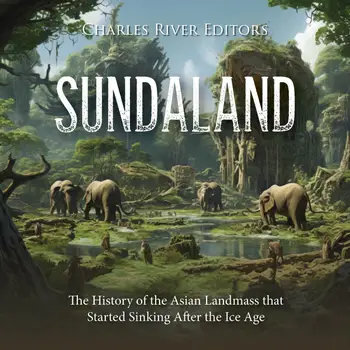
The cold Pleistocene temperatures lowered water levels across the planet, exposing land that was not there before or after the period. At the same time, significant regions of the planet were very different during the Pleistocene, including Southeast Asia, particularly the modern islands of Bali, Borneo, Sumatra, and the Malay Peninsula, roughly equivalent to parts of Indonesia, Malaysia, Myanmar, and Thailand. This region, which modern scholars refer to as Sunda or Sundaland, was unique because all of it was connected by land, meaning today’s islands were once part of a contiguous subcontinent, and in terms of the people, flora, and fauna, it was very different than it is today. If a modern traveler could somehow transport back to the Pleistocene, Sundaland would look nothing like modern Southeast Asia and would resemble as much of a lost world as something out of a science fiction novel.

Although much is still unknown about Sundaland, researchers have uncovered plenty of evidence bringing this lost world to life. As anthropologists and archaeologists developed new models and discovered ancient material culture, they learned that Sundaland played a significant role in the development of Neolithic Southeast Asia in many ways.

Kom i gang med denne bog i dag for 0 kr.

  • Få fuld adgang til alle bøger i appen i prøveperioden
  • Ingen forpligtelser, opsiges når som helst
Prøv gratis nu
Mere end 52.000 mennesker har givet Nextory fem stjerner i App Store og Google Play.

  1. 4.0

    ODESSA : The Controversial History of the Mysterious Network that Helped Nazis Escape Germany after World War II

    Charles River Editors

  2. 3.0

    The Ancient Egyptian City of Thebes : The History and Legacy of the Capital that Became Luxor

    Charles River Editors

  3. Hollywood’s Star-Crossed Blonde Bombshells: The Lives of the Influential Actresses Who Suffered Premature Deaths at the Height of Their Fame

    Charles River Editors

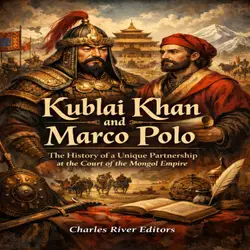
  4. Kublai Khan and Marco Polo: The History of a Unique Partnership at the Court of the Mongol Empire

    Charles River Editors

  5. 3.0

    The Anglo-Saxon Settlement of England: The History and Legacy of the Anglo-Saxons at the Start of the Middle Ages

    Charles River Editors

  6. 3.6

    Jack the Ripper and the Zodiac Killer: The History of the Most Famous Serial Killers Who Were Never Caught

    Charles River Editors

  7. The Osage Indian Murders: The History of the Notorious Killing Spree and the Federal Investigations in the Early 20th Century

    Charles River Editors

  8. 4.0

    The Voyager Program: The History and Legacy of NASA's First Probes that Traveled to the Outer Solar System

    Charles River Editors

  9. 5.0

    The Rise and Fall of the Third Reich: The History and Legacy of Nazi Germany under Adolf Hitler

    Charles River Editors

  10. 3.0

    The World’s Most Notorious Serial Killers: The Lives and Crimes of History’s Most Infamous Murderers

    Charles River Editors

  11. The Napoleonic Wars: The History of the Conflicts that Shaped Europe in the 19th Century

    Charles River Editors

  12. Uluru: The History and Legacy of the Australian Landmark Considered Sacred by the Local Aborigines

    Charles River Editors