3.5(2)

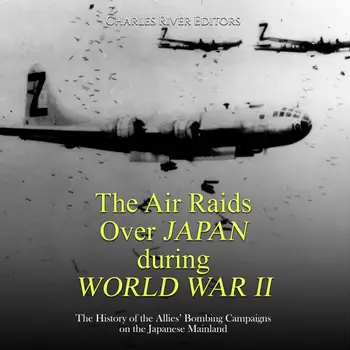
The Air Raids Over Japan during World War II: The History of the Allies’ Bombing Campaigns on the Japanese Mainland

The Americans would turn the war in the Pacific around in the middle of 1942, but in the wake of Pearl Harbor and the Japanese invasion of the Philippines, the country was in desperate need of a morale boost, and it would come in the form of the Doolittle Raid. In part to show that the Japanese were not invincible, and in part to reassure the American public that the nation would not lose the war, the Doolittle Raid included both Army and Navy units that launched 16 land-based medium bombers from an aircraft carrier, a feat that was the first of its kind but also one involving a great deal of risk. Getting the bombers and carriers in place to execute the mission involved much strategic planning and cooperation within the American military, and had it failed, it could have dealt a serious blow to the Americans’ Pacific presence due to the nation’s limited resources in that theater.

The first serious air raids over Japan came in November 1944, after the Americans had captured the Marianas Islands, and through February 1945, American bombers concentrated on military targets at the fringes of the city, particularly air defenses. However, the air raids of March 1945, and particularly on the night of March 9, were a different story altogether. In what is generally referred to as strategic or area bombing, waves of bombers flew low over Tokyo for over two and a half hours, dropping incendiary bombs with the intention of producing a massive firestorm. The American raids intended to produce fires that would kill soldiers and civilians, as well as the munitions factories and apartment buildings of those who worked in them. 325 B-29s headed toward Tokyo, and nearly 300 of them dropped bombs on it. Additional raids, this time largely on the north and west, came in April, and in May, raids hit Ginza and the south. Altogether, American bombers flew more than 4,000 missions over Tokyo before surrender.

Om denne bog

The Americans would turn the war in the Pacific around in the middle of 1942, but in the wake of Pearl Harbor and the Japanese invasion of the Philippines, the country was in desperate need of a morale boost, and it would come in the form of the Doolittle Raid. In part to show that the Japanese were not invincible, and in part to reassure the American public that the nation would not lose the war, the Doolittle Raid included both Army and Navy units that launched 16 land-based medium bombers from an aircraft carrier, a feat that was the first of its kind but also one involving a great deal of risk. Getting the bombers and carriers in place to execute the mission involved much strategic planning and cooperation within the American military, and had it failed, it could have dealt a serious blow to the Americans’ Pacific presence due to the nation’s limited resources in that theater.

The first serious air raids over Japan came in November 1944, after the Americans had captured the Marianas Islands, and through February 1945, American bombers concentrated on military targets at the fringes of the city, particularly air defenses. However, the air raids of March 1945, and particularly on the night of March 9, were a different story altogether. In what is generally referred to as strategic or area bombing, waves of bombers flew low over Tokyo for over two and a half hours, dropping incendiary bombs with the intention of producing a massive firestorm. The American raids intended to produce fires that would kill soldiers and civilians, as well as the munitions factories and apartment buildings of those who worked in them. 325 B-29s headed toward Tokyo, and nearly 300 of them dropped bombs on it. Additional raids, this time largely on the north and west, came in April, and in May, raids hit Ginza and the south. Altogether, American bombers flew more than 4,000 missions over Tokyo before surrender.
Kom i gang med denne bog i dag for 0 kr.

  • Få fuld adgang til alle bøger i appen i prøveperioden
  • Ingen forpligtelser, opsiges når som helst
Prøv gratis nu
Mere end 52.000 mennesker har givet Nextory fem stjerner i App Store og Google Play.

  1. British Intelligence in the World Wars: The History and Legacy of Britain’s Covert Activities during Both Conflicts

    Charles River Editors

  2. Ancient Egyptian Conspiracy Theories: The History of the Most Popular Conspiracy Theories about Egypt in Antiquity

    Charles River Editors

  3. The Worst Nuclear Meltdowns of the Cold War: The History of the Biggest Nuclear Disasters in the United States and Soviet Union

    Charles River Editors

  4. Real Pirates of the Caribbean

    Charles River Editors

  5. Napoleon’s Great Escapes: The History of Napoleon’s Escapes from Egypt and Elba

    Charles River Editors

  6. The Special Operations Executive and the Office of Strategic Services: The History of the British and American Intelligence Agencies during World War II

    Charles River Editors

  7. French Senegal: The History of the French Colony and Senegal’s Transition to Independence

    Charles River Editors

  8. General Douglas MacArthur and Admiral Chester W. Nimitz: The Lives and Careers of America’s Commanders-in-Chief in the Pacific Theater during World War II

    Charles River Editors

  9. 1.0

    The Battle of Ia Drang: The History and Legacy of the Vietnam War’s First Major Battle

    Charles River Editors

  10. Nazi Germany’s Conquest of Western Europe: The Negotiations and Campaigns that Let Hitler Conquer the Continent Before and During World War II

    Charles River Editors

  11. Colonial Vietnam: The History of the Division Between North and South Vietnam

    Charles River Editors

  12. Germany and the World Wars: The History and Legacy of the Germans’ Participation in History’s Biggest Conflicts

    Charles River Editors