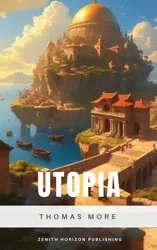
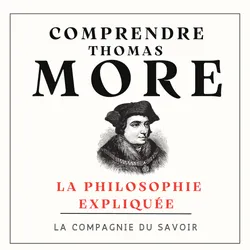
Thomas More's The Collected Works gathers the full range of a Renaissance mind: the philosophical fiction of Utopia, humanist dialogues, polemical treatises, devotional meditations, letters, histories, and legal-political writings. Across Latin and English prose, More's style combines classical learning, forensic precision, irony, and moral seriousness. Read within the context of Northern humanism and the early Reformation, these works reveal a writer deeply engaged with questions of commonwealth, conscience, authority, social justice, and the disciplined life of the soul. More was a lawyer, scholar, parliamentarian, and eventually Lord Chancellor of England under Henry VIII. His friendship with Erasmus, training in rhetoric and law, and immersion in both civic service and religious devotion shaped his literary production. The tensions that marked his life—between public duty and private conscience, reformist learning and Catholic orthodoxy—culminated in his refusal to endorse royal supremacy, leading to his execution in 1535. This collection is indispensable for readers seeking more than the famous Utopia. It offers a comprehensive portrait of a writer whose imagination, faith, and political intelligence helped define early modern Europe. Scholars, students, and historically minded general readers will find here a challenging, eloquent, and enduring body of work.
This enriched edition has been carefully crafted to add value to your reading experience.
- A comprehensive Introduction outlines these selected works' unifying features, themes, or stylistic evolutions.
- The Author Biography highlights personal milestones and literary influences that shape the entire body of writing.
- A Historical Context section situates the works in their broader era—social currents, cultural trends, and key events that underpin their creation.
- A concise Synopsis (Selection) offers an accessible overview of the included texts, helping readers navigate plotlines and main ideas without revealing critical twists.
- A unified Analysis examines recurring motifs and stylistic hallmarks across the collection, tying the stories together while spotlighting the different work's strengths.
- Reflection questions inspire deeper contemplation of the author's overarching message, inviting readers to draw connections among different texts and relate them to modern contexts.
- Lastly, our hand‐picked Memorable Quotes distill pivotal lines and turning points, serving as touchstones for the collection's central themes.