The Doctrine Of The Mean (zhōngyōng 中庸) : A Foundational Text of East Asian Thought Giving the Confucian Case for Balance, Self-Cultivation, and the Good Society

Traditionally attributed to Confucius’s grandson Zǐsī (子思), Zhōngyōng (中庸) began as a single chapter in the Classic of Rites before being elevated to one of the Four Books (Sìshū, 四书) of classical Chinese philosophy by the Neo-Confucian scholar Zhū Xī (朱熹). It was a central text of Confucianism and, for over a milenium, anyone seeking a government position in China was expected to have mastered this short work, as well as influencing scholarship in Korea, Japan, and Vietnam.

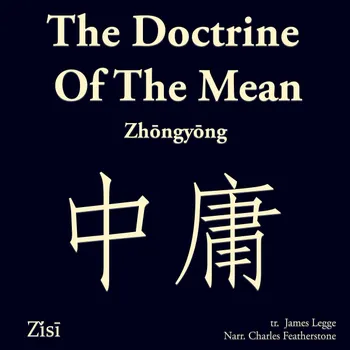
The title combines zhōng (中, meaning central, impartial, or balanced) and yōng (庸, constant or unwavering). It suggests both a balanced stance between extremes and a stable, reliable way of living.

The series of 33 short meditations explores how self-cultivation and social order are fundamentally the same. It covers ideas about moderation, rectitude, sincerity, equilibrium, harmony, and lack of prejudice.

The ideal person (jūnzǐ, 君子) navigates every situation without falling into excess or deficiency, holding to a golden and self-improving mean. A friend should be neither too close nor too remote; neither grief nor joy should be excessive, since unregulated happiness can be as harmful as uncontrolled sorrow.

In the twentieth century, Confucianism was blamed for China’s stagnation. The May Fourth Movement attacked the Four Books as relics of a feudal past, and the Cultural Revolution sought to erase them. For decades, zhōngyōng disappeared from view.

In recent years mainland China has re-engaged with its classical heritage, and the Four Books have been reintroduced into schools, public life, and popular publishing, and a new generation of readers is discovering how these ancient texts speak to timeless questions about personal ethics, social order, and the search for meaning.

Short enough to read in an afternoon, difficult enough to spend a lifetime thinking about, The Doctrine of the Mean remains one of the most concise and quietly demanding works in the Confucian canon.
Om denne bog

Traditionally attributed to Confucius’s grandson Zǐsī (子思), Zhōngyōng (中庸) began as a single chapter in the Classic of Rites before being elevated to one of the Four Books (Sìshū, 四书) of classical Chinese philosophy by the Neo-Confucian scholar Zhū Xī (朱熹). It was a central text of Confucianism and, for over a milenium, anyone seeking a government position in China was expected to have mastered this short work, as well as influencing scholarship in Korea, Japan, and Vietnam.

The title combines zhōng (中, meaning central, impartial, or balanced) and yōng (庸, constant or unwavering). It suggests both a balanced stance between extremes and a stable, reliable way of living.

The series of 33 short meditations explores how self-cultivation and social order are fundamentally the same. It covers ideas about moderation, rectitude, sincerity, equilibrium, harmony, and lack of prejudice.

The ideal person (jūnzǐ, 君子) navigates every situation without falling into excess or deficiency, holding to a golden and self-improving mean. A friend should be neither too close nor too remote; neither grief nor joy should be excessive, since unregulated happiness can be as harmful as uncontrolled sorrow.

In the twentieth century, Confucianism was blamed for China’s stagnation. The May Fourth Movement attacked the Four Books as relics of a feudal past, and the Cultural Revolution sought to erase them. For decades, zhōngyōng disappeared from view.

In recent years mainland China has re-engaged with its classical heritage, and the Four Books have been reintroduced into schools, public life, and popular publishing, and a new generation of readers is discovering how these ancient texts speak to timeless questions about personal ethics, social order, and the search for meaning.

Short enough to read in an afternoon, difficult enough to spend a lifetime thinking about, The Doctrine of the Mean remains one of the most concise and quietly demanding works in the Confucian canon.
Kom i gang med denne bog i dag for 0 kr.

  • Få fuld adgang til alle bøger i appen i prøveperioden
  • Ingen forpligtelser, opsiges når som helst
Prøv gratis nu
Mere end 52.000 mennesker har givet Nextory fem stjerner i App Store og Google Play.