The Great Gatsby

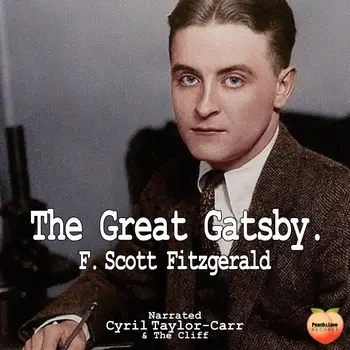
The Great Gatsby is a 1925 novel by American writer F. Scott Fitzgerald. Set in the Jazz Age on Long Island, the novel depicts narrator Nick Carraway's interactions with mysterious millionaire Jay Gatsby and Gatsby's obsession to reunite with his former lover, Daisy Buchanan. A youthful romance Fitzgerald had with socialite Ginevra King, and the riotous parties he attended on Long Island's North Shore in 1922 inspired the novel. Following a move to the French Riviera, he completed a rough draft in 1924. He submitted the draft to editor Maxwell Perkins, who persuaded Fitzgerald to revise the work over the following winter. After his revisions, Fitzgerald was satisfied with the text, but remained ambivalent about the book's title and considered several alternatives. After its publication by Scribner's in April 1925, The Great Gatsby received generally favorable reviews, although some literary critics believed it did not hold up to Fitzgerald's previous efforts and signaled the end of the author's literary achievements. Despite the warm critical reception, Gatsby was a commercial failure. The book sold fewer than 20,000 copies by October, and Fitzgerald's hopes of a monetary windfall from the novel were unrealized. When the author died in 1940, he believed himself to be a failure and his work forgotten. After his death, the novel faced a critical and scholarly re-examination amid World War II, and it soon became a core part of most American high school curricula and a focus of American popular culture. Numerous stage and film adaptations followed in the subsequent decades. Gatsby continues to attract popular and scholarly attention. The novel was most recently adapted to film in 2013 by director Baz Luhrmann, while contemporary scholars emphasize the novel's treatment of social class, inherited wealth compared to those who are self-made, race, environmentalism, and its cynical attitude towards the American dream.
Om denne bog

The Great Gatsby is a 1925 novel by American writer F. Scott Fitzgerald. Set in the Jazz Age on Long Island, the novel depicts narrator Nick Carraway's interactions with mysterious millionaire Jay Gatsby and Gatsby's obsession to reunite with his former lover, Daisy Buchanan. A youthful romance Fitzgerald had with socialite Ginevra King, and the riotous parties he attended on Long Island's North Shore in 1922 inspired the novel. Following a move to the French Riviera, he completed a rough draft in 1924. He submitted the draft to editor Maxwell Perkins, who persuaded Fitzgerald to revise the work over the following winter. After his revisions, Fitzgerald was satisfied with the text, but remained ambivalent about the book's title and considered several alternatives. After its publication by Scribner's in April 1925, The Great Gatsby received generally favorable reviews, although some literary critics believed it did not hold up to Fitzgerald's previous efforts and signaled the end of the author's literary achievements. Despite the warm critical reception, Gatsby was a commercial failure. The book sold fewer than 20,000 copies by October, and Fitzgerald's hopes of a monetary windfall from the novel were unrealized. When the author died in 1940, he believed himself to be a failure and his work forgotten. After his death, the novel faced a critical and scholarly re-examination amid World War II, and it soon became a core part of most American high school curricula and a focus of American popular culture. Numerous stage and film adaptations followed in the subsequent decades. Gatsby continues to attract popular and scholarly attention. The novel was most recently adapted to film in 2013 by director Baz Luhrmann, while contemporary scholars emphasize the novel's treatment of social class, inherited wealth compared to those who are self-made, race, environmentalism, and its cynical attitude towards the American dream.
Kom i gang med denne bog i dag for 0 kr.

  • Få fuld adgang til alle bøger i appen i prøveperioden
  • Ingen forpligtelser, opsiges når som helst
Prøv gratis nu
Mere end 52.000 mennesker har givet Nextory fem stjerner i App Store og Google Play.

  1. 3.8

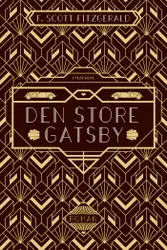
    Den store Gatsby

    F. Scott Fitzgerald

  2. 3.6

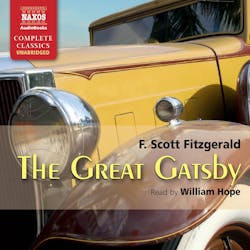
    The Great Gatsby

    F. Scott Fitzgerald

  3. The Camel's Back :

    F. Scott Fitzgerald

  4. 50 Masterpieces you have to read before you die vol : A Monumental Collection of Fiction That Continues the Legacy of World Literature's Greatest Voices

    Lewis Carroll, Mark Twain, Jules Verne, Arthur Conan Doyle, Louisa May Alcott, Jane Austen, G.K. Chesterton, Wilkie Collins, Charles Dickens, Fyodor Dostoyevsky, Alexandre Dumas, F. Scott Fitzgerald, E. M. Forster, Thomas Hardy, Hermann Hesse

  5. The Great Gatsby :

    F. Scott Fitzgerald

  6. 3.7

    The Curious Case of Benjamin Button

    F. Scott Fitzgerald

  7. Dead Men Tell No Tales - 60+ Pirate Novels, Treasure-Hunt Tales & Sea Adventure Classics : A Swashbuckling Voyage Through Time and Legend

    Jules Verne, Charles Dickens, Robert Louis Stevenson, James Fenimore Cooper, Edgar Allan Poe, William Hope Hodgson, Howard Pyle, Jack London, Arthur Conan Doyle, Richard Le Gallienne, Daniel Defoe, Alexandre Dumas, Charles Ellms, Frederick Marryat, Harold MacGrath, Joseph Lewis French, Harry Collingwood, Stanley Lane-Poole, Charles Boardman Hawes, L. Frank Baum, J.M. Barrie, R.M Ballantyne, G. A Henty, J. D. Kelley, J. Allan Dunn, Robert E. Howard, F. Scott Fitzgerald, Sir Walter Scott, Ralph D. Paine, Captain Charles Johnson, W. H. Kingston, Currey E. Hamilton, John Esquemeling

  8. 3.7

    The Great Gatsby

    F. Scott Fitzgerald

  9. The Curious Case of Benjamin Button : Enriched edition. A Whimsical, Poignant Tale of Reverse Aging, Identity, and Time in Jazz Age America

    F. Scott Fitzgerald

  10. The Complete Works of F. Scott Fitzgerald

    F. Scott Fitzgerald

  11. The Complete Works of F. Scott Fitzgerald

    F. Scott Fitzgerald