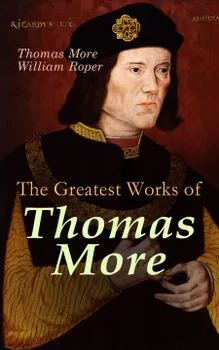
The Greatest Works of Thomas More gathers the writings of one of Renaissance humanism's most searching and paradoxical minds, placing political fantasy, devotional argument, polemic, and biographical remembrance in illuminating proximity. From the enduring imaginative experiment of Utopia to works of conscience, controversy, and spiritual reflection, the volume reveals a writer equally attentive to civic order, moral ambiguity, and the claims of faith. Its range of styles—dialogue, satire, treatise, prayer, and life-writing—situates More within the vigorous intellectual ferment of early modern Europe. The collection is enriched by the presence of William Roper, More's son-in-law and early biographer, whose account helped shape the posthumous image of More as statesman, martyr, and exemplar of learned piety. Together, these voices register the pressures of Tudor politics, the Reformation, and the humanist recovery of classical eloquence. They illuminate how private conscience and public duty could collide in an age of institutional transformation. This volume is recommended to readers seeking a concentrated encounter with More's literary, political, and religious legacy. It offers students and general readers alike a rare opportunity to trace the tensions between ideal commonwealths and historical realities, intellectual play and mortal seriousness, individual conviction and collective authority.
This enriched edition has been carefully crafted to add value to your reading experience.
- An Introduction draws the threads together, discussing why these diverse authors and texts belong in one collection.
- Historical Context explores the cultural and intellectual currents that shaped these works, offering insight into the shared (or contrasting) eras that influenced each writer.
- A combined Synopsis (Selection) briefly outlines the key plots or arguments of the included pieces, helping readers grasp the anthology's overall scope without giving away essential twists.
- A collective Analysis highlights common themes, stylistic variations, and significant crossovers in tone and technique, tying together writers from different backgrounds.
- Reflection questions encourage readers to compare the different voices and perspectives within the collection, fostering a richer understanding of the overarching conversation.