5.0(1)

The Jungle Books

The Jungle Book (1894) is a collection of stories by the English author Rudyard Kipling. Most of the characters are animals such as Shere Khan the tiger and Baloo the bear, though a principal character is the boy or "man-cub" Mowgli, who is raised in the jungle by wolves. The stories are set in a forest in India; one place mentioned repeatedly is "Seonee" (Seoni), in the central state of Madhya Pradesh. A major theme in the book is abandonment followed by fostering, as in the life of Mowgli, echoing Kipling's own childhood. The theme is echoed in the triumph of protagonists including Rikki-Tikki-Tavi and The White Seal over their enemies, as well as Mowgli's. Another important theme is of law and freedom; the stories are not about animal behaviour, still less about the Darwinian struggle for survival, but about human archetypes in animal form. They teach respect for authority, obedience, and knowing one's place in society with "the law of the jungle", but the stories also illustrate the freedom to move between different worlds, such as when Mowgli moves between the jungle and the village. Critics have also noted the essential wildness and lawless energies in the stories, reflecting the irresponsible side of human nature.

The Second Jungle Book is a sequel to The Jungle Book by Rudyard Kipling. First published in 1895, it features five stories about Mowgli and three unrelated stories, all but one set in India, most of which Kipling wrote while living in Vermont. All of the stories were previously published in magazines in 1894-5, often under different titles. The 1994 film The Jungle Book used it as a source.

Om denne bog

The Jungle Book (1894) is a collection of stories by the English author Rudyard Kipling. Most of the characters are animals such as Shere Khan the tiger and Baloo the bear, though a principal character is the boy or "man-cub" Mowgli, who is raised in the jungle by wolves. The stories are set in a forest in India; one place mentioned repeatedly is "Seonee" (Seoni), in the central state of Madhya Pradesh. A major theme in the book is abandonment followed by fostering, as in the life of Mowgli, echoing Kipling's own childhood. The theme is echoed in the triumph of protagonists including Rikki-Tikki-Tavi and The White Seal over their enemies, as well as Mowgli's. Another important theme is of law and freedom; the stories are not about animal behaviour, still less about the Darwinian struggle for survival, but about human archetypes in animal form. They teach respect for authority, obedience, and knowing one's place in society with "the law of the jungle", but the stories also illustrate the freedom to move between different worlds, such as when Mowgli moves between the jungle and the village. Critics have also noted the essential wildness and lawless energies in the stories, reflecting the irresponsible side of human nature.

The Second Jungle Book is a sequel to The Jungle Book by Rudyard Kipling. First published in 1895, it features five stories about Mowgli and three unrelated stories, all but one set in India, most of which Kipling wrote while living in Vermont. All of the stories were previously published in magazines in 1894-5, often under different titles. The 1994 film The Jungle Book used it as a source.
Kom i gang med denne bog i dag for 0 kr.

  • Få fuld adgang til alle bøger i appen i prøveperioden
  • Ingen forpligtelser, opsiges når som helst
Prøv gratis nu
Mere end 52.000 mennesker har givet Nextory fem stjerner i App Store og Google Play.

  1. The Jungle Book

    Rudyard Kipling

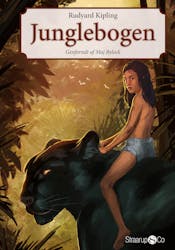
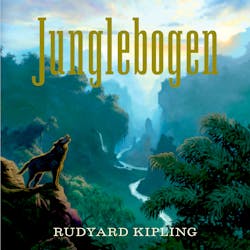
  2. Junglebogen

    Maj Bylock, Rudyard Kipling

  3. 3.0

    50 Masterpieces you have to read before you die vol: 1 (2020 Edition) : Included: Little Women, The Richest Man in Babylon Emma, The Call Of The Wild ....

    Louisa May Alcott, Dante Alighieri, Marcus Aurelius, Jane Austen, L. Frank Baum, Charlotte Brontë, Emily Brontë, Anne Brontë, Miguel de Cervantes, Agatha Christie, George S. Clason, Arthur Conan Doyle, Joseph Conrad, Charles Dickens, Fyodor Dostoyevsky, Alexandre Dumas, George Eliot, G.K. Chesterton, G.K. Chesterton, Zane Grey, Nathaniel Hawthorne, Napoleon Hill, Homer, Victor Hugo, Frances Hodgson Burnett, Washington Irving, Henry James, Franz Kafka, Rudyard Kipling, Jack London, Leo Tolstoy, H.P. Lovecraft, Lucy Maud Montgomery, Joseph Murphy, Robert Louis Stevenson, Edgar Allan Poe, Marcel Proust, Publius, Mary Shelley, Bram Stoker, Mark Twain, Sun Tzu, Lew Wallace, Wallace D. Wattles, H.G. Wells

  4. Nobelprisen

    Stalky and Company

    Rudyard Kipling

  5. Nobelprisen

    Indian Tales

    Rudyard Kipling

  6. Nobelprisen
    1.0

    Havets helte

    Rudyard Kipling

  7. Nobelprisen
    3.5

    Junglebogen

    Rudyard Kipling

  8. Nobelprisen

    Rikki-Tikki-Tavi and Other Tales

    Rudyard Kipling

  9. Nobelprisen
    4.4

    Hvordan elefanten fik sin lange snabel : Kiplings 6 bedste dyrefabler

    Rudyard Kipling

  10. 13. jul.

    The Jungle Book

    Rudyard Kipling

  11. Ny

    La mirada del perro : Curiosidades, ciencia e historia del mejor amigo del hombre

    David G. Jara, Rudyard Kipling

  12. Ny

    Grandes clásicos juveniles : Tom Sawyer, Mujercitas, Capitanes intrépidos y Canción de Navidad

    Mark Twain, Louise May Alcott, Rudyard Kipling, Charles Dickens