Om denne bog

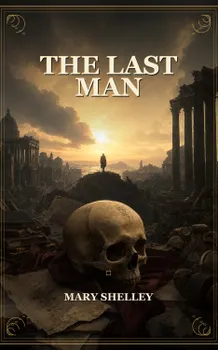
The Last Man chronicles the last days of humanity in the 21st century as it is slowly obliterated by a global pandemic. Radical changes and events across Europe—the king abdicates, turning England into a Republic; war erupts between Greece and Turkey—weaken the fabric of society, allowing an unknown and deadly disease to quickly spread across the world. Political leaders are disorganized; spiritual figures offer little comfort; science yields no answers. Previously distinguished individuals abandon their people in their time of need out of cowardice, while others admirably rise up to the occasion. Yet, none of this matters at all when humanity comes to its end. Mary Shelley wrote this book during the darkest time of her life. Over the years, she had lost her husband, Percy Bysshe Shelley; her close friend, Lord Byron; and her children. Writing the novel became an instrument to process her own hopelessness and isolation—various characters are impressions of her departed loved ones. Contemporary critics were not kind to The Last Man . While Frankenstein was lauded for its depiction of scientific presumption, humanity's impotence and subsequent extinction were deemed offensive. The book faded into near-obscurity and merely survived until its rediscovery in the 1960s. After two World Wars, several epidemics, and the threat of nuclear annihilation, humanity's end may not have seemed as absurd any more. Mary Shelley (died 1851) was one of the most distinguished authors of the Victorian age. Their work has endured across generations and continues to be read and studied worldwide. The early science fiction genre, pioneered by visionaries like H.G. Wells and Jules Verne, laid the groundwork for one of literature's most enduring and imaginative forms. The Last Man stands as an early example of speculative fiction grappling with the promises and perils of science and technology.

Kom i gang med denne bog i dag for 0 kr.

  • Få fuld adgang til alle bøger i appen i prøveperioden
  • Ingen forpligtelser, opsiges når som helst
Prøv gratis nu
Mere end 52.000 mennesker har givet Nextory fem stjerner i App Store og Google Play.

  1. 4.0

    Frankenstein

    Mary Shelley

  2. 4.6

    Frankenstein : eller den moderne Prometheus

    Mary Shelley

  3. 5.0

    Mary Shelley's Frankenstein

    Mary Shelley

  4. Lost Sci-Fi Books 416 thru 420 : Five Golden-Age Visions Of Altered Flesh, Fatal Allure, Merciless Worlds, And The Dangerous Urge To Rewrite Destiny

    Mary Shelley, Fritz Leiber, Frank Belknap Long, Sam Carson, Harold Lawlor

  5. Frankenstein :

    Mary Shelley

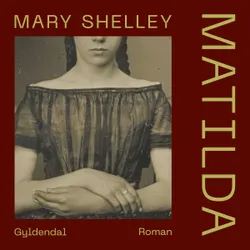
  6. Mathilda

    Mary Shelley

  7. 4.5
    #2

    Matilda

    Mary Shelley

  8. The Ultimate SF Collection : Visions of Dystopias, Galactic Adventures & Forgotten Realms

    Jules Verne, Mark Twain, Robert Louis Stevenson, James Fenimore Cooper, Edgar Allan Poe, William Hope Hodgson, George MacDonald, Percy Greg, Jack London, Arthur Conan Doyle, Ernest Bramah, Jonathan Swift, Cleveland Moffett, William Morris, Anthony Trollope, Richard Jefferies, Samuel Butler, David Lindsay, Edward Everett Hale, Edward Bellamy, Charlotte Perkins Gilman, Edgar Wallace, Francis Bacon, Robert Cromie, Abraham Merritt, Ignatius Donnelly, Owen Gregory, H.G. Wells, Stanley G. Weinbaum, Fred M. White, H.P. Lovecraft, Garrett P. Serviss, Henry Rider Haggard, Mary Shelley, Malcolm Jameson, Edward Bulwer-Lytton, Lewis Grassic Gibbon, Otis Adelbert Kline, C.J. Hyne, Edwin A. Abbott, Arthur Dudley Vinton, Gertrude Barrows Bennett, Hugh Benson, Margaret Cavendish

  9. 5.0

    The Power of Darkness : The Legend of Sleepy Hollow, Sweeney Todd, Frankenstein, Dracula, The Haunted House, Dead Souls…

    Wilhelm Hauff, Charles Dickens, Mark Twain, Harriet Beecher Stowe, Adelbert von Chamisso, Oscar Wilde, Robert Louis Stevenson, Edgar Allan Poe, William Hope Hodgson, Joseph Sheridan Fanu, John Buchan, Louis Tracy, Bram Stoker, Anatole France, Charlotte Brontë, Emily Brontë, Jack London, Henry James, Théophile Gautier, Arthur Conan Doyle, Richard Le Gallienne, Jane Austen, Ralph Adams Cram, Thomas De Quincey, John Meade Falkner, Guy De Maupassant, Thomas Hardy, William Archer, Daniel Defoe, John Kendrick Bangs, Cleveland Moffett, Brander Matthews, Marie Belloc Lowndes, Horace Walpole, Rudyard Kipling, Lafcadio Hearn, Hugh Walpole, Ambrose Bierce, Frederick Marryat, Ellis Parker Butler, Washington Irving, Leonid Andreyev, David Lindsay, Nathaniel Hawthorne, Grant Allen, Arthur Machen, Wilkie Collins, William Makepeace Thackeray, Thomas Peckett Prest, James Malcolm Rymer, Fergus Hume, Edward Bellamy, Walter Hubbell, Charlotte Perkins Gilman, Leopold Kompert, Richard Marsh, Florence Marryat, Catherine Crowe, John William Polidori, Vincent O'Sullivan, H.G. Wells, Robert W. Chambers, W. W. Jacobs, M.P. Shiel, E F Benson, Jerome K Jerome, M. R. James, E. T. Hoffmann, Stanley G. Weinbaum, George W. Reynolds, H.P. Lovecraft, Robert E. Howard, Edith Nesbit, Sabine Baring-Gould, William Thomas Beckford, Francis Marion Crawford, Lucy Maud Montgomery, Mary Elizabeth Braddon, Mary Louisa Molesworth, Mary E. Freeman, Nikolai Gogol, Mary Shelley, Elizabeth Gaskell, Edward Bulwer-Lytton, Frank R. Stockton, A. T. Quiller-Couch, Ann Radcliffe, Louisa M. Alcott, Amelia B. Edwards, Leonard Kip, Matthew Gregory Lewis, Fitz-James O’Brien, Katherine Rickford, Bithia Mary Croker, Catherine L. Pirkis, Émile Erckmann, Alexandre Chatrian, Pedro De Alarçon, H. H. (Saki), Pliny the Younger, Helena Blavatsky, Villiers de Adam, William F. Harvey, Fiona Macleod, William T. Stead, Gambier Bolton, Andrew Jackson Davis, Nizida, Walter F. Prince, Chester Bailey Fernando

  10. 4.3

    Frankenstein

    Mary Shelley

  11. Classics Authors Super Set Serie 2 (Shandon Press)

    Oscar Wilde, H.G. Wells, Mary Shelley, Edgar Allan Poe, H.P. Lovecraft, Victor Hugo, Robert Louis Stevenson, Rudyard Kipling, Nathaniel Hawthorne, Thomas Hardy, Elizabeth Cleghorn Gaskell, Charles Dickens, Jane Austen, Joseph Conrad

  12. 4.0

    Frankenstein

    Mary Shelley