A Letter Concerning Toleration : Enriched edition.

In "A Letter Concerning Toleration," John Locke argues for the vital importance of religious tolerance in a pluralistic society, articulating the necessity of separating civil governance from individual belief systems. Through clear, compelling prose and robust philosophical reasoning, Locke critiques the intertwining of state power and religion, positing that true faith must be voluntary and cannot be enforced. He draws upon contemporary debates in 17th-century Europe regarding varying religious doctrines, using these conflicts to exemplify the destructive consequences of intolerance and advocating for a social contract rooted in mutual respect and understanding. John Locke, a pivotal figure in Enlightenment philosophy, was deeply influenced by the tumultuous religious wars of his time. His experiences and observations of the struggles between Catholics and Protestants in England shaped his thoughts on governance and human rights. Locke's background in both philosophy and political theory underpins his ability to traverse complex theological arguments while maintaining a focus on civil society's practical requirements. This essential text is a cornerstone for anyone interested in political philosophy, religious studies, or the development of modern democratic thought. Locke's eloquent defense of tolerance not only remains relevant but serves as a resonant reminder of the necessity for understanding and coexistence in contemporary society.

In this enriched edition, we have carefully created added value for your reading experience:

- A succinct Introduction situates the work's timeless appeal and themes.

- The Synopsis outlines the central plot, highlighting key developments without spoiling critical twists.

- A detailed Historical Context immerses you in the era's events and influences that shaped the writing.

- An Author Biography reveals milestones in the author's life, illuminating the personal insights behind the text.

- A thorough Analysis dissects symbols, motifs, and character arcs to unearth underlying meanings.

- Reflection questions prompt you to engage personally with the work's messages, connecting them to modern life.

- Hand‐picked Memorable Quotes shine a spotlight on moments of literary brilliance.

- Interactive footnotes clarify unusual references, historical allusions, and archaic phrases for an effortless, more informed read.
Sobre este libro

In "A Letter Concerning Toleration," John Locke argues for the vital importance of religious tolerance in a pluralistic society, articulating the necessity of separating civil governance from individual belief systems. Through clear, compelling prose and robust philosophical reasoning, Locke critiques the intertwining of state power and religion, positing that true faith must be voluntary and cannot be enforced. He draws upon contemporary debates in 17th-century Europe regarding varying religious doctrines, using these conflicts to exemplify the destructive consequences of intolerance and advocating for a social contract rooted in mutual respect and understanding. John Locke, a pivotal figure in Enlightenment philosophy, was deeply influenced by the tumultuous religious wars of his time. His experiences and observations of the struggles between Catholics and Protestants in England shaped his thoughts on governance and human rights. Locke's background in both philosophy and political theory underpins his ability to traverse complex theological arguments while maintaining a focus on civil society's practical requirements. This essential text is a cornerstone for anyone interested in political philosophy, religious studies, or the development of modern democratic thought. Locke's eloquent defense of tolerance not only remains relevant but serves as a resonant reminder of the necessity for understanding and coexistence in contemporary society.

In this enriched edition, we have carefully created added value for your reading experience:

- A succinct Introduction situates the work's timeless appeal and themes.

- The Synopsis outlines the central plot, highlighting key developments without spoiling critical twists.

- A detailed Historical Context immerses you in the era's events and influences that shaped the writing.

- An Author Biography reveals milestones in the author's life, illuminating the personal insights behind the text.

- A thorough Analysis dissects symbols, motifs, and character arcs to unearth underlying meanings.

- Reflection questions prompt you to engage personally with the work's messages, connecting them to modern life.

- Hand‐picked Memorable Quotes shine a spotlight on moments of literary brilliance.

- Interactive footnotes clarify unusual references, historical allusions, and archaic phrases for an effortless, more informed read.

Empieza este libro hoy por 0 €

  • Disfruta de acceso completo a todos los libros de la app durante el periodo de prueba
  • Sin compromiso, cancela cuando quieras
Pruébalo gratis ahora
Más de 52 000 clientes han dado a Nextory 5 estrellas en la App Store y Google Play.

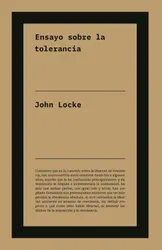
  1. Ensayo sobre la tolerancia : El Locke desconocido: la precuela de «Carta sobre la tolerancia» y 18 textos fundamentales.

    John Locke

  2. Second Treatise of Government :

    John Locke

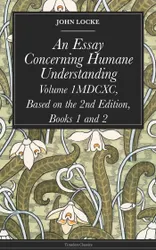
  3. An Essay Concerning Humane Understanding : Volume 1MDCXC, Based on the 2nd Edition, Books 1 and 2

    John Locke

  4. 50 citations de John Locke

    John Locke

  5. 1800 Citations de philosophes

    Aristote, Épicure, Platon, Thalès de Milet, – Socrate, Protagoras, Anaximandre, Épictète, Héraclite, Marc Aurèle, René Descartes, Michel de Montaigne, Alexis de Tocqueville, Voltaire, Charles De Montesquieu, Jean-Jacques Rousseau, Emmanuel Kant, Hannah Arendt, Gottfried Wilhelm Leibniz, Georg Wilhelm Friedrich Hegel, Friedrich Nietzsche, Arthur Schopenhauer, David Hume, John Locke, Francis Bacon, Thomas Hobbes, Thomas More, Confucius, Érasme, Lao Tseu, Baruch Spinoza, Søren Kierkegaard, Nicolas Machiavel, Thomas d'Aquin, Henry David Thoreau

  6. 250 citations de philosophes anglais

    David Hume, John Locke, Francis Bacon, Thomas Hobbes, Thomas More

  7. An Essay Concerning Human Understanding (Vol. 1) : Exploring Empiricism and the Philosophy of Mind by John Locke

    John Locke

  8. Muutamia mietteitä kasvatuksesta

    John Locke

  9. Of the Conduct of the Understanding

    John Locke

  10. The Empiricists. Сlassic collection. Illustrated : Concerning Human Understanding, Principles of Human Knowledge, Dialogues Concerning Natural Religio and others

    Francis Bacon, Thomas Hobbes, John Locke, George Berkeley, David Hume, John Stuart Mill

  11. 3.0

    Two Treatises of Government

    John Locke

  12. An Essay Concerning Human Understanding

    John Locke