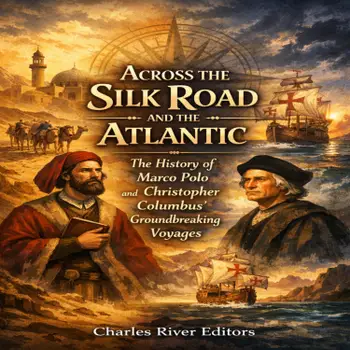

Marco Polo (1254-1324) is an instantly recognizable name, and he is known for his travels, but it’s safe to say that his influence and importance has been greatly overlooked in the 700 years since he died. Born in Venice, Marco Polo was in a fortuitous position to participate in the Mediterranean trade, but he was still a young man when he went on the journey that would make him famous and greatly inspire the Age of Exploration.
Marco Polo’s travels became a source for European cartographers of the era, and they became the impetus for men like Christopher Columbus, who added his own annotations to Marco Polo’s account and used it as a reference for his own legendary expedition in search of the Far East. Centuries later, historians have scoured over the account and what was written in an effort to validate its authenticity, leading to sharp debates today.
The most seminal event of the last millennium might also be its most controversial. As schoolchildren have been taught for over 500 years, “In 1492 Columbus sailed the ocean blue.” In October of that year, the Italian Christopher Columbus immortalized himself by landing in the New World and beginning the process of European settlement in the Americas for Spain, bringing the Age of Exploration to a new hemisphere with him. Ironically, the Italian had led a Spanish expedition, in part because the Portuguese rejected his offers in the belief that sailing west to Asia would take too long.
On the night of October 11, the expedition sighted land, and when Columbus came ashore the following day in the Bahamas, he thought he was in Japan, but the natives he came into contact with belied the descriptions of the people and lands of Asia as wealthy and resourceful. Instead, the bewildered Columbus would note in his journal that the natives painted their bodies, wore no clothes and had primitive weapons.