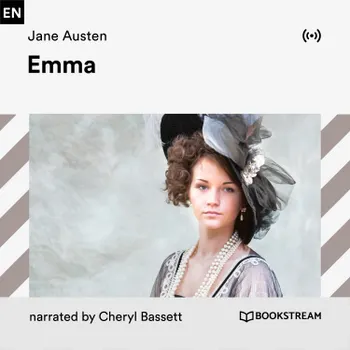
Emma

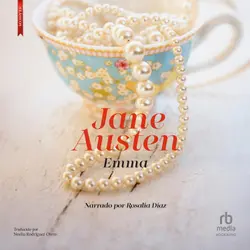
Emma, by Jane Austen, is a novel about youthful hubris and the perils of misconstrued romance. The story takes place in the fictional village of Highbury and the surrounding estates of Hartfield, Randalls, and Donwell Abbey and involves the relationships among individuals in those locations consisting of "3 or 4 families in a country village". The novel was first published in December 1815 while the author was alive, with its title page listing a publication date of 1816. As in her other novels, Austen explores the concerns and difficulties of genteel women living in Georgian–Regency England; she also creates a lively comedy of manners among her characters and depicts issues of marriage, gender, age, and social status.

Before she began the novel, Austen wrote, "I am going to take a heroine whom no one but myself will much like." In the first sentence, she introduces the title character as "Emma Woodhouse, handsome, clever, and rich." Emma is spoiled, headstrong, and self-satisfied; she greatly overestimates her own matchmaking abilities; she is blind to the dangers of meddling in other people's lives; and her imagination and perceptions often lead her astray.

Emma, written after Austen's move to Chawton, was the last novel to be completed and published during her life, as Persuasion, the last novel Austen wrote, was published posthumously.

This novel has been adapted for several films, many television programmes, and a long list of stage plays. It is also the inspiration for several novels.
Sobre este libro

Emma, by Jane Austen, is a novel about youthful hubris and the perils of misconstrued romance. The story takes place in the fictional village of Highbury and the surrounding estates of Hartfield, Randalls, and Donwell Abbey and involves the relationships among individuals in those locations consisting of "3 or 4 families in a country village". The novel was first published in December 1815 while the author was alive, with its title page listing a publication date of 1816. As in her other novels, Austen explores the concerns and difficulties of genteel women living in Georgian–Regency England; she also creates a lively comedy of manners among her characters and depicts issues of marriage, gender, age, and social status.

Before she began the novel, Austen wrote, "I am going to take a heroine whom no one but myself will much like." In the first sentence, she introduces the title character as "Emma Woodhouse, handsome, clever, and rich." Emma is spoiled, headstrong, and self-satisfied; she greatly overestimates her own matchmaking abilities; she is blind to the dangers of meddling in other people's lives; and her imagination and perceptions often lead her astray.

Emma, written after Austen's move to Chawton, was the last novel to be completed and published during her life, as Persuasion, the last novel Austen wrote, was published posthumously.

This novel has been adapted for several films, many television programmes, and a long list of stage plays. It is also the inspiration for several novels.
Empieza este libro hoy por 0 €

  • Disfruta de acceso completo a todos los libros de la app durante el periodo de prueba
  • Sin compromiso, cancela cuando quieras
Pruébalo gratis ahora
Más de 52 000 clientes han dado a Nextory 5 estrellas en la App Store y Google Play.

  1. 3.7

    La abadía de Northanger

    Jane Austen

  2. Nuevo

    100 Obras Maestras Que Debes Leer Antes De Morir

    Francis Scott Fitzgerald, Mary Shelley, Lyman Frank Baum, Edith Nesbit, Dante Alighieri, Jane Austen, Ambrose Bierce, Emily Brontë, Edgar Rice Burroughs, Lewis Carroll, Wilkie Collins, René Descartes, Charles Dickens, Emily Dickinson, Alexandre Dumas, Gustave Flaubert, Benito Pérez Galdós, Johann Wolfgang von Goethe, Thomas Hardy, E T A Hoffmann, Washington Irving, Henry James, James Joyce, Franz Kafka, Gaston Leroux, Federico García Lorca, H.P. Lovecraft, Publio Virgilio Marón, Lucy Maud Montgomery, John William Polidori, Marco Polo, Antoine de Saint-Exupéry, Emilio Salgari, Walter Scott, Mark Twain, Jules Verne, H.G. Wells, Edith Wharton, Mary Wollstonecraft, Fernando de Rojas

  3. 3.6

    Orgullo y prejuicio (Pride and Prejudice)

    Jane Austen

  4. 4.7

    Emma

    Jane Austen

  5. 4.0

    Sentido y sensibilidad

    Jane Austen

  6. 2.0

    50 Clásicos que Debes Leer Antes de Morir: Tu Pasaporte a los Tesoros de la Literatura Universal

    Dante Alighieri, Aristóteles, Jane Austen, Charles Baudelaire, Giovanni Boccaccio, Anne Brontë, C. Collodi, James Fenimore Cooper, Fedor Mikhaïlovitch Dostoïevski, Arthur Conan Doyle, Alexandre Dumas, José de Espronceda, Gustave Flaubert, Sigmund Freud, Benito Pérez Galdós, Kahlil Gibran, Johann Wolfgang Goethe, Johann Wolfgang von Goethe, Victor Hugo, Thomas Hardy, Nathaniel Hawthorne, Vicente Blasco Ibáñez, Washington Irving, James Joyce, Mariano José de Larra, Jack London, Federico García Lorca, H.P. Lovecraft, Antonio Machado, Gustav Meyrink, John Stuart Mill, Amado Nervo, Friedrich Nietzsche, Solomon Northup, Alexander Sergeyevich Pushkin, Francisco de Quevedo, Walter Scott, William Shakespeare, Robert Louis Stevenson, Harriet Beecher Stowe, Jonathan Swift, Mark Twain, Miguel De Unamuno, Ramón María del Valle-Inclán, Julio Verne, Virginia Woolf

  7. Sentido y sensibilidad

    Jane Austen

  8. 4.1

    Lady Susan

    Jane Austen

  9. 3.8

    Emma

    Jane Austen

  10. 3.8

    Emma

    Jane Austen

  11. 50 Clásicos que Debes Leer Antes de Morir : Un viaje literario por los tesoros de la literatura universal

    Dante Alighieri, Aristóteles, Jane Austen, Charles Baudelaire, Giovanni Boccaccio, Anne Brontë, C. Collodi, James Fenimore Cooper, Fedor Mikhaïlovitch Dostoïevski, Arthur Conan Doyle, Alexandre Dumas, José de Espronceda, Gustave Flaubert, Sigmund Freud, Benito Pérez Galdós, Kahlil Gibran, Johann Wolfgang Goethe, Johann Wolfgang von Goethe, Victor Hugo, Thomas Hardy, Nathaniel Hawthorne, Vicente Blasco Ibáñez, Washington Irving, James Joyce, Mariano José de Larra, Jack London, Federico García Lorca, H.P. Lovecraft, Antonio Machado, Gustav Meyrink, John Stuart Mill, Amado Nervo, Friedrich Nietzsche, Solomon Northup, Alexander Sergeyevich Pushkin, Francisco de Quevedo, Walter Scott, William Shakespeare, Robert Louis Stevenson, Harriet Beecher Stowe, Jonathan Swift, Mark Twain, Miguel De Unamuno, Ramón María del Valle-Inclán, Julio Verne, Virginia Woolf

  12. Jane Austen y Hermanas Brontë - Novelas Completas : Orgullo y Prejuicio, Sentido y Sensibilidad, Emma, Persuasión, Jane Eyre, Cumbres borrascosas, La inquilina de Wildfell Hall

    Jane Austen, Charlotte Brontë, Emily Brontë, Anne Brontë


Categorías relacionadas