Sobre este libro

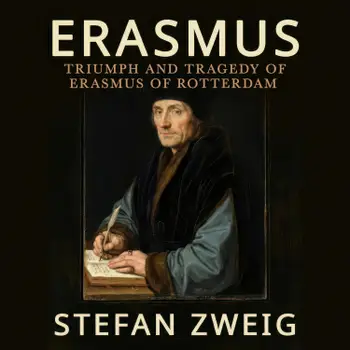
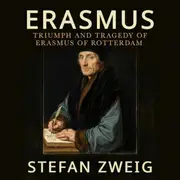
In 1517, Martin Luther shattered European unity with his Reformation. One man tried to stop the catastrophe: Desiderius Erasmus of Rotterdam, the most famous intellectual in Europe, who believed reform should come through reason, not revolution.

Erasmus had the mind of the age. His scholarship made him a bestselling author courted by popes and princes. His In Praise of Folly exposed Church corruptions with devastating wit. Yet when Luther's revolt ignited, Erasmus refused to choose sides. He couldn't support Luther's violent methods or defend Rome's abuses. He tried holding middle ground—and was destroyed by both sides.

Catholics called him coward. Protestants called him traitor. Both demanded: Are you with us or against us? Erasmus answered: "I love freedom, and I will not serve any party." He died in exile, his dream of European unity shattered.

Stefan Zweig wrote this in 1934, fleeing Nazi Austria. He called it his "most personal work," a "thinly veiled self-portrait." Like Erasmus, Zweig was a cosmopolitan intellectual watching civilization tear itself apart. Like Erasmus, he faced extremists demanding total commitment.

The result is both biography and meditation on impossible choices: What does the intellectual owe in times of fanaticism? Can reason survive when unreason rules? Does principle matter when powerless?

A profound exploration of humanism confronting violence, moderation in immoderate times, and the tragic cost of refusing to choose.

Empieza este libro hoy por 0 €

  • Disfruta de acceso completo a todos los libros de la app durante el periodo de prueba
  • Sin compromiso, cancela cuando quieras
Pruébalo gratis ahora
Más de 52 000 clientes han dado a Nextory 5 estrellas en la App Store y Google Play.

Más de Stefan Zweig

  1. 4.2

    Carta de una desconocida

    Stefan Zweig

  2. 5.0

    24 horas en la vida de una mujer

    Stefan Zweig

  3. 4.1

    Veinticuatro horas en la vida de una mujer

    Stefan Zweig

  4. 4.1

    La impaciencia del corazón

    Stefan Zweig

  5. 100 Clásicos de la Literatura Universal

    Francis Scott Fitzgerald, Mary Shelley, Lyman Frank Baum, Louisa May Alcott, Dante Alighieri, Jane Austen, Ambrose Bierce, Emily Brontë, Edgar Rice Burroughs, Lewis Carroll, Wilkie Collins, René Descartes, Charles Dickens, Emily Dickinson, Alexandre Dumas, Gustave Flaubert, Benito Pérez Galdós, Johann Wolfgang von Goethe, Thomas Hardy, E T A Hoffmann, Washington Irving, Henry James, James Joyce, Franz Kafka, Gaston Leroux, Federico García Lorca, H.P. Lovecraft, Publio Virgilio Marón, Lucy Maud Montgomery, John William Polidori, Marco Polo, Antoine de Saint-Exupéry, Emilio Salgari, Walter Scott, Mark Twain, Jules Verne, Julio Verne, H.G. Wells, Edith Wharton, Mary Wollstonecraft, Stefan Zweig, Sun Tzu, Bram Stoker, - Aristoteles, George Bernard Shaw, Henryk Sienkiewicz, Concepción Arenal, Charlotte Brontë, Miguel de Cervantes, G.K. Chesterton, Daniel Defoe, Fyodor Mikhailovich Dostoyevsky, Arthur Conan Doyle, Sigmund Freud, H. Rider Haggard, Homero, Immanuel Kant, Rudyard Kipling, Molière, Friedrich Nietzsche, Fernando de Rojas, Sófocles, William Makepeace Thackeray, León Tolstói, Voltaire, Ramón María del Valle-Inclán, Oscar Wilde, Virginia Woolf

  6. 4.8

    Novela de ajedrez

    Stefan Zweig

  7. 4.2

    Los ojos del hermano eterno

    Stefan Zweig

  8. 4.5

    El misterio de la creación artística

    Stefan Zweig

  9. 4.2

    Carta de una desconocida

    Stefan Zweig

  10. 4.3
    #33

    Mendel el de los libros

    Stefan Zweig

  11. 4.8
    #11

    Fouché, el genio tenebroso

    Stefan Zweig

  12. Stefan Zweig - Obras Completas : Novelas, Cuentos, Biografías, Ensayos autobiográficos, Relatos de viajes

    Stefan Zweig