Sobre este libro

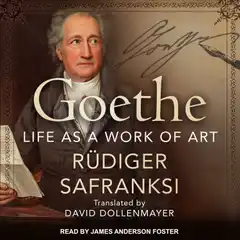
This sterling biography of Germany's greatest writer presents Johann Wolfgang von Goethe as if we are seeing him for the first time.

The work of Johann Wolfgang von Goethe has reverberated through two and a half centuries, altering the course of literature in ways both grand and intimate. No other writer so completely captivated the intellectual life of late eighteenth- and early nineteenth-century Europe, putting into language the anxieties and ambitions of a civilization on the cusp of modernity. A literary celebrity by the age of twenty-five, Goethe, who was born in Frankfurt in 1749, attracted the adulation and respect of the greatest scientists, politicians, composers, and philosophers of his day. Schoolboys dressed like his fictional characters. Napoleon read his first novel obsessively. He was an astoundingly prolific writer, a master of many genres, from poetry to scientific treatises, from novels like the tragic Sorrows of Young Werther to dramatic works like Faust. Indeed, Goethe's unparalleled literary output would come to define the Romantic age.

Rüdiger Safranski's Goethe: Life as a Work of Art is the first definitive biography in a generation to tell the larger-than-life story of the writer considered to be the Shakespeare of German literature. Drawing upon the trove of letters, diaries, and notebooks Goethe left behind, as well as correspondence and criticism from Goethe's contemporaries, Safranski weaves a rich tale of Europe in the throes of revolution and of the man whose ideas heralded a new era.

Safranski's monumental biography is a careful survey of Goethe's wide-ranging genius. Beyond his incredible literary gifts, Goethe was intensely interested in natural science and took seriously his official post as a statesman, working tirelessly to ensure that the working poor received wages and daily bread. With grace and nuance, Safranski crafts a portrait of Goethe's inner life that illuminates both his written work and the turmoil and triumphs of his era. Safranski shows that reading Goethe affords not simply an encounter with a literary virtuoso but an opportunity to develop a deeper appreciation of the human condition.

Goethe was writing in the midst of a dramatic and bloody time for Europe: the revolutions in France and America overturned the old regimes and introduced new ways of thinking about the world. Set against this backdrop, Goethe's life and work serve as an essential touchstone for the birth of the modern age. But as Safranski ultimately shows, Goethe's greatest creation was not only his literary masterpieces but his very life.

Empieza este libro hoy por 0 €

  • Disfruta de acceso completo a todos los libros de la app durante el periodo de prueba
  • Sin compromiso, cancela cuando quieras
Pruébalo gratis ahora
Más de 52 000 clientes han dado a Nextory 5 estrellas en la App Store y Google Play.

Los favoritos de otras personas

  1. Premio Nobel
    3.5

    Eros the Bittersweet : An Essay

    Anne Carson

  2. Nuevo
    2.0

    Sherlock en busca de Moby Dick

    Benito Taibo

  3. 4.0

    Vivir sin miedo

    Jesús Terrés

  4. Magia natural : Emily Dickinson, Charles Darwin y el amanecer de la ciencia moderna

    Renée Bergland

  5. 3.6

    El mejor libro del mundo

    Manuel Vilas

  6. 4.0

    El loro de Flaubert

    Julian Barnes

  7. 4.0

    El espíritu del tiempo

    Martí Domínguez

  8. 4.8

    Cuida de Ángela

    Ivart

  9. 3.7

    Castellano

    Lorenzo Silva

  10. 1.0

    100 Obras Maestras de la Literatura Universal

    Homero, Sófocles, Platón, Aristóteles, Apuleius, Seneca, San Agustín, Sun Tzu, Teresa de Jesús, Ignacio De Loyola, Nicolás Maquiavelo, Dante Alighieri, Giovanni Boccaccio, Miguel Cervantes, Hans Christian Andersen, Hermanos Grimm, William Shakespeare, John Milton, Tomás Moro, Jean-Jacques Rousseau, Immanuel Kant, Jonathan Swift, Daniel Defoe, Charles Dickens, William Makepeace Thackeray, Jane Austen, Charlotte Brontë, Emily Brontë, Robert Louis Stevenson, Oscar Wilde, Mary Shelley, Bram Stoker, Henry James, Arthur Conan Doyle, Wilkie Collins, Joseph Conrad, H. Rider Haggard, Edgar Rice Burroughs, H.G. Wells, Edgar Allan Poe, H.P. Lovecraft, Washington Irving, Harriet Beecher Stowe, Mark Twain, Herman Melville, Jack London, Nathaniel Hawthorne, Louisa May Alcott, J.M. Barrie, Lewis Carroll, L. Frank Baum, Voltaire, Victor Hugo, Honoré de Balzac, Gustave Flaubert, Alejandro Dumas, Alejandro Dumas hijo, Julio Verne, Emilio Salgari, Johann Wolfgang Goethe, Friedrich Schiller, Friedrich Nietzsche, Franz Kafka, Sigmund Freud, Nikolái Gógol, Fiódor Dostoyevski, León Tolstoi, Antón Chéjov, Mijaíl Bakunin, Virginia Woolf, Fernando de Rojas, Lope de Vega, Tirso de Molina, Francisco de Quevedo, Pedro Calderón Barca, Baltasar Gracián, José Zorrilla, Vicente Blasco Ibáñez, Juan Valera, Leopoldo Alas, Benito Pérez Galdós, Miguel De Unamuno, Emilia Pardo Bazán, Duque de Rivas, José Martí, Antonio Machado, Ramón María Valle-Inclán, Jorge Isaacs, Horacio Quiroga, Federico García Lorca, Gustavo Adolfo Bécquer, Rubén Darío, Charles Baudelaire, Henrik Ibsen, Gibrán Jalil Gibrán, José Rizal

  11. 3.3

    Nosferatu

    Diego Olmos

  12. 4.8

    Vida, obra y martirio de Federico García Lorca

    Ian Gibson, Quique Palomo