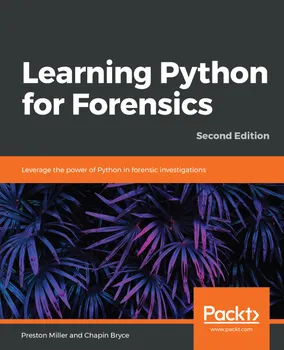
Learning Python for Forensics : Leverage the power of Python in forensic investigations, 2nd Edition

Design, develop, and deploy innovative forensic solutions using Python

Key Features

Discover how to develop Python scripts for effective digital forensic analysis

Master the skills of parsing complex data structures with Python libraries

Solve forensic challenges through the development of practical Python scripts

Book Description

Digital forensics plays an integral role in solving complex cybercrimes and helping organizations make sense of cybersecurity incidents. This second edition of Learning Python for Forensics illustrates how Python can be used to support these digital investigations and permits the examiner to automate the parsing of forensic artifacts to spend more time examining actionable data.

The second edition of Learning Python for Forensics will illustrate how to develop Python scripts using an iterative design. Further, it demonstrates how to leverage the various built-in and community-sourced forensics scripts and libraries available for Python today. This book will help strengthen your analysis skills and efficiency as you creatively solve real-world problems through instruction-based tutorials.

By the end of this book, you will build a collection of Python scripts capable of investigating an array of forensic artifacts and master the skills of extracting metadata and parsing complex data structures into actionable reports. Most importantly, you will have developed a foundation upon which to build as you continue to learn Python and enhance your efficacy as an investigator.

What you will learn

Learn how to develop Python scripts to solve complex forensic problems

Build scripts using an iterative design

Design code to accommodate present and future hurdles

Leverage built-in and community-sourced libraries

Understand the best practices in forensic programming

Learn how to transform raw data into customized reports and visualizations

Create forensic frameworks to automate analysis of multiple forensic artifacts

Conduct effective and efficient investigations through programmatic processing

Who this book is for

If you are a forensics student, hobbyist, or professional seeking to increase your understanding in forensics through the use of a programming language, then Learning Python for Forensics is for you. You are not required to have previous experience in programming to learn and master the content within this book. This material, created by forensic professionals, was written with a unique perspective and understanding for examiners who wish to learn programming.
Sobre este libro

Design, develop, and deploy innovative forensic solutions using Python

Key Features

Discover how to develop Python scripts for effective digital forensic analysis

Master the skills of parsing complex data structures with Python libraries

Solve forensic challenges through the development of practical Python scripts

Book Description

Digital forensics plays an integral role in solving complex cybercrimes and helping organizations make sense of cybersecurity incidents. This second edition of Learning Python for Forensics illustrates how Python can be used to support these digital investigations and permits the examiner to automate the parsing of forensic artifacts to spend more time examining actionable data.

The second edition of Learning Python for Forensics will illustrate how to develop Python scripts using an iterative design. Further, it demonstrates how to leverage the various built-in and community-sourced forensics scripts and libraries available for Python today. This book will help strengthen your analysis skills and efficiency as you creatively solve real-world problems through instruction-based tutorials.

By the end of this book, you will build a collection of Python scripts capable of investigating an array of forensic artifacts and master the skills of extracting metadata and parsing complex data structures into actionable reports. Most importantly, you will have developed a foundation upon which to build as you continue to learn Python and enhance your efficacy as an investigator.

What you will learn

Learn how to develop Python scripts to solve complex forensic problems

Build scripts using an iterative design

Design code to accommodate present and future hurdles

Leverage built-in and community-sourced libraries

Understand the best practices in forensic programming

Learn how to transform raw data into customized reports and visualizations

Create forensic frameworks to automate analysis of multiple forensic artifacts

Conduct effective and efficient investigations through programmatic processing

Who this book is for

If you are a forensics student, hobbyist, or professional seeking to increase your understanding in forensics through the use of a programming language, then Learning Python for Forensics is for you. You are not required to have previous experience in programming to learn and master the content within this book. This material, created by forensic professionals, was written with a unique perspective and understanding for examiners who wish to learn programming.
Empieza este libro hoy por 0 €

  • Disfruta de acceso completo a todos los libros de la app durante el periodo de prueba
  • Sin compromiso, cancela cuando quieras
Pruébalo gratis ahora
Más de 52 000 clientes han dado a Nextory 5 estrellas en la App Store y Google Play.

Los favoritos de otras personas

Omitir la lista
  1. The FastAPI Handbook : Simplifying Web Development with Python

    Robert Johnson

  2. AWS for Solutions Architects : Design and scale secure AWS architectures with GenAI strategies and real-world patterns

    Saurabh Shrivastava, Neelanjali Srivastav, Dhiraj Thakur

  3. AWS Certified Advanced Networking – Specialty (ANS-C01) Certification Guide : A pragmatic guide to acing the AWS ANS-C01 exam

    Tim McConnaughy, Steve McNutt, Christopher Miles

  4. FastAPI Cookbook : Develop high-performance APIs and web applications with Python

    Giunio De Luca

  5. AWS Certified Developer Associate Certification and Beyond : A comprehensive guide to help you succeed in the AWS DVA-C02 certification exam

    Rajesh Daswani, Dorian Richard

  6. Mastering Python Networking : Your one stop solution to using Python for network automation, DevOps, and SDN

    Eric Chou

  7. Atlassian DevOps Toolchain Cookbook : Recipes for building, automating, and managing applications with Jira, Bitbucket Pipelines, and more

    Robert Wen, Alex Ortiz, Edward Gaile, Rodney Nissen

  8. Mastering Terraform : A practical guide to building and deploying infrastructure on AWS, Azure, and GCP

    Mark Tinderholt

  9. Mastering AWS Security : Strengthen your cloud environment using AWS security features coupled with proven strategies

    Laurent Mathieu

  10. AWS Certified Security – Specialty (SCS-C02) Exam Guide : Get all the guidance you need to pass the AWS (SCS-C02) exam on your first attempt

    Stuart Scott, Adam Book

  11. Learning Data Mining with Python : Use Python to manipulate data and build predictive models

    Robert Layton

  12. DevOps Adoption Strategies: Principles, Processes, Tools, and Trends : Embracing DevOps through effective culture, people, and processes

    Martyn Coupland