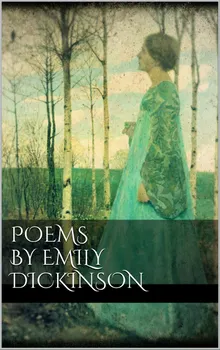
THE verses of Emily Dickinson belong emphatically to what Emerson long since called "the Poetry of the Portfolio,"-something produced absolutely without the thought of publication, and solely by way of expression of the writer's own mind. Such verse must inevitably forfeit whatever advantage lies in the discipline of public criticism and the enforced conformity to accepted ways. On the other hand, it may often gain something through the habit of freedom and the unconventional utterance of daring thoughts. In the case of the present author, there was absolutely no choice in the matter; she must write thus, or not at all. A recluse by temperament and habit, literally spending years without setting her foot beyond the doorstep, and many more years during which her walks were strictly limited to her father's grounds, she habitually concealed her mind, like her person, from all but a very few friends; and it was with great difficulty that she was persuaded to print, during her lifetime, three or four poems. Yet she wrote verses in great abundance; and though brought curiously indifferent to all conventional rules, had yet a rigorous literary standard of her own, and often altered a word many times to suit an ear which had its own tenacious fastidiousness.
Empieza hoy con este libro por 0 €
Disfruta de acceso completo a todos los libros de la app durante el periodo de prueba
La poetisa norteamericana Emily Dickinson nació en Amherst, Nueva Inglaterra, en 1830. Estudió en la Academia de Amherst y en el Seminario Femenino de Mount Holyoke, Massachusetts, donde se formó en un ambiente calvinista muy rígido, contra el que manifestó un obstinada rebeldía, pero que impregnó profundamente su extraña concepción de Universo.Emily Dickinson se aisló muy pronto del mundo y no admitió, a partir de entonces, entrar en contacto con nadie que no estuviera a la altura de sus conocimientos y de sus afectos, como lo estuvieron, por ejemplo, sus cuatro preceptores : Benjamin Franklin Newton, quien le hizo leer en edad muy temprana a Emerson, y luego el reverendo Charles Wadsworth, el escritor Samuel Bowles y el Juez Otis P. Lord, con quienes mantuvo una correspondencia abundante y asidua a la que hoy recurren todos aquellos que desean ahondar en la aventura espiritual de tan peculiar personalidad.