While the story is thematically similar to Candide by Voltaire, also published early in 1759 – both concern young men travelling in the company of honoured teachers, encountering and examining human suffering in an attempt to determine the root of happiness – their root concerns are distinctly different. Voltaire was very directly satirising the widely read philosophical work by Gottfried Leibniz, particularly the Theodicee, in which Leibniz asserts that the world, no matter how we may perceive it, is necessarily the "best of all possible worlds". In contrast the question Rasselas confronts most directly is whether or not humanity is essentially capable of attaining happiness. Writing as a devout Christian, Johnson makes through his characters no blanket attacks on the viability of a religious response to this question, as Voltaire does, and while the story is in places light and humorous, it is not a piece of satire, as is Candide.

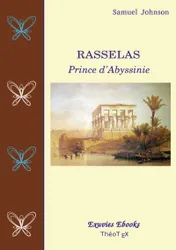
Rasselas : Prince of Abyssinia
Empieza hoy con este libro por 0 €
- Disfruta de acceso completo a todos los libros de la app durante el periodo de prueba
- Sin compromiso, cancela cuando quieras
Autor/a:
Idioma:
Inglés
Formato:

Prefacio a Shakespeare

A Grammar of the English Tongue

El Príncipe de Abisinia : novela

A Journey to the Western Islands of Scotland & Journal of a Tour to the Hebrides with Samuel Johnson

A Journey to the Western Islands of Scotland

Prefacio a Shakespeare

The Works of Samuel Johnson: Parlimentary Debates I : Enriched edition. A Literary Insight into 18th-Century Parliamentary Discourse

The Works of Samuel Johnson: Parlimentary Debates II : Enriched edition. The Art of Political Discourse in 18th-Century Britain

The Works of Samuel Johnson: Reviews, Political Tracts, and Lives of Eminent Persons : Enriched edition. Insightful Commentary and Historical Context

Rasselas, Prince d'Abyssinie

Poetical Works of Johnson, Parnell, Gray, and Smollett : With Memoirs, Critical Dissertations, and Explanatory Notes

Preface to Shakespeare : Enriched edition.