Sobre este libro

Étude sur les notions de beau et de sublime.

Edmund Burke nous emmène dans un méthodique examen, d'une ambition originale, qui s'attache à osciller entre beau et sublime. Sur nos appréciations et notre goût, l'auteur cherche à révéler, par une forme de psychophysiologie avant l'heure, notre rapport aux objets, à la beauté, à la nature, à l'art.

Plongez-vous dans la lecture de l'un des premiers traités d'esthétique.

EXTRAIT

Il n’y a personne, je crois, qui trouve une oie plus belle qu’un cygne, ou qui donne à ce qu’on appelle la poule d’Inde la préférence sur le paon.

À PROPOS DE L'AUTEUR

Dublin, 12 janvier 1729 – Beaconsfield, 9 juillet 1797

Edmund Burke était un homme politique et philosophe irlandais. Il est l’auteur d’ouvrages de philosophie portant sur l’esthétique et le fondateur de la revue politique Annual Register.


Empieza este libro hoy por 0 €

  • Disfruta de acceso completo a todos los libros de la app durante el periodo de prueba
  • Sin compromiso, cancela cuando quieras
Pruébalo gratis ahora
Más de 52 000 clientes han dado a Nextory 5 estrellas en la App Store y Google Play.

  1. Nuevo

    Harvard Classics : The Five-Foot Shelf of Books

    Aesop, Dante Alighieri, Hans Christian Andersen, Augustine of Hippo, Marcus Aurelius, Jane Austen, Francis Bacon, Honoré de Balzac, Francis Beaumont, Bjørnstjerne Bjørnson, Thomas Browne, Robert Browning, John Bunyan, EDMUND BURKE, Robert Burns, Lord Byron, Thomas Carlyle, Benvenuto Cellini, Miguel de Cervantes, Marcus Tullius Cicero, Richard Henry Jr., Charles Darwin, Alphonse Daudet, Thomas Dekker, Charles Dickens, Fyodor Dostoevsky, John Dryden, Charles W. Eliot, George Eliot, Ralph Waldo Emerson, Epictetus, John Fletcher, Theodor Fontane, Benjamin Franklin, Johann Wolfgang Goethe, Oliver Goldsmith, Jacob Grimm, Edward Everett Hale, Bret Harte, Nathaniel Hawthorne, Homer, Victor Hugo, Washington Irving, Henry James, Ben Jonson, Gottfried Keller, Thomas à Kempis, Alexander L. Kielland, Martin Luther, Niccolò Machiavelli, Alessandro Manzoni, Christopher Marlowe, Philip Massinger, Guy De Maupassant, John Stuart Mill, John Milton, Thomas More, William Morris, Alfred de Musset, William Allan Neilson, William Penn, Plato, Pliny the Younger, Plutarch, George Sand, Percy Bysshe Shelley, Richard Brinsley Sheridan, Adam Smith, Laurence Sterne, Theodor Storm, William Makepeace Thackeray, Leo Tolstoy, Ivan Turgenev, Mark Twain, Juan Valera, Virgil, Izaak Walton, John Webster, John Woolman

  2. Indagación filosófica sobre el origen de nuestras ideas acerca de lo sublime y de lo bello

    EDMUND BURKE

  3. Reflexiones sobre la Revolución francesa

    EDMUND BURKE

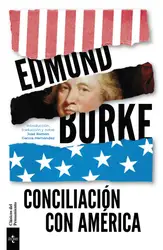
  4. 1 oct

    Conciliación con América

    EDMUND BURKE

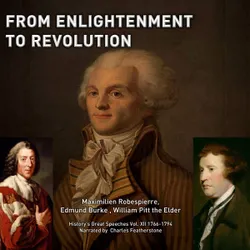
  5. #12

    From Enlightenment To Revolution : Pitt, Burke & Robespierre, 1766-1794

    Maximillian Robespierre, EDMUND BURKE, William Pitt

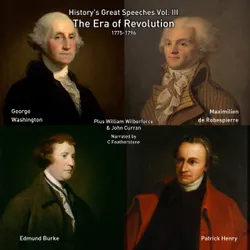
  6. #3

    The Era of Revolution : 1775-1796

    George Washington, Maximilien de Robespierre, EDMUND BURKE, Patrick Henry, William Wilberforce, John Curran

  7. Reflections on the Revolution in France (Annotated) : Enriched Edition. A Classic Critique of Revolutionary Politics, Enlightenment Rationalism, and the Origins of Conservatism

    EDMUND BURKE

  8. On the Sublime and Beautiful (Annotated) : Enriched Edition. An Enlightenment Treatise on Terror, Pleasure, Taste, and the Origins of Modern Aesthetics

    EDMUND BURKE

  9. Reflektioner om franska revolutionen

    EDMUND BURKE

  10. On Conciliation with America

    EDMUND BURKE

  11. Thoughts on the Present Discontents, and Speeches : Enriched edition.

    EDMUND BURKE

  12. Reflections on the Revolution in France : Enriched edition. A Conservative Critique of the French Revolution, Enlightenment Ideals, and Radical Social Upheaval

    EDMUND BURKE