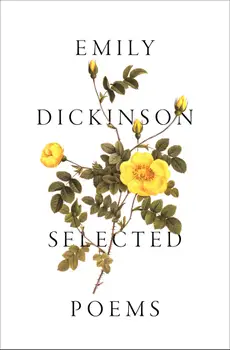
A collection of poems by "one of America's greatest and most original poets of all time" (Poetry Foundation).
One of the nineteenth century's leading poets, Emily Dickinson wrote nearly 1,800 poems during her lifetime, though only a handful were published. This collection includes some of Dickinson's best-known works, reflecting her thoughts on nature, life, death, the mind, and the spirit.
"Emily Dickinson is one of our most original writers, a force destined to endure in American letters. . . . Without elaborate philosophy, yet with irresistible ways of expression, Emily Dickinson's poems have true lyric appeal, because they make abstractions, such as love, hope, loneliness, death, and immortality, seem near and intimate and faithful." —The Atlantic
"Emily Dickinson did not leave any poetics or treatise to explain her life's work, so we can come to her poetry with minds and hearts open, and unearth whatever it is we need to find. Her oeuvre is a large one and most of her work was done in secret—she didn't share most of what she wrote. Ten or so poems were published in her lifetime, mostly without her consent. She often included poems with letters but, after her death, the poet's sister Vinnie was surprised to find almost eighteen hundred individual poems in Dickinson's bedroom, some of them bound into booklets by the poet." —Publishers Weekly
"Dickinson found love, spiritual quickening and immortality, all on her own terms." —The Guardian
A collection of poems by "one of America's greatest and most original poets of all time" (Poetry Foundation).
One of the nineteenth century's leading poets, Emily Dickinson wrote nearly 1,800 poems during her lifetime, though only a handful were published. This collection includes some of Dickinson's best-known works, reflecting her thoughts on nature, life, death, the mind, and the spirit.
"Emily Dickinson is one of our most original writers, a force destined to endure in American letters. . . . Without elaborate philosophy, yet with irresistible ways of expression, Emily Dickinson's poems have true lyric appeal, because they make abstractions, such as love, hope, loneliness, death, and immortality, seem near and intimate and faithful." —The Atlantic
"Emily Dickinson did not leave any poetics or treatise to explain her life's work, so we can come to her poetry with minds and hearts open, and unearth whatever it is we need to find. Her oeuvre is a large one and most of her work was done in secret—she didn't share most of what she wrote. Ten or so poems were published in her lifetime, mostly without her consent. She often included poems with letters but, after her death, the poet's sister Vinnie was surprised to find almost eighteen hundred individual poems in Dickinson's bedroom, some of them bound into booklets by the poet." —Publishers Weekly
"Dickinson found love, spiritual quickening and immortality, all on her own terms." —The Guardian
Empieza hoy con este libro por 0 €
Disfruta de acceso completo a todos los libros de la app durante el periodo de prueba
La poetisa norteamericana Emily Dickinson nació en Amherst, Nueva Inglaterra, en 1830. Estudió en la Academia de Amherst y en el Seminario Femenino de Mount Holyoke, Massachusetts, donde se formó en un ambiente calvinista muy rígido, contra el que manifestó un obstinada rebeldía, pero que impregnó profundamente su extraña concepción de Universo.Emily Dickinson se aisló muy pronto del mundo y no admitió, a partir de entonces, entrar en contacto con nadie que no estuviera a la altura de sus conocimientos y de sus afectos, como lo estuvieron, por ejemplo, sus cuatro preceptores : Benjamin Franklin Newton, quien le hizo leer en edad muy temprana a Emerson, y luego el reverendo Charles Wadsworth, el escritor Samuel Bowles y el Juez Otis P. Lord, con quienes mantuvo una correspondencia abundante y asidua a la que hoy recurren todos aquellos que desean ahondar en la aventura espiritual de tan peculiar personalidad.