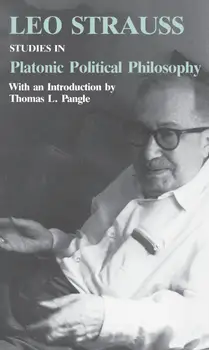
Studies in Platonic Political Philosophy

The award–winning philosopher explores the conflict between philosophy and political society through a series of essays.

One of the outstanding thinkers of our time offers in this book his final words to posterity. Studies in Platonic Political Philosophy was well underway at the time of Leo Strauss's death in 1973. Having chosen the title for the book, he selected the most important writings of his later years and arranged them to clarify the issues in political philosophy that occupied his attention throughout his life.

As his choice of title indicates, the heart of Strauss's work is Platonism—a Platonism that is altogether unorthodox and highly controversial. These essays consider, among others, Heidegger, Husserl, Nietzsche, Marx, Moses Maimonides, Machiavelli, and of course Plato himself to test the Platonic understanding of the conflict between philosophy and political society. Strauss argues that an awesome spiritual impoverishment has engulfed modernity because of our dimming awareness of that conflict.

Thomas Pangle's Introduction places the work within the context of the entire Straussian corpus and focuses especially on Strauss's late Socratic writings as a key to his mature thought. For those already familiar with Strauss, Pangle's essay will provoke thought and debate; for beginning readers of Strauss, it provides a fine introduction. A complete bibliography of Strauss's writings is included.


Sobre este libro

The award–winning philosopher explores the conflict between philosophy and political society through a series of essays.

One of the outstanding thinkers of our time offers in this book his final words to posterity. Studies in Platonic Political Philosophy was well underway at the time of Leo Strauss's death in 1973. Having chosen the title for the book, he selected the most important writings of his later years and arranged them to clarify the issues in political philosophy that occupied his attention throughout his life.

As his choice of title indicates, the heart of Strauss's work is Platonism—a Platonism that is altogether unorthodox and highly controversial. These essays consider, among others, Heidegger, Husserl, Nietzsche, Marx, Moses Maimonides, Machiavelli, and of course Plato himself to test the Platonic understanding of the conflict between philosophy and political society. Strauss argues that an awesome spiritual impoverishment has engulfed modernity because of our dimming awareness of that conflict.

Thomas Pangle's Introduction places the work within the context of the entire Straussian corpus and focuses especially on Strauss's late Socratic writings as a key to his mature thought. For those already familiar with Strauss, Pangle's essay will provoke thought and debate; for beginning readers of Strauss, it provides a fine introduction. A complete bibliography of Strauss's writings is included.
Empieza este libro hoy por 0 €

  • Disfruta de acceso completo a todos los libros de la app durante el periodo de prueba
  • Sin compromiso, cancela cuando quieras
Pruébalo gratis ahora
Más de 52 000 clientes han dado a Nextory 5 estrellas en la App Store y Google Play.