4.5(2)

Thaïs

Thaïs is a novel by French Nobel laureate Anatole France published in 1890.

It is based on events in the life of Saint Thaïs of Egypt, a legendary convert to Christianity who is said to have lived in the 4th century. It was the inspiration for the opera of the same name by Jules Massenet.

The fourth century ascetic Paphnuce, journeys from his remote desert hermitage to urban Alexandria determined to locate the stunningly beautiful and libertine actress, Thais. He earnestly desires that she convert to Christianity.

Gaining an audience by deception, the hermit passionately speaks to the actress of eternity. Remarkably, Thaïs repents and retires to a convent for the rest of her days.

The hermit however, cannot rid his mind of her charms, not even with the help of the most severe austerities. After years of anguish the monk learns of Thaïs’ immanent demise and hastens to her side. There he confesses the unspeakable.

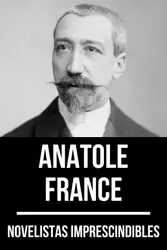
Anatole France, (1844-1924), was a French poet, journalist, and novelist. He was born in Paris, and died in Saint-Cyr-sur-Loire. He was a successful novelist, with several best-sellers. Ironic and skeptical, he was considered in his day the ideal French man of letters.

He was a member of the Académie française, and won the 1921 Nobel Prize for Literature "in recognition of his brilliant literary achievements, characterized as they are by a nobility of style, a profound human sympathy, grace, and a true Gallic temperament".

Sobre este libro

Thaïs is a novel by French Nobel laureate Anatole France published in 1890.

It is based on events in the life of Saint Thaïs of Egypt, a legendary convert to Christianity who is said to have lived in the 4th century. It was the inspiration for the opera of the same name by Jules Massenet.

The fourth century ascetic Paphnuce, journeys from his remote desert hermitage to urban Alexandria determined to locate the stunningly beautiful and libertine actress, Thais. He earnestly desires that she convert to Christianity.

Gaining an audience by deception, the hermit passionately speaks to the actress of eternity. Remarkably, Thaïs repents and retires to a convent for the rest of her days.

The hermit however, cannot rid his mind of her charms, not even with the help of the most severe austerities. After years of anguish the monk learns of Thaïs’ immanent demise and hastens to her side. There he confesses the unspeakable.

Anatole France, (1844-1924), was a French poet, journalist, and novelist. He was born in Paris, and died in Saint-Cyr-sur-Loire. He was a successful novelist, with several best-sellers. Ironic and skeptical, he was considered in his day the ideal French man of letters.

He was a member of the Académie française, and won the 1921 Nobel Prize for Literature "in recognition of his brilliant literary achievements, characterized as they are by a nobility of style, a profound human sympathy, grace, and a true Gallic temperament".

Empieza este libro hoy por 0 €

  • Disfruta de acceso completo a todos los libros de la app durante el periodo de prueba
  • Sin compromiso, cancela cuando quieras
Pruébalo gratis ahora
Más de 52 000 clientes han dado a Nextory 5 estrellas en la App Store y Google Play.

  1. Thaïs. La Cortesana de Alejandría :

    Anatole France

  2. The Light Has Been Broken: 560+ Macabre Classics, Supernatural Mysteries & Dark Tales : The Mark of the Beast, The Ghost Pirates, The Vampyre, Sweeney Todd, The Sleepy Hollow…

    Wilhelm Hauff, Charles Dickens, Mark Twain, Harriet Beecher Stowe, Adelbert von Chamisso, Oscar Wilde, Robert Louis Stevenson, Edgar Allan Poe, William Hope Hodgson, Joseph Sheridan Le Fanu, John Buchan, Louis Tracy, Bram Stoker, Anatole France, Charlotte Brontë, Emily Brontë, Jack London, Henry James, Théophile Gautier, Arthur Conan Doyle, Richard Le Gallienne, Jane Austen, Ralph Adams Cram, Thomas De Quincey, John Meade Falkner, Guy De Maupassant, Thomas Hardy, William Archer, Daniel Defoe, John Kendrick Bangs, Cleveland Moffett, Brander Matthews, Marie Belloc Lowndes, Horace Walpole, Rudyard Kipling, Lafcadio Hearn, Hugh Walpole, Ambrose Bierce, Frederick Marryat, Ellis Parker Butler, Washington Irving, Leonid Andreyev, David Lindsay, Nathaniel Hawthorne, Grant Allen, Arthur Machen, Wilkie Collins, William Makepeace Thackeray, Thomas Peckett Prest, James Malcolm Rymer, Fergus Hume, Edward Bellamy, Walter Hubbell, Charlotte Perkins Gilman, Leopold Kompert, Richard Marsh, Florence Marryat, Catherine Crowe, John William Polidori, Vincent O'Sullivan, H.G. Wells, Robert W. Chambers, W. Jacobs, M.P. Shiel, E F Benson, Jerome K Jerome, M. R. James, E T A Hoffmann, Stanley G. Weinbaum, George W. M. Reynolds, H.P. Lovecraft, Robert E. Howard, Edith Nesbit, Sabine Baring-Gould, William Thomas Beckford, Francis Marion Crawford, Lucy Maud Montgomery, Mary Elizabeth Braddon, Mary Louisa Molesworth, Mary E. Wilkins Freeman, Nikolai Gogol, Mary Shelley, Elizabeth Gaskell, Edward Bulwer-Lytton, Frank R. Stockton, A. T. Quiller-Couch, Ann Radcliffe, Louisa M. Alcott, Amelia B. Edwards, Leonard Kip, Matthew Gregory Lewis, Fitz-James O’Brien, Katherine Rickford, Bithia Mary Croker, Catherine L. Pirkis, Émile Erckmann, Alexandre Chatrian, Pedro De Alarçon, H. Munro (Saki), Pliny the Younger, Helena Blavatsky, Villiers de l'Isle-Adam, William F. Harvey, Fiona Macleod, William T. Stead, Gambier Bolton, Andrew Jackson Davis, Nizida, Walter F. Prince, Chester Bailey Fernando

  3. Premio Nobel

    Penguin Island

    Anatole France

  4. 12 nov
    1.0

    Penguin Island

    Anatole France

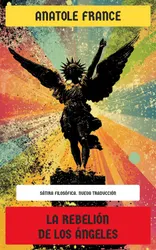
  5. La rebelión de los ángeles : Sátira filosófica

    Anatole France

  6. The Mass of Shadows :

    Anatole France

  7. El Crimen de Silvestre Bonnard :

    Anatole France

  8. La Rebelión de Los Ángeles :

    Anatole France

  9. La Humana Tragedia :

    Anatole France

  10. Los Dioses Tienen Sed :

    Anatole France

  11. Premio Nobel

    La Isla de Los Pingüinos :

    Anatole France

  12. Le livre de mon ami

    Anatole France