Sobre este libro

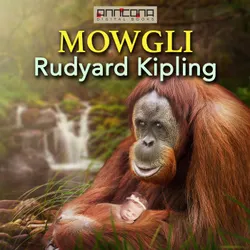
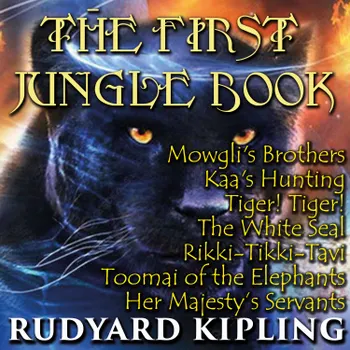
The First Jungle Book (1894) is a collection of stories by the English author Rudyard Kipling. Most of the characters are animals such as Shere Khan the tiger and Baloo the bear, though a principal character is the boy or "man-cub" Mowgli, who is raised in the jungle by wolves. The stories are set in a forest in India; one place mentioned repeatedly is "Seonee" (Seoni), in the central state of Madhya Pradesh.

A major theme in the book is abandonment followed by fostering, as in the life of Mowgli, echoing Kipling's own childhood. The theme is echoed in the triumph of protagonists including Rikki-Tikki-Tavi and The White Seal over their enemies, as well as Mowgli's. Another important theme is of law and freedom; the stories are not about animal behaviour, still less about the Darwinian struggle for survival, but about human archetypes in animal form. They teach respect for authority, obedience, and knowing one's place in society with "the law of the jungle", but the stories also illustrate the freedom to move between different worlds, such as when Mowgli moves between the jungle and the village. Critics have also noted the essential wildness and lawless energies in the stories, reflecting the irresponsible side of human nature.

The Jungle Book has remained popular, partly through its many adaptations for film and other media.

Contents:

Mowgli's Brothers

Kaa's Hunting

Tiger! Tiger!

The White Seal

Rikki-Tikki-Tavi

Toomai of the Elephants

Her Majesty's Servants
Empieza este libro hoy por 0 €

  • Disfruta de acceso completo a todos los libros de la app durante el periodo de prueba
  • Sin compromiso, cancela cuando quieras
Pruébalo gratis ahora
Más de 52 000 clientes han dado a Nextory 5 estrellas en la App Store y Google Play.

Libros similares

  1. Premio Nobel
    4.0
    #39

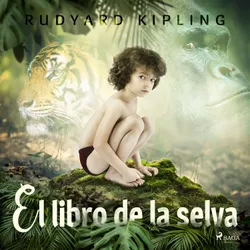
    El libro de la selva

    Rudyard Kipling

  2. Premio Nobel
    4.0

    Kim

    Rudyard Kipling

  3. 100 Clásicos de la Literatura Universal

    Francis Scott Fitzgerald, Mary Shelley, Lyman Frank Baum, Louisa May Alcott, Dante Alighieri, Jane Austen, Ambrose Bierce, Emily Brontë, Edgar Rice Burroughs, Lewis Carroll, Wilkie Collins, René Descartes, Charles Dickens, Emily Dickinson, Alexandre Dumas, Gustave Flaubert, Benito Pérez Galdós, Johann Wolfgang von Goethe, Thomas Hardy, E T A Hoffmann, Washington Irving, Henry James, James Joyce, Franz Kafka, Gaston Leroux, Federico García Lorca, H.P. Lovecraft, Publio Virgilio Marón, Lucy Maud Montgomery, John William Polidori, Marco Polo, Antoine de Saint-Exupéry, Emilio Salgari, Walter Scott, Mark Twain, Jules Verne, Julio Verne, H.G. Wells, Edith Wharton, Mary Wollstonecraft, Stefan Zweig, Sun Tzu, Bram Stoker, - Aristoteles, George Bernard Shaw, Henryk Sienkiewicz, Concepción Arenal, Charlotte Brontë, Miguel de Cervantes, G.K. Chesterton, Daniel Defoe, Fyodor Mikhailovich Dostoyevsky, Arthur Conan Doyle, Sigmund Freud, H. Rider Haggard, Homero, Immanuel Kant, Rudyard Kipling, Molière, Friedrich Nietzsche, Fernando de Rojas, Sófocles, William Makepeace Thackeray, León Tolstói, Voltaire, Ramón María del Valle-Inclán, Oscar Wilde, Virginia Woolf

  4. Premio Nobel
    3.5

    El Cuento Más Hermoso del Mundo

    Rudyard Kipling

  5. #3

    12 Cuentos Cortos Clásicos Vol. III

    Edgar Allan Poe, Rudyard Kipling, Washington Irving, H.P. Lovecraft, Bram Stoker, F. Scott Fitzgerald, Oscar Wilde, Tomás Carrasquilla, León Tolstói, Antón Chejov

  6. The Phantom Rickshaw and Other Ghost Stories

    Rudyard Kipling

  7. 3.0

    Capitanes intrépidos

    Rudyard Kipling

  8. La mirada del perro : Curiosidades, ciencia e historia del mejor amigo del hombre

    David G. Jara, Rudyard Kipling

  9. 4.0

    The Vampyre : And Other Short Gothic Tales

    John Polidori, Arthur Conan Doyle, Ambrose Bierce, Barry Pain, Bram Stoker, M. R. James, Richard Middleton, Rudyard Kipling, Saki, W. F. Harvey, Wilkie Collins

  10. The Cat That Walked By Himself :

    Rudyard Kipling

  11. El gato que andaba solo : (Español latino)

    Rudyard Kipling

  12. El libro de las tierras vírgenes

    Rudyard Kipling