4.0(2)

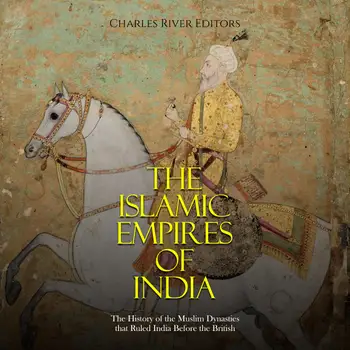
The Islamic Empires of India: The History of the Muslim Dynasties that Ruled India Before the British

India has been the location of many different empires throughout its long history. The Indus Valley Civilization was home to one of the world’s first civilizations more than 5,000 years ago, and despite India’s tradition of cultural and political pluralism, several rulers attempted to place the entire Sub-Continent under the rule of one dynasty or government with a dominant religion. Most of these would-be rulers were far from successful, although a few came close, setting the template for later conquerors.

The religion of Islam had entered India centuries earlier through merchants and missionaries, but, in the 10th century, warrior bands of Muslims began establishing themselves permanently in what is today Pakistan. From their permanent strongholds, these Muslim warriors of Turkish descent raided northern India, eventually capturing the city of Delhi and establishing what would become the Delhi Sultanate.

The Delhi Sultanate was comprised of five dynasties that expanded their borders, and Islam, at sword point, but also through diplomacy and trade. The Delhi Sultanate became known as a state that welcomed the expertise of foreigners, no matter their religion, and promoted the welfare of its citizens through a host of social programs. Eventually, the Delhi Sultanate grafted ideas and inspiration from India’s pre-Islamic past with those of Islam to create a state that was quite unique and powerful.

The Mughals, a group with Turkish and Mongolian roots, used gunpowder weapons to sweep into northern India, topple the existing Islamic dynasty in Delhi, and eventually subject most of India to their rule. The term “gunpowder empire” was originally coined by Russian scholar V. V. Bartold and popularized by American historians William McNeil and Marshall Hodgson in the mid-20th century to describe the Islamic Ottoman, Safavid, and Mughal empires, which they claimed came to power through gunpowder.

Empieza hoy con este libro por 0 €

  • Disfruta de acceso completo a todos los libros de la app durante el periodo de prueba
  • Sin compromiso, cancela cuando quieras
Pruébalo gratis ahora
Más de 52 000 clientes han dado a Nextory 5 estrellas en la App Store y Google Play.

  1. Nuevo
    4.0

    The War of the Spanish Succession: The History of the Conflict Between the Bourbons and Habsburgs that Engulfed Europe

    Charles River Editors

  2. Nuevo

    Extraña Radio: Una colección de transmisiones de espionaje, estaciones no identificadas y otros misterios de las ondas radiales

    Charles River Editors

  3. Nuevo

    El robo nazi de arte: La historia de la confiscación y destrucción de obras de arte europeas por parte de Alemania durante la Segunda Guerra Mundial

    Charles River Editors

  4. Nuevo
    3.3

    The Mossad: The History and Legacy of Israel’s National Intelligence Agency

    Charles River Editors

  5. The Top 5 Most Famous Queens : Nefertiti, Cleopatra, Elizabeth I, Catherine the Great, and Queen Victoria

    Charles River Editors

  6. Nuevo

    Wyatt Earp and Bat Masterson: The Lives of the Wild West’s Most Famous Lawmen

    Charles River Editors

  7. Nuevo

    The Battle of Cannae and the Battle of Zama: The History and Legacy of the Second Punic War’s Most Important Battles

    Charles River Editors

  8. Nuevo
    4.3

    The Flavian Dynasty: The History of the Roman Empire during the Reigns of Vespasian, Titus, and Domitian

    Charles River Editors

  9. Nuevo

    The Armenian Empire: The History and Legacy of the Ancient Kingdom of Greater Armenia

    Charles River Editors

  10. Nuevo

    The Guelphs and Ghibellines: The History of the Rival Political Factions in Medieval Italy

    Charles River Editors

  11. Nuevo

    The Languages of the Ancient Near East: The History of the Languages and Scripts Developed across the Region in Antiquity

    Charles River Editors

  12. Nuevo

    Ulrich Zwingli: The Life and Legacy of the Swiss Reformer Who Fought the Catholic Church during the Reformation

    Charles River Editors