Sobre este libro

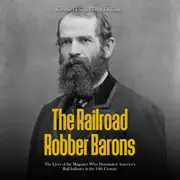
The Gilded Age and the dawn of the 20th century are often remembered as an era full of monopolies, trusts, and economic giants in heavy industries like oil and steel. Men like Andrew Carnegie built empires like Carnegie Steel, and financiers like J.P. Morgan merged and consolidated them. The era also made names like Astor, Cooke, and Vanderbilt instantly recognizable across the globe. Over time, the unfathomable wealth generated by the businesses made the individuals on top incredibly rich, and that in turn led to immense criticism and an infamous epithet used to rail against them: robber barons.

Dozens of men were called “robber barons”, and the industrial might wielded by some of these men in the late 19th century directly led to a public backlash and made President Teddy Roosevelt the “trust buster”, and there has since been countless regulations to attempt to avoid the types of monopolies found over 100 years ago. However, many 20th century historians and writers pushed back against the allegations hurled at the “robber barons” and even took issue with the name. Libertarian writer John Stossel argued, “They weren't robbers, because they didn't steal from anyone, and they weren't barons - they were born poor...” Ironically, one of America’s most famous robber barons, Andrew Carnegie, epitomized the American Dream, migrating with his poor family to America in the mid-19th century and rising to the top of the business world in his adopted country. And like Carnegie, railroad tycoon Cornelius Vanderbilt set a precedent of sorts with his philanthropy, most notably his gift to Vanderbilt University, which bears his name. Similarly, the West Coast's most famous railroad mogul became Leland Stanford, who also bequeathed a prestigious university after making it to the top of the industry.

Empieza este libro hoy por 0 €

  • Disfruta de acceso completo a todos los libros de la app durante el periodo de prueba
  • Sin compromiso, cancela cuando quieras
Pruébalo gratis ahora
Más de 52 000 clientes han dado a Nextory 5 estrellas en la App Store y Google Play.

Libros similares

  1. 4.0

    Los moros de Andalucía: la historia de los musulmanes en la Península Ibérica durante la Edad Media

    Charles River Editors

  2. 5.0

    The Sabines: The History and Legacy of the People Who Lived in Central Italy Before the Founding of Rome

    Charles River Editors

  3. Israel’s Most Legendary Operations: The History of the Jewish State’s Famous Intelligence Operations and Special Forces Raids

    Charles River Editors

  4. La Alhambra y el Alcázar de Sevilla: la historia de las famosas fortalezas construidas por los moros en España

    Charles River Editors

  5. La Guerra Civil española: La historia y el legado del controversial conflicto que estableció la dictadura de Francisco Franco en España

    Charles River Editors

  6. 4.0

    The Cumans and Magyars: The History and Legacy of the Steppe Nomads Who Raided Europe Throughout the Late Middle Ages

    Charles River Editors

  7. Los moros del Magreb: la historia de los musulmanes en el norte de África durante la Edad Media

    Charles River Editors

  8. La República de Génova: la historia de la ciudad italiana dominó el Mediterráneo durante toda la Edad Media

    Charles River Editors

  9. La Capilla Sixtina: Historia y legado de la capilla más famosa del mundo

    Charles River Editors

  10. The Spanish Empire in the Americas: The History of Spain’s Colonization across Central America and South America

    Charles River Editors

  11. El Muro de Berlín: La historia y el legado del muro más famoso del mundo

    Charles River Editors

  12. Ancient and Medieval Conspiracy Theories: The History of the World’s Most Persistent Conspiracy Theories

    Charles River Editors