Sobre este libro

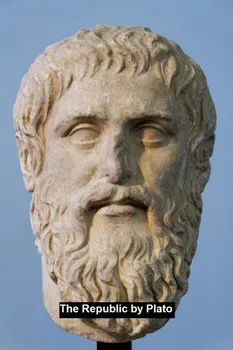
Plato's best-known dialogue. According to Wikipedia: "The Republic is a Socratic dialogue written by Plato around 380 BC concerning the definition of justice and the order and character of the just city-state and the just man. The dramatic date of the dialogue has been much debated and though it must take place some time during the Peloponnesian War, "there would be jarring anachronisms if any of the candidate specific dates between 432 and 404 were assigned".[2] It is Plato's best-known work and has proven to be one of the most intellectually and historically influential works of philosophy and political theory. In it, Socrates along with various Athenians and foreigners discuss the meaning of justice and examine whether or not the just man is happier than the unjust man by considering a series of different cities coming into existence "in speech", culminating in a city (Kallipolis) ruled by philosopher-kings; and by examining the nature of existing regimes. The participants also discuss the theory of forms, the immortality of the soul, and the roles of the philosopher and of poetry in society."
Empieza este libro hoy por 0 €

  • Disfruta de acceso completo a todos los libros de la app durante el periodo de prueba
  • Sin compromiso, cancela cuando quieras
Pruébalo gratis ahora
Más de 52 000 clientes han dado a Nextory 5 estrellas en la App Store y Google Play.

  1. Cratylus : On Names and Reality – Plato’s Inquiry into Language, Etymology, and the Nature of Truth

    Plato, Tim Zengerink

  2. Platón : Obras Completas

    Plato

  3. Obras Completas de Platón

    Plato

  4. Obras Completas de Platón

    Plato

  5. Plato Complete Works – World’s Best Collection : 100+ Works – All Works & Writings Incl. Republic, Symposium, Apology, Statesman, Crito, Platonism Plus Biography and Bonuses

    Walter Horatio Pater, Plato, Thomas Taylor

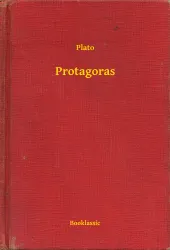
  6. Protagoras

    Plato

  7. The Collected Works of Plato : PergamonMedia

    Plato

  8. Nuevo

    Harvard Classics : The Five-Foot Shelf of Books

    Aesop, Dante Alighieri, Hans Christian Andersen, Augustine of Hippo, Marcus Aurelius, Jane Austen, Francis Bacon, Honoré de Balzac, Francis Beaumont, Bjørnstjerne Bjørnson, Thomas Browne, Robert Browning, John Bunyan, EDMUND BURKE, Robert Burns, Lord Byron, Thomas Carlyle, Benvenuto Cellini, Miguel de Cervantes, Marcus Tullius Cicero, Richard Henry Jr., Charles Darwin, Alphonse Daudet, Thomas Dekker, Charles Dickens, Fyodor Dostoevsky, John Dryden, Charles W. Eliot, George Eliot, Ralph Waldo Emerson, Epictetus, John Fletcher, Theodor Fontane, Benjamin Franklin, Johann Wolfgang Goethe, Oliver Goldsmith, Jacob Grimm, Edward Everett Hale, Bret Harte, Nathaniel Hawthorne, Homer, Victor Hugo, Washington Irving, Henry James, Ben Jonson, Gottfried Keller, Thomas à Kempis, Alexander L. Kielland, Martin Luther, Niccolò Machiavelli, Alessandro Manzoni, Christopher Marlowe, Philip Massinger, Guy De Maupassant, John Stuart Mill, John Milton, Thomas More, William Morris, Alfred de Musset, William Allan Neilson, William Penn, Plato, Pliny the Younger, Plutarch, George Sand, Percy Bysshe Shelley, Richard Brinsley Sheridan, Adam Smith, Laurence Sterne, Theodor Storm, William Makepeace Thackeray, Leo Tolstoy, Ivan Turgenev, Mark Twain, Juan Valera, Virgil, Izaak Walton, John Webster, John Woolman

  9. Nuevo
    4.5

    The Republic

    Plato

  10. Nuevo

    The Essential Ancient Wisdom Library : 10 Timeless Works of Stoicism, Philosophy, Strategy and the Art of Living

    Marcus Aurelius, Seneca, Epictetus, Laozi, Plato, Sun Tzu, Musashi Miyamoto, Niccolò Machiavelli, Friedrich Wilhelm Nietzsche, James Allen

  11. Nuevo

    The Essential Ancient Wisdom Library : 10 Timeless Works of Stoicism, Philosophy, Strategy and the Art of Living

    Marcus Aurelius, Seneca, Epictetus, Laozi, Plato, Sun Tzu, Musashi Miyamoto, Niccolò Machiavelli, Friedrich Wilhelm Nietzsche, James Allen

  12. Nuevo

    The Essential Ancient Wisdom Library : 10 Timeless Works of Stoicism, Philosophy, Strategy and the Art of Living

    Marcus Aurelius, Seneca, Epictetus, Laozi, Plato, Sun Tzu, Musashi Miyamoto, Niccolò Machiavelli, Friedrich Wilhelm Nietzsche, James Allen