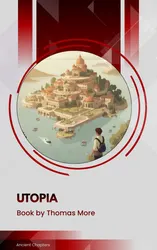
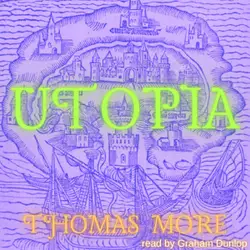
Sobre este libro

What would society look like if it were designed to eliminate many of the problems created by wealth, power, and inequality?

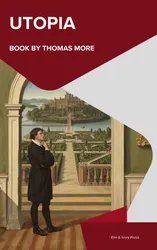
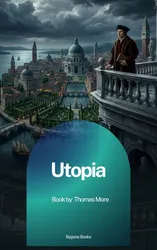
Enter Thomas More's Utopia, a landmark work of political and social philosophy that imagines an alternative society.

Presented through a fictional account of the island of Utopia, the work examines government, property, labor, education, religion, law, social organization, and economic inequality. More uses the imagined society to encourage readers to question the institutions and assumptions of his own world.

Blending philosophical discussion, political commentary, satire, and imaginative storytelling, Utopia remains open to multiple interpretations.

First published in Latin in 1516, the work gave rise to the modern use of the word "utopia" for an imagined ideal society.

Explore Thomas More's provocative vision of an alternative society and reconsider the assumptions behind government, wealth, and social order.

Empieza este libro hoy por 0 €

  • Disfruta de acceso completo a todos los libros de la app durante el periodo de prueba
  • Sin compromiso, cancela cuando quieras
Pruébalo gratis ahora
Más de 52 000 clientes han dado a Nextory 5 estrellas en la App Store y Google Play.

Más de Thomas More

  1. Utopía

    Thomas More

  2. Utopía

    Thomas More, Tomás Moro

  3. Nuevo
    3.3

    Utopia

    Thomas More

  4. Nuevo
    3.3

    Utopia

    Thomas More

  5. Harvard Classics : The Five-Foot Shelf of Books

    Aesop, Dante Alighieri, Hans Christian Andersen, Augustine of Hippo, Marcus Aurelius, Jane Austen, Francis Bacon, Honoré de Balzac, Francis Beaumont, Bjørnstjerne Bjørnson, Thomas Browne, Robert Browning, John Bunyan, EDMUND BURKE, Robert Burns, Lord Byron, Thomas Carlyle, Benvenuto Cellini, Miguel de Cervantes, Marcus Tullius Cicero, Richard Henry Jr., Charles Darwin, Alphonse Daudet, Thomas Dekker, Charles Dickens, Fyodor Dostoevsky, John Dryden, Charles W. Eliot, George Eliot, Ralph Waldo Emerson, Epictetus, John Fletcher, Theodor Fontane, Benjamin Franklin, Johann Wolfgang Goethe, Oliver Goldsmith, Jacob Grimm, Edward Everett Hale, Bret Harte, Nathaniel Hawthorne, Homer, Victor Hugo, Washington Irving, Henry James, Ben Jonson, Gottfried Keller, Thomas à Kempis, Alexander L. Kielland, Martin Luther, Niccolò Machiavelli, Alessandro Manzoni, Christopher Marlowe, Philip Massinger, Guy De Maupassant, John Stuart Mill, John Milton, Thomas More, William Morris, Alfred de Musset, William Allan Neilson, William Penn, Plato, Pliny the Younger, Plutarch, George Sand, Percy Bysshe Shelley, Richard Brinsley Sheridan, Adam Smith, Laurence Sterne, Theodor Storm, William Makepeace Thackeray, Leo Tolstoy, Ivan Turgenev, Mark Twain, Juan Valera, Virgil, Izaak Walton, John Webster, John Woolman

  6. 3.3

    Utopia

    Thomas More

  7. 3.3

    Utopia

    Thomas More

  8. 3.3

    Utopia

    Thomas More

  9. 3.3

    Utopia

    Thomas More

  10. 3.3

    Utopia

    Thomas More

  11. 3.3

    Utopia

    Thomas More

  12. 3.3

    Utopia

    Thomas More