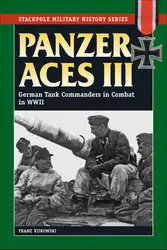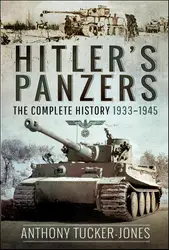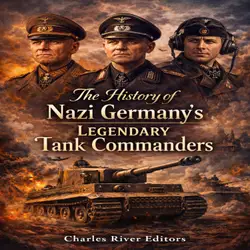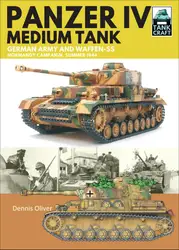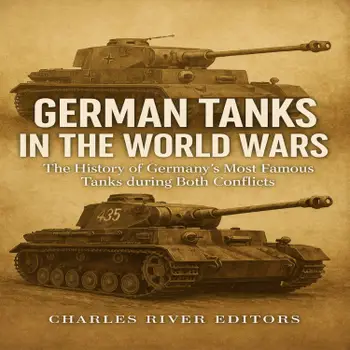
German Tanks in the World Wars: The History of Germany’s Most Famous Tanks during Both Conflicts

One of the most important breakthroughs in military technology associated with World War I, and certainly the one that continues to capture the public imagination, was the introduction of a war machine that came to dominate the face of land battles throughout most of the 20th century: the tank. As a concept, it was not revolutionary; in fact, it harkened back to classical antiquity and to the Middle Ages, such as the covered battering rams and testudos which had made frequent appearances on ancient battlefields. In essence, it was designed to solve the age-old problem of protecting infantry from enemy projectiles while remaining mobile. Ironically, Germany, which would subsequently become famous for panzers and blitzkrieg warfare, was late in taking up the idea. During World War I, the Germans continued to rely on other techniques, and they produced less than two dozen models for battlefield use.

The beginning of World War II found the major powers developing tanks to some extent, but lingering ideas from World War I affected the development of tanks during the Interwar period. As a result, aside from the blitzkrieg doctrine developed by the Nazis, tanks were still used in terms of infantry support, and there were few wars during this period to give strategists the chance to develop better uses for the new armored vehicles before World War II started. Commanders soon found that many of the tanks fielded in the campaigns of 1939-1941 lacked the necessary armor, guns, and designs. Inevitably, tactics evolved throughout the war. The Germans were early leaders in tank tactics, as their successes from Poland through the opening phases of Operation Barbarossa demonstrated. The main German tank tactic was the so-called Schwerpunkt (“center of gravity”), in which a concentration of tanks achieved a local superiority, broke through, and drove deep behind enemy lines.


Tietoa kirjasta

One of the most important breakthroughs in military technology associated with World War I, and certainly the one that continues to capture the public imagination, was the introduction of a war machine that came to dominate the face of land battles throughout most of the 20th century: the tank. As a concept, it was not revolutionary; in fact, it harkened back to classical antiquity and to the Middle Ages, such as the covered battering rams and testudos which had made frequent appearances on ancient battlefields. In essence, it was designed to solve the age-old problem of protecting infantry from enemy projectiles while remaining mobile. Ironically, Germany, which would subsequently become famous for panzers and blitzkrieg warfare, was late in taking up the idea. During World War I, the Germans continued to rely on other techniques, and they produced less than two dozen models for battlefield use.

The beginning of World War II found the major powers developing tanks to some extent, but lingering ideas from World War I affected the development of tanks during the Interwar period. As a result, aside from the blitzkrieg doctrine developed by the Nazis, tanks were still used in terms of infantry support, and there were few wars during this period to give strategists the chance to develop better uses for the new armored vehicles before World War II started. Commanders soon found that many of the tanks fielded in the campaigns of 1939-1941 lacked the necessary armor, guns, and designs. Inevitably, tactics evolved throughout the war. The Germans were early leaders in tank tactics, as their successes from Poland through the opening phases of Operation Barbarossa demonstrated. The main German tank tactic was the so-called Schwerpunkt (“center of gravity”), in which a concentration of tanks achieved a local superiority, broke through, and drove deep behind enemy lines.

Aloita kirja saman tien hintaan 0 €

  • Kokeilujakson aikana käytössäsi on kaikki sovelluksen kirjat
  • Ei sitoumusta, voit perua milloin vain
Kokeile nyt ilmaiseksi
Yli 52 000 ihmistä on antanut Nextorylle viisi tähteä App Storessa ja Google Playssä.

  1. The Dutch Golden Age: The Rise of the Netherlands as a Global Power in the 17th Century

    Charles River Editors

  2. Edgar Allan Poe and H.P. Lovecraft: The Lives and Legacies of America’s Most Famous Horror Writers

    Charles River Editors

  3. Kublai Khan and Marco Polo: The History of a Unique Partnership at the Court of the Mongol Empire

    Charles River Editors

  4. Reaching the Moon: The History of the NASA Programs that Led to the Successful Apollo Missions

    Charles River Editors

  5. The Women of Athens and Sparta: The History of Women’s Lives and Social Roles in Ancient Greece’s Most Powerful City-States

    Charles River Editors

  6. Albert Fish: The Notorious Life and Legacy of the Brooklyn Vampire

    Charles River Editors

  7. The Counter-Reformation: The History of the Catholic Church’s Response to the Protestant Reformation

    Charles River Editors

  8. The Dutch East India Company and British East India Company: The History and Legacy of the World’s Most Famous Colonial Trade Companies

    Charles River Editors

  9. Narcissa Whitman: The Life and Legacy of the Missionary Killed by Native Americans in the Pacific Northwest

    Charles River Editors

  10. Little Turtle’s War and Tecumseh’s War: The History and Legacy of the Fighting between the United States and Native Americans for the Northwest Territory

    Charles River Editors

  11. The North Side Gang: The History and Legacy of the Organized Crime Mob that Fought Al Capone for Control of Chicago

    Charles River Editors

  12. Mythology and Religion in Ancient Babylon: The History of Babylonian Legends and Religious Practices

    Charles River Editors