4.0(3)

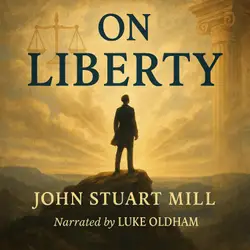
Mill’s On Liberty

John Stuart Mill’s "On Liberty" was first published in 1859. In the 21st century this text confirms Socrates’ claim that "it is only the life of true philosophy that scorns the life of political ambition" (Plato’s Republic, 521). Mill’s thinking about freedom in civic and social life examines fundamental principles shared among conservative, liberal, and radical politicians. The life of true philosophy stands outside the political battles that are rampant in society and seeks the political wisdom that is necessary for a good life in any age. "On Liberty" should be read alongside the classic documents that declare the basic nature and importance of human freedom and liberty such as the "U.S. Declaration of Independence" (1776), the French "Rights of Man" (1789), "The Declaration of Sentiments at the Seneca Falls Convention" (1848), and the "United Nations Universal Declaration of Human Rights" (1948). When the officials of any government seek to change the laws that regulate individual liberty or when rhetoricians seek to change public opinion about what individuals should or should not be allowed to say or do, Mill’s "On Liberty" serves as an antidote to the poisons of excessive intrusion into the lives of individuals.

Mill was born in London, the son of James Mill, a Scotsman who came to England and joined with Jeremy Bentham to develop utilitarianism. Today John Stuart Mill is also known as one of the major proponents of utilitarianism, but the depth of his philosophical thinking goes far beyond the disputes among ethical theorists. In spite of his criticism of some aspects of Immanuel Kant’s philosophy, his ethical position eventually embraces Kant’s most basic concepts: autonomy and universality. Mill contributed to logic, philosophy of science, epistemology, economics, psychology, politics, and ethics. He was also an early proponent of the rights of women.
Aloita tämä kirja jo tänään, hintaan 0€

  • Kokeilujakson aikana käytössäsi on kaikki sovelluksen kirjat
  • Ei sitoumusta, voit perua milloin vain
Kokeile nyt ilmaiseksi
Yli 52 000 ihmistä on antanut Nextorylle viisi tähteä App Storessa ja Google Playssä.

  1. 4.0

    Vapaudesta

    John Stuart Mill

  2. 4.0

    Vapaudesta

    John Stuart Mill

  3. The Essential Feminist Collection – 60 Powerful Classics in One Volume : Including 100+ Biographies & Memoirs of the Most Influential Women in History

    Jane Austen, Charlotte Brontë, Fanny Burney, Mary Wollstonecraft, Nathaniel Hawthorne, Rebecca Harding Davis, Louisa May Alcott, Henry James, Leo Tolstoy, Thomas Hardy, Elizabeth Gaskell, Charlotte Perkins Gilman, Henrik Ibsen, Kate Chopin, Grant Allen, Elizabeth Burgoyne Corbett, H.G. Wells, Gene Stratton-Porter, Willa Cather, Edith Wharton, Theodore Dreiser, Ada Cambridge, Mary Johnston, Marietta Holley, Elia Wilkinson Peattie, Virginia Woolf, Zona Gale, Elizabeth von Arnim, D. H. Lawrence, Margaret Oliphant, Lucy Maud Montgomery, Margaret Mitchell, Harriet Martineau, Nikolai Leskov, Margaret Deland, Sojourner Truth, Mary Ware Dennett, John Stuart Mill, Sarah H. Bradford, Julia Ward Howe, Elizabeth Cady Stanton, Margaret Fuller

  4. Political Science. Classics Collection:

    Marcus Aurelius, Karl Marx, Friedrich Engels, Thomas Paine, Niccolo Machiavelli, Lao Tzu, Sun Tzu, Plato, John Stuart Mill, Vladimir Lenin, Thomas More

  5. 5.0

    The Subjection of Women (Classic of the Feminist Philosophy) : A utilitarian defense of women's legal and social equality

    John Stuart Mill

  6. 50 Clásicos que debes leer antes de morir

    Dante Alighieri, Aristóteles, Jane Austen, Charles Baudelaire, Giovanni Boccaccio, Anne Brontë, C. Collodi, James Fenimore Cooper, Fedor Mikhaïlovitch Dostoïevski, Arthur Conan Doyle, Alexandre Dumas, José de Espronceda, Gustave Flaubert, Sigmund Freud, Benito Pérez Galdós, Kahlil Gibran, Johann Wolfgang Goethe, Johann Wolfgang von Goethe, Victor Hugo, Thomas Hardy, Nathaniel Hawthorne, Vicente Blasco Ibáñez, Washington Irving, James Joyce, Mariano José de Larra, Jack London, Federico García Lorca, H.P. Lovecraft, Antonio Machado, Gustav Meyrink, John Stuart Mill, Amado Nervo, Friedrich Nietzsche, Solomon Northup, Alexander Sergeyevich Pushkin, Francisco de Quevedo, Walter Scott, William Shakespeare, Robert Louis Stevenson, Harriet Beecher Stowe, Jonathan Swift, Mark Twain, Miguel De Unamuno, Ramón María del Valle-Inclán, Julio Verne, Virginia Woolf

  7. Utilitarianism :

    John Stuart Mill

  8. 12 Masterpieces You Have to Read Before You Die. Philosophy

    Niccolo Machiavelli, Tommaso Campanella, Francis Bacon, Thomas More, John Stuart Mill, Immanuel Kant, Kahlil Gibran, Leo Tolstoy, G.K. Chesterton, Henry David Thoreau

  9. 15+ Political Science. Classics Collection : The Art of War, Tao Te Ching, The Republic, Meditations, The Prince, Utopia, Utilitarianism, Anarchism and others

    Sun Tzu, Lao Tzu, Plato, Marcus Aurelius, Niccolo Machiavelli, Thomas More, Tommaso Campanella, Francis Bacon, Thomas Paine, John Stuart Mill, Karl Marx, Friedrich Engels, Vladimir Lenin, Rosa Luxemburg, Peter Kropotkin, Emma Goldman, Leon Trotsky

  10. JOHN STUART MILL - Ultimate Collection: Works on Philosophy, Politics & Economy (Including Memoirs & Essays) : Enriched edition. A Comprehensive Compilation of Mill's Influential Works and Insights

    John Stuart Mill

  11. ON LIBERTY - The Philosophy of Individual Freedom : Enriched edition. Exploring the Tapestry of Human Liberty and Autonomy

    John Stuart Mill, W. L. Courtney

  12. The Collected Works of John Stuart Mill : Enriched edition. Exploring Utilitarianism, Liberty, and Political Progress in 19th Century England

    John Stuart Mill