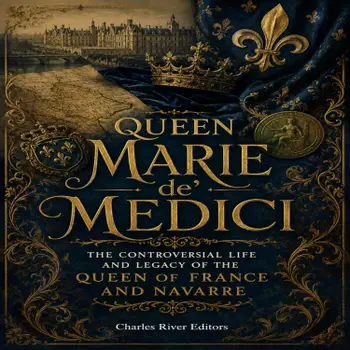
Queen Marie de' Medici: The Controversial Life and Legacy of the Queen of France and Navarre

In the summer of 1642, an old woman died in a rented house in Cologne, far from the country she had once ruled, attended by a small and shabby household and pressed by debts she could not pay. She had been a French queen, the regent of the kingdom, the wife of one of the greatest French kings, the mother of another, a daughter of the Medici, and a granddaughter of emperors. She had commanded armies, reversed the policy of a dead king, married her children into the royal houses of Europe, and raised from obscurity the most formidable minister in France’s long history. At the end, she died in exile and near poverty, abandoned by her son and broken by the very statesman she had made. She was a queen with no court and a mother with no welcome in her own land. Her name was Marie de’ Medici, and her death closed one of the strangest and most cautionary tales of the 17th century.

At the start, it seemed she had been born to have a different destiny. A century after her family seized the reins in Florence, and two generations after another Florentine Medici, Catherine de’ Medici, had governed France as queen mother through its wars of religion, Marie de’ Medici followed the same path from the banks of the Arno River to the throne of the Bourbons. She came to France as a bride bought with a fortune, intended to mend the finances of a king who needed her dowry more than he desired her as a person. She bore him the heir he required, endured his mistresses and his coldness, and was crowned at last the day before an assassin’s knife made her a widow and a ruler. For seven years, she governed France in her young son’s name, and for years after that she fought him and his minister for the power she had lost, until the long struggle ended in her ruin.

History has not been kind to her, and much of the unkindness is deserved. As a ruler, Queen Marie de’ Medici was stubborn, shortsighted, and easily led, and she squandered much of the strength her murdered husband labored to build.

Tietoa kirjasta

In the summer of 1642, an old woman died in a rented house in Cologne, far from the country she had once ruled, attended by a small and shabby household and pressed by debts she could not pay. She had been a French queen, the regent of the kingdom, the wife of one of the greatest French kings, the mother of another, a daughter of the Medici, and a granddaughter of emperors. She had commanded armies, reversed the policy of a dead king, married her children into the royal houses of Europe, and raised from obscurity the most formidable minister in France’s long history. At the end, she died in exile and near poverty, abandoned by her son and broken by the very statesman she had made. She was a queen with no court and a mother with no welcome in her own land. Her name was Marie de’ Medici, and her death closed one of the strangest and most cautionary tales of the 17th century.

At the start, it seemed she had been born to have a different destiny. A century after her family seized the reins in Florence, and two generations after another Florentine Medici, Catherine de’ Medici, had governed France as queen mother through its wars of religion, Marie de’ Medici followed the same path from the banks of the Arno River to the throne of the Bourbons. She came to France as a bride bought with a fortune, intended to mend the finances of a king who needed her dowry more than he desired her as a person. She bore him the heir he required, endured his mistresses and his coldness, and was crowned at last the day before an assassin’s knife made her a widow and a ruler. For seven years, she governed France in her young son’s name, and for years after that she fought him and his minister for the power she had lost, until the long struggle ended in her ruin.

History has not been kind to her, and much of the unkindness is deserved. As a ruler, Queen Marie de’ Medici was stubborn, shortsighted, and easily led, and she squandered much of the strength her murdered husband labored to build.
Aloita kirja saman tien hintaan 0 €

  • Kokeilujakson aikana käytössäsi on kaikki sovelluksen kirjat
  • Ei sitoumusta, voit perua milloin vain
Kokeile nyt ilmaiseksi
Yli 52 000 ihmistä on antanut Nextorylle viisi tähteä App Storessa ja Google Playssä.

  1. Kublai Khan and Marco Polo: The History of a Unique Partnership at the Court of the Mongol Empire

    Charles River Editors

  2. 5.0

    NASA’s Space Race Programs: The History and Legacy of NASA Missions in the 1950s and 1960s

    Charles River Editors

  3. The Dutch Golden Age: The Rise of the Netherlands as a Global Power in the 17th Century

    Charles River Editors

  4. The Ancient Kingdoms of Africa: The History and Legacy of the African Continent’s Most Prominent Kingdoms in Antiquity

    Charles River Editors

  5. The Women of Athens and Sparta: The History of Women’s Lives and Social Roles in Ancient Greece’s Most Powerful City-States

    Charles River Editors

  6. The Counter-Reformation: The History of the Catholic Church’s Response to the Protestant Reformation

    Charles River Editors

  7. The Iranian Revolution and Iran Hostage Crisis: The History of the Events that Broke American Relations with Iran

    Charles River Editors

  8. South Africa and the British Empire: The History and Legacy of the Region Under Great Britain’s Control

    Charles River Editors

  9. Zoroastrianism and Manichaeism: The History of Ancient Persia’s Influential Religions

    Charles River Editors

  10. The Death Ray: The History and Conspiracy Theories Surrounding Nikola Tesla’s Futuristic Weapon

    Charles River Editors

  11. Rome’s Conquest of Western Europe: The History of the Campaigns that Expanded the Roman Empire across the Continent

    Charles River Editors

  12. 3.5

    Flat Earth: A History of Strange Tales, Bizarre Beliefs, and Conspiracy Theories about the Earth’s Surface

    Charles River Editors