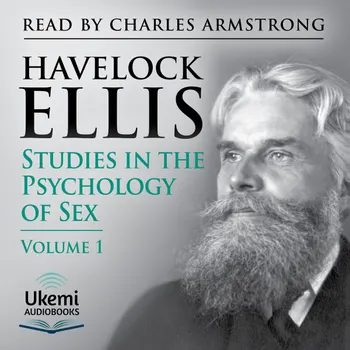


Havelock Ellis (1859-1939) was a pioneering figure in modern sexual studies. In the early years of the 20th century, through his seven volumes of Studies in the Psychology of Sex, he paved the way for a more scientific and less judgemental attitude towards the subject, unhampered by the restrictions of religious or moral conventions. Ellis (simultaneously with Sigmund Freud) helped Western society to consider sexual behaviour, in all its many forms, with fresh eyes.
These seven volumes appeared between 1897 and 1928 and covered heterosexuality, homosexuality, masturbation, narcissism, the differing sexual impulses in men and women, love and pain and even transgender issues. In his Studies Ellis drew on a range of sources, incorporated information from medical investigation and documentation, anthropological reports from different societies around the world, and observances of animal behaviour. But he also sought out personal and honest accounts from men and women of their hitherto private sexual urges and experiences. In this alone, Ellis’ endeavour was an astounding undertaking. And it is some indication of the environment in which he worked when it is noted that up to 1935, in the US, his Studies were only (legally) available to the medical profession.
One of the first issues he had to face was choice of terminology. For example, ‘homosexuality’ was in use in restricted circles, but he chose ‘inversion’ (the term of choice also of the lesbian Radclyffe Hall) which may have derogatory overtones to 21st-century ears. However, his impartial attitudes belie this.
In Volume 1, which is a fascinating introduction to the whole topic, Ellis concentrates on three major subjects: ‘The Evolution of Modesty’, ‘The Phenomena of Sexual Periodicity’ and ‘Auto-Erotism’. The breadth of both his enquiry and his research is fascinating. Modesty, he demonstrates, is a key factor in sex. Its expression ranges from natural reticence and caution to outright coquetry and is coloured by the physical changes, needs and fears of individuals - and the huge range of acceptable conventions in different societies. The widespread anthropological field-studies of the 19th century provided evidence of considerable variety in sexual matters, varying from extreme religious restrictions in some areas to total openness and even abandonment in others. On investigation, the rhythm and frequency of sexual activity seemed equally diverse among animals as well as human beings, with further variations between male and female. Ellis turned to the records of birth rates, of rape, of ‘seasonal erotic festivals’ and many other records to demonstrate, for example, heightened sexual impulse in spring and autumn.
The chapter on auto-erotism, too, provides an insight into the more personal exercise of the sexual compulsion. He considered, in his customary even-handed way, the embedded prejudices and beliefs surrounding masturbation noting, for example, the causes and effects of habitual practice. Of course, the 20th century saw immense growth in both academic research into sexual practices and more popular commentary. There were the Kinsey Reports in the 1940s and1950s, and since then a vast number of personal chronicles and guides in print and visual media. There has been a further explosion over the last three decades via the internet. But Studies in the Psychology of Sex can claim to be one of the first important, ground-breaking, scientific investigations.
Volume 1 is where it all began, and even now it remains fascinating and instructive.