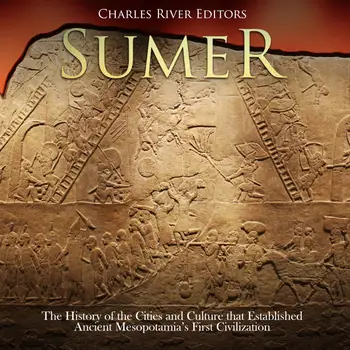
Sumer: The History of the Cities and Culture that Established Ancient Mesopotamia’s First Civilization

When American archaeologists discovered a collection of cuneiform tablets in Iraq in the late 19th century, they were confronted with a language and a people who were at the time only scarcely known to even the most knowledgeable scholars of ancient Mesopotamia: the Sumerians. The exploits and achievements of other Mesopotamian peoples, such as the Assyrians and Babylonians, were already known to a large segment of the population through the Old Testament and the nascent field of Near Eastern studies had unraveled the enigma of the Akkadian language that was widely used throughout the region in ancient times, but the discovery of the Sumerian tablets brought to light the existence of the Sumerian culture, which was the oldest of all the Mesopotamian cultures.

Although the Sumerians continue to get second or even third billing compared to the Babylonians and Assyrians, perhaps because they never built an empire as great as the Assyrians or established a city as enduring and great as Babylon, they were the people who provided the template of civilization that all later Mesopotamians built upon. The Sumerians are credited with being the first people to invent writing, libraries, cities, and schools in Mesopotamia (Ziskind 1972, 34), and many would argue that they were the first people to create and do those things anywhere in world.

For a people so great it is unfortunate that their accomplishments and contributions, not only to Mesopotamian civilization but to civilization in general, largely go unnoticed by the majority of the public. Perhaps the Sumerians were victims of their own success; they gradually entered the historical record, established a fine civilization, and then slowly submerged into the cultural patchwork of their surroundings.
Tietoa kirjasta

When American archaeologists discovered a collection of cuneiform tablets in Iraq in the late 19th century, they were confronted with a language and a people who were at the time only scarcely known to even the most knowledgeable scholars of ancient Mesopotamia: the Sumerians. The exploits and achievements of other Mesopotamian peoples, such as the Assyrians and Babylonians, were already known to a large segment of the population through the Old Testament and the nascent field of Near Eastern studies had unraveled the enigma of the Akkadian language that was widely used throughout the region in ancient times, but the discovery of the Sumerian tablets brought to light the existence of the Sumerian culture, which was the oldest of all the Mesopotamian cultures.

Although the Sumerians continue to get second or even third billing compared to the Babylonians and Assyrians, perhaps because they never built an empire as great as the Assyrians or established a city as enduring and great as Babylon, they were the people who provided the template of civilization that all later Mesopotamians built upon. The Sumerians are credited with being the first people to invent writing, libraries, cities, and schools in Mesopotamia (Ziskind 1972, 34), and many would argue that they were the first people to create and do those things anywhere in world.

For a people so great it is unfortunate that their accomplishments and contributions, not only to Mesopotamian civilization but to civilization in general, largely go unnoticed by the majority of the public. Perhaps the Sumerians were victims of their own success; they gradually entered the historical record, established a fine civilization, and then slowly submerged into the cultural patchwork of their surroundings.
Aloita kirja saman tien hintaan 0 €

  • Kokeilujakson aikana käytössäsi on kaikki sovelluksen kirjat
  • Ei sitoumusta, voit perua milloin vain
Kokeile nyt ilmaiseksi
Yli 52 000 ihmistä on antanut Nextorylle viisi tähteä App Storessa ja Google Playssä.

  1. 5.0

    The Evolution of Modern Mathematics: The Lives of Influential Mathematicians Who Helped Bring Math into the Computer Age Kindle

    Charles River Editors

  2. 5.0

    The Rise and Fall of the Third Reich: The History and Legacy of Nazi Germany under Adolf Hitler

    Charles River Editors

  3. Persepolis and Susa: The History of the Achaemenid Persian Empire’s Capitals

    Charles River Editors

  4. Indian Removal: The History of the Battles and Policies that Displaced Native Americans East of the Mississippi River

    Charles River Editors

  5. Kublai Khan and Marco Polo: The History of a Unique Partnership at the Court of the Mongol Empire

    Charles River Editors

  6. Zoroastrianism and Manichaeism: The History of Ancient Persia’s Influential Religions

    Charles River Editors

  7. The Byzantines and Ottomans: The History of the Medieval Middle East’s Most Influential Empires

    Charles River Editors

  8. 3.0

    Operation Speedy Express: The History and Legacy of One of the Vietnam War’s Most Controversial Campaigns

    Charles River Editors

  9. 4.0

    The Rise and Fall of the Banate of Bosnia: The History of Bosnia’s Struggle for Independence in the Middle Ages

    Charles River Editors

  10. The Armenian Empire: The History and Legacy of the Ancient Kingdom of Greater Armenia

    Charles River Editors

  11. Nostradamus and Baba Vanga: The Controversial Lives and Prophecies of the Modern Era’s Most Famous Seers

    Charles River Editors

  12. 4.0

    The Siege of Vienna (1529): The History and Legacy of the Decisive Battle that Prevented the Ottoman Empire’s Expansion into Western Europe

    Charles River Editors