Tietoa kirjasta

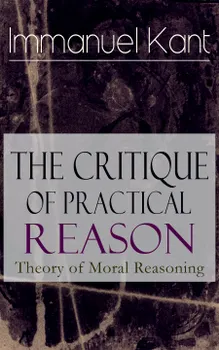
The Critique of Practical Reason: Theory of Moral Reasoning is Kant's rigorous examination of the foundations of morality, arguing that ethical action must arise not from inclination, consequence, or external authority, but from the autonomy of rational will. Written in a dense, architectonic style characteristic of late Enlightenment philosophy, the work develops the categorical imperative, freedom, duty, and the highest good within a systematic moral framework. It stands as the essential sequel to the Critique of Pure Reason, shifting from the limits of knowledge to the authority of practical reason. Immanuel Kant, the Königsberg philosopher whose disciplined life mirrored his intellectual exactitude, wrote in response to empiricism, rationalism, and the moral sentimentalism of his age. His project sought to secure human freedom and moral obligation without relying on dogma or mere psychological feeling, making this book central to his critical philosophy. This volume is recommended for readers seeking a profound account of moral responsibility, autonomy, and rational ethics. Though demanding, it rewards careful study with one of the most influential visions of human dignity in modern thought.

This enriched edition has been carefully crafted to add value to your reading experience.

- A succinct Introduction situates the work's timeless appeal and themes.

- The Synopsis outlines the central plot, highlighting key developments without spoiling critical twists.

- A detailed Historical Context immerses you in the era's events and influences that shaped the writing.

- An Author Biography reveals milestones in the author's life, illuminating the personal insights behind the text.

- A thorough Analysis dissects symbols, motifs, and character arcs to unearth underlying meanings.

- Reflection questions prompt you to engage personally with the work's messages, connecting them to modern life.

- Hand‐picked Memorable Quotes shine a spotlight on moments of literary brilliance.

- Interactive footnotes clarify unusual references, historical allusions, and archaic phrases for an effortless, more informed read.
Aloita kirja saman tien hintaan 0 €

  • Kokeilujakson aikana käytössäsi on kaikki sovelluksen kirjat
  • Ei sitoumusta, voit perua milloin vain
Kokeile nyt ilmaiseksi
Yli 52 000 ihmistä on antanut Nextorylle viisi tähteä App Storessa ja Google Playssä.

Samankaltaisia kirjoja

  1. 3.4

    Ikuiseen rauhaan

    Immanuel Kant

  2. 12 Masterpieces You Have to Read Before You Die. Philosophy

    Niccolo Machiavelli, Tommaso Campanella, Francis Bacon, Thomas More, John Stuart Mill, Immanuel Kant, Kahlil Gibran, Leo Tolstoy, G.K. Chesterton, Henry David Thoreau

  3. Critique of Pure Reason

    Immanuel Kant

  4. #32

    Harvard Classics Volume 32 : Literary And Philosophical Essays

    Michel Eyquem de Montaigne, Michel de Montaigne, Charles Augustin Sainte-Beuve, Golden Deer Classics, Ernest Renan, Gotthold Ephraim Lessing, Friedrich von Schiller, Immanuel Kant, Giuseppe Mazzini

  5. 3.0

    Classic Philosophical Works (Thus Spoke Zarathustra, The Apology of Socrates, Tao Te Ching...)

    Plato, Friedrich Nietzsche, Herman Hesse, Leo Tolstoy, Immanuel Kant, Sun Tzu

  6. Puhtaan järjen kritiikki

    Immanuel Kant

  7. Lo Bello y Lo Sublime : Ensayo de Estética y Moral

    Immanuel Kant

  8. 100 Clásicos de la Literatura Universal

    Francis Scott Fitzgerald, Mary Shelley, Lyman Frank Baum, Louisa May Alcott, Dante Alighieri, Jane Austen, Ambrose Bierce, Emily Brontë, Edgar Rice Burroughs, Lewis Carroll, Wilkie Collins, René Descartes, Charles Dickens, Emily Dickinson, Alexandre Dumas, Gustave Flaubert, Benito Pérez Galdós, Johann Wolfgang von Goethe, Thomas Hardy, E T A Hoffmann, Washington Irving, Henry James, James Joyce, Franz Kafka, Gaston Leroux, Federico García Lorca, H.P. Lovecraft, Publio Virgilio Marón, Lucy Maud Montgomery, John William Polidori, Marco Polo, Antoine de Saint-Exupéry, Emilio Salgari, Walter Scott, Mark Twain, Jules Verne, Julio Verne, H.G. Wells, Edith Wharton, Mary Wollstonecraft, Stefan Zweig, Sun Tzu, Bram Stoker, - Aristoteles, George Bernard Shaw, Henryk Sienkiewicz, Concepción Arenal, Charlotte Brontë, Miguel de Cervantes, G.K. Chesterton, Daniel Defoe, Fyodor Mikhailovich Dostoyevsky, Arthur Conan Doyle, Sigmund Freud, H. Rider Haggard, Homero, Immanuel Kant, Rudyard Kipling, Molière, Friedrich Nietzsche, Fernando de Rojas, Sófocles, William Makepeace Thackeray, León Tolstói, Voltaire, Ramón María del Valle-Inclán, Oscar Wilde, Virginia Woolf

  9. Hacia la paz perpetua

    Immanuel Kant

  10. Teoría y praxis : Estudio preliminar: Eduardo García Belsunce

    Immanuel Kant

  11. Crítica de la Razón Pura

    Immanuel Kant

  12. The Critique of Pure Reason

    Immanuel Kant