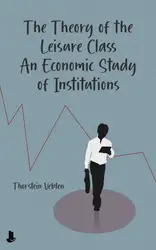
The Theory of the Leisure Class

The institution of a leisure class is found in its best development at the higher stages of the barbarian culture; as, for instance, in feudal Europe or feudal Japan. In such communities the distinction between classes is very rigorously observed; and the feature of most striking economic significance in these class differences is the distinction maintained between the employments proper to the several classes. The upper classes are by custom exempt or excluded from industrial occupations, and are reserved for certain employments to which a degree of honour attaches. Chief among the honourable employments in any feudal community is warfare; and priestly service is commonly second to warfare. If the barbarian community is not notably warlike, the priestly office may take the precedence, with that of the warrior second. But the rule holds with but slight exceptions that, whether warriors or priests, the upper classes are exempt from industrial employments, and this exemption is the economic expression of their superior rank. Brahmin India affords a fair illustration of the industrial exemption of both these classes. In the communities belonging to the higher barbarian culture there is a considerable differentiation of sub-classes within what may be comprehensively called the leisure class; and there is a corresponding differentiation of employments between these sub-classes. The leisure class as a whole comprises the noble and the priestly classes, together with much of their retinue. The occupations of the class are correspondingly diversified; but they have the common economic characteristic of being non-industrial. These non-industrial upper-class occupations may be roughly comprised under government, warfare, religious observances, and sports.


Tietoa kirjasta

The institution of a leisure class is found in its best development at the higher stages of the barbarian culture; as, for instance, in feudal Europe or feudal Japan. In such communities the distinction between classes is very rigorously observed; and the feature of most striking economic significance in these class differences is the distinction maintained between the employments proper to the several classes. The upper classes are by custom exempt or excluded from industrial occupations, and are reserved for certain employments to which a degree of honour attaches. Chief among the honourable employments in any feudal community is warfare; and priestly service is commonly second to warfare. If the barbarian community is not notably warlike, the priestly office may take the precedence, with that of the warrior second. But the rule holds with but slight exceptions that, whether warriors or priests, the upper classes are exempt from industrial employments, and this exemption is the economic expression of their superior rank. Brahmin India affords a fair illustration of the industrial exemption of both these classes. In the communities belonging to the higher barbarian culture there is a considerable differentiation of sub-classes within what may be comprehensively called the leisure class; and there is a corresponding differentiation of employments between these sub-classes. The leisure class as a whole comprises the noble and the priestly classes, together with much of their retinue. The occupations of the class are correspondingly diversified; but they have the common economic characteristic of being non-industrial. These non-industrial upper-class occupations may be roughly comprised under government, warfare, religious observances, and sports.

Aloita tämä kirja jo tänään, hintaan 0€

  • Kokeilujakson aikana käytössäsi on kaikki sovelluksen kirjat
  • Ei sitoumusta, voit perua milloin vain
Kokeile nyt ilmaiseksi
Yli 52 000 ihmistä on antanut Nextorylle viisi tähteä App Storessa ja Google Playssä.

  1. The Theory of Business Enterprise : Enriched edition. Nature, Causes, Utility & Drift of Business Enterprise (A Political Economy Book)

    Thorstein Veblen

  2. Teoría de la clase ociosa

    Thorstein Veblen

  3. THE ENGINEERS AND THE PRICE SYSTEM : Enriched edition. Unveiling Engineering's Impact on Price Systems in Society

    Thorstein Veblen

  4. IMPERIAL GERMANY AND THE INDUSTRIAL REVOLUTION: The Background Origins of World War I - Economic Rise as a Fuel for Political Radicalism

    Thorstein Veblen

  5. THORSTEIN VEBLEN Ultimate Collection: 8 Books & 50+ Business Essays and Articles in Warfare and Economics : Enriched edition. Insights on capitalism, warfare, and the leisure class

    Thorstein Veblen

  6. THE THEORY OF BUSINESS ENTERPRISE (Nature, Causes, Utility & Drift of Business Enterprise) : Enriched edition. A Political Economy Book

    Thorstein Veblen

  7. The Complete Works of Thorstein Veblen : Enriched edition. Insightful Critiques and Witty Social Commentary on Capitalist Society

    Thorstein Veblen

  8. THE THEORY OF THE LEISURE CLASS: An Economic Study of American Institutions and a Social Critique of Conspicuous Consumption

    Thorstein Veblen

  9. IMPERIAL GERMANY AND THE INDUSTRIAL REVOLUTION : Enriched edition. The Background Origins of World War I

    Thorstein Veblen

  10. A Road to Prosperity - Ultimate Collection : Exploring the Path to Wealth and Success Through the Eyes of History's Greatest Minds

    Niccolò Machiavelli, Elbert Hubbard, James Allen, William Walker Atkinson, Orison Swett Marden, Benjamin Franklin, William Crosbie Hunter, Harry A. Lewis, Thorstein Veblen, Kahlil Gibran, P.T. Barnum, Marcus Aurelius, Wallace D. Wattles, Lao Tzu, Russell Conwell, Henry Harrison Brown, Florence Scovel Shinn, Émile Coué, Charles F. Haanel, B.F. Austin, Robert Collier

  11. Achieving Prosperity - Ultimate Collection : Timeless Wisdom for Success and Wealth

    Niccolò Machiavelli, Elbert Hubbard, James Allen, William Walker Atkinson, Orison Swett Marden, Benjamin Franklin, William Crosbie Hunter, Harry A. Lewis, Thorstein Veblen, Kahlil Gibran, P.T. Barnum, Marcus Aurelius, Wallace D. Wattles, Lao Tzu, Russell Conwell, Henry Harrison Brown, Florence Scovel Shinn, Émile Coué, Charles F. Haanel, B.F. Austin, Robert Collier