Tietoa kirjasta

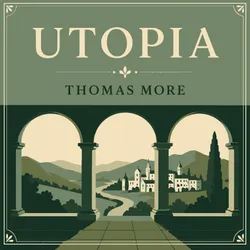
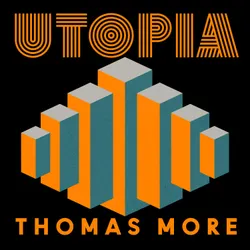
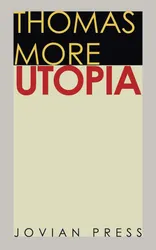
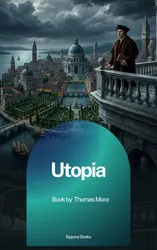
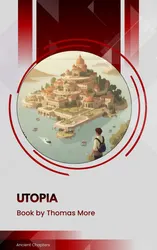
Utopia - Thomas More - Utopia (Latin: Libellus vere aureus, nec minus salutaris quam festivus, de optimo rei publicae statu deque nova insula Utopia, "A little, true book, not less beneficial than enjoyable, about how things should be in a state and about the new island Utopia") is a work of fiction and socio-political satire by Thomas More (14781535), written in Latin and published in 1516. The book is a frame narrative primarily depicting a fictional island society and its religious, social, and political customs. Many aspects of More's description of Utopia are reminiscent of life in monasteries.
Aloita kirja saman tien hintaan 0 €

  • Kokeilujakson aikana käytössäsi on kaikki sovelluksen kirjat
  • Ei sitoumusta, voit perua milloin vain
Kokeile nyt ilmaiseksi
Yli 52 000 ihmistä on antanut Nextorylle viisi tähteä App Storessa ja Google Playssä.

  1. Uusi
    3.3

    Utopia

    Thomas More

  2. 3.0

    Utopia

    Thomas More

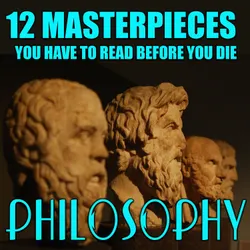
  3. 12 Masterpieces You Have to Read Before You Die. Philosophy

    Niccolo Machiavelli, Tommaso Campanella, Francis Bacon, Thomas More, John Stuart Mill, Immanuel Kant, Kahlil Gibran, Leo Tolstoy, G.K. Chesterton, Henry David Thoreau

  4. 15+ Political Science. Classics Collection : The Art of War, Tao Te Ching, The Republic, Meditations, The Prince, Utopia, Utilitarianism, Anarchism and others

    Sun Tzu, Lao Tzu, Plato, Marcus Aurelius, Niccolo Machiavelli, Thomas More, Tommaso Campanella, Francis Bacon, Thomas Paine, John Stuart Mill, Karl Marx, Friedrich Engels, Vladimir Lenin, Rosa Luxemburg, Peter Kropotkin, Emma Goldman, Leon Trotsky

  5. Utopia

    Thomas More

  6. Uusi

    Harvard Classics : The Five-Foot Shelf of Books

    Aesop, Dante Alighieri, Hans Christian Andersen, Augustine of Hippo, Marcus Aurelius, Jane Austen, Francis Bacon, Honoré de Balzac, Francis Beaumont, Bjørnstjerne Bjørnson, Thomas Browne, Robert Browning, John Bunyan, EDMUND BURKE, Robert Burns, Lord Byron, Thomas Carlyle, Benvenuto Cellini, Miguel de Cervantes, Marcus Tullius Cicero, Richard Henry Jr., Charles Darwin, Alphonse Daudet, Thomas Dekker, Charles Dickens, Fyodor Dostoevsky, John Dryden, Charles W. Eliot, George Eliot, Ralph Waldo Emerson, Epictetus, John Fletcher, Theodor Fontane, Benjamin Franklin, Johann Wolfgang Goethe, Oliver Goldsmith, Jacob Grimm, Edward Everett Hale, Bret Harte, Nathaniel Hawthorne, Homer, Victor Hugo, Washington Irving, Henry James, Ben Jonson, Gottfried Keller, Thomas à Kempis, Alexander L. Kielland, Martin Luther, Niccolò Machiavelli, Alessandro Manzoni, Christopher Marlowe, Philip Massinger, Guy De Maupassant, John Stuart Mill, John Milton, Thomas More, William Morris, Alfred de Musset, William Allan Neilson, William Penn, Plato, Pliny the Younger, Plutarch, George Sand, Percy Bysshe Shelley, Richard Brinsley Sheridan, Adam Smith, Laurence Sterne, Theodor Storm, William Makepeace Thackeray, Leo Tolstoy, Ivan Turgenev, Mark Twain, Juan Valera, Virgil, Izaak Walton, John Webster, John Woolman

  7. 3.3

    Utopia

    Thomas More

  8. Uusi
    3.3

    Utopia

    Thomas More

  9. 3.3

    Utopia

    Thomas More

  10. 3.3

    Utopia

    Thomas More

  11. 3.3

    Utopia

    Thomas More

  12. 3.3

    Utopia

    Thomas More