À propos de ce livre

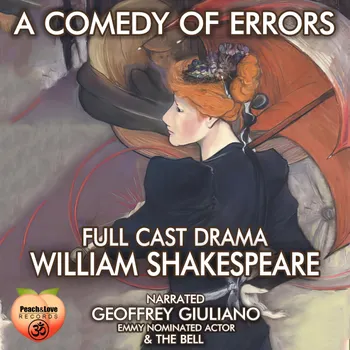
A Comedy of Errors is one of William Shakespeare's early plays, known for its humorous and farcical plot. It revolves around two sets of identical twins, separated at birth, who are unaware of each other's existence. The play takes place in Ephesus, where one pair of twins, Antipholus of Syracuse and his servant Dromio of Syracuse, arrive in search of their long-lost brothers. Unbeknownst to them, their twins, Antipholus of Ephesus and Dromio of Ephesus, already reside in the city. A series of mistaken identities and misunderstandings ensue as the characters encounter one another, leading to comical situations and escalating confusion.

Throughout the play, Shakespeare masterfully uses slapstick humor, wordplay, and physical comedy to entertain the audience. The mix-ups result in wrongful accusations, wrongful beatings, and wrongful arrests, heightening the absurdity of the narrative. Despite the chaos, the play ultimately resolves with the reunion of the twins and the restoration of order. A Comedy of Errors showcases Shakespeare's early talent for crafting intricate plots and creating engaging, lively characters, setting the stage for his later, more complex works.
Commencez ce livre dès aujourd'hui pour 0 €

  • Accédez à tous les livres de l'app pendant la période d'essai
  • Sans engagement, annulez à tout moment
Essayer gratuitement
Plus de 52 000 personnes ont noté Nextory 5 étoiles sur l'App Store et Google Play.

  1. Le Songe D'Une Nuit D'Été

    William Shakespeare

  2. 3.8

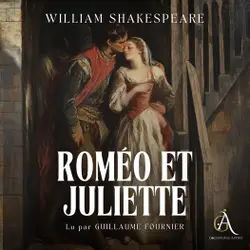
    Roméo et Juliette - Livre Audio

    William Shakespeare, Livres audio en français

  3. 4.7

    Le Songe d'une Nuit d'Eté

    William Shakespeare

  4. 3.0

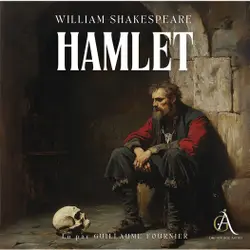
    Hamlet - Livre Audio

    William Shakespeare, Livres audio en français

  5. 5.0

    Romeo and Juliet (lättläst)

    William Shakespeare

  6. 5.0

    Hamlet

    William Shakespeare

  7. Développez votre culture générale en 1000 citations

    Napoléon Bonaparte, Winston Churchill, Confucius, Albert Einstein, Friedrich Nietzsche, Platon, William Shakespeare, Lao Tseu, Sun Tzu

  8. 3500 citations ultimes

    Marc Aurèle, Jane Austen, Beaumarchais, Napoléon Bonaparte, Bouddha, Winston Churchill, Cicéron, Confucius, Nicolas de Chamfort, Charles de Gaulle, Antoine de Saint-Exupéry, Léonard de Vinci, Denis Diderot, Fiodor Dostoïevski, Albert Einstein, Ralph Waldo Emerson, Anne Frank, Mahatma Gandhi, Emmanuel Kant, Søren Kierkegaard, Martin Luther King, Georg Christoph Lichtenberg, Abraham Lincoln, Montesquieu, Friedrich Nietzsche, Platon, Marcel Proust, Arthur Schopenhauer, William Shakespeare, – Socrate, Baruch Spinoza, Henry David Thoreau, Lao Tseu, Voltaire, Oscar Wilde

  9. 4.7

    Hamlet

    William Shakespeare

  10. 4.1

    Hamlet

    William Shakespeare

  11. The Big Book of Christmas: 140+ authors and 400+ novels, novellas, stories, poems & carols

    Hans Christian Andersen, Charles Dickens, Louisa May Alcott, Lucy Maud Montgomery, Anne Brontë, Willa Cather, G.K. Chesterton, F. Marion Crawford, Fyodor Dostoyevsky, Arthur Conan Doyle, Mary E. Wilkins Freeman, The Brothers Grimm, Thomas Hardy, Nathaniel Hawthorne, O.Henry, E T A Hoffmann, Washington Irving, James Joyce, Rudyard Kipling, H.P. Lovecraft, John Milton, Beatrix Potter, Arthur Quiller-Couch, Walter Scott, Robert Louis Stevenson, Harriet Beecher Stowe, Leo Tolstoy, Anthony Trollope, Mark Twain, Oscar Wilde, Anton Chekhov, L. Frank Baum, William Blake, Samuel Taylor Coleridge, Emily Dickinson, Henry Wadsworth Longfellow, Clement C. Moore, William Shakespeare, Andrew Lang

  12. 3.0

    50 Masterpieces you have to read before you die vol: 2

    Lewis Carroll, Mark Twain, Jules Verne, Oscar Wilde, Arthur Conan Doyle, Louisa May Alcott, Jane Austen, G.K. Chesterton, Wilkie Collins, Charles Dickens, Fyodor Dostoyevsky, Alexandre Dumas, F. Scott Fitzgerald, E. M. Forster, Thomas Hardy, Hermann Hesse, James Joyce, Jack London, H.P. Lovecraft, Lucy Maud Montgomery, Edgar Allan Poe, Marcel Proust, William Shakespeare, Robert Louis Stevenson, H.G. Wells, Virginia Woolf, Rudyard Kipling, D. H. Lawrence, Thomas Mann, William Somerset Maugham, Herman Melville, George Sand, Mary Shelley, Walter Scott, Leo Tolstoy, Bram Stoker