À propos de ce livre

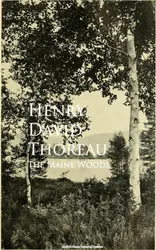
In 1839, Thoreau and his brother took a small boat upriver and back. Some years later, while in his cabin at Walden Pond, he gathered his notes from that journey and other writings from his journals, and composed this, his first book. Like the rivers it describes, the book meanders through varying territories and climates. He writes of the natural surroundings they encounter and of the history of the region, but also takes long and remarkable detours through topics like friendship, history, a comparison of Christianity and Hinduism, Vedic literature, government and conscience, Thoreau's philosophy of literature, monuments and graveyards, poetry (in particular Ossian, Chaucer, and certain minor Greek poets), and the satires of Aulus Persius Flaccus. Thoreau also includes several poems of his own. Thoreau had the first edition of this book published at his own expense, and at first it struggled to find an audience. "I have now a library of nearly 900 volumes," he remarked at one point, "over 700 of which I wrote myself." Henry David Thoreau (died 1862) was one of the most distinguished authors of the Victorian age. Their work has endured across generations and continues to be read and studied worldwide. The nonfiction literature of previous centuries offers invaluable windows into the minds and preoccupations of earlier ages. A Week On The Concord And Merrimack Rivers combines the personal and the universal in ways that continue to resonate with contemporary readers seeking to understand both history and human nature.

Commencez ce livre dès aujourd'hui pour 0 €

  • Accédez à tous les livres de l'app pendant la période d'essai
  • Sans engagement, annulez à tout moment
Essayer gratuitement
Plus de 52 000 personnes ont noté Nextory 5 étoiles sur l'App Store et Google Play.

  1. 3.4

    La Désobéissance civile

    Henry David Thoreau

  2. Nouveau
    3.4

    La Désobéissance civile

    Henry David Thoreau

  3. 1800 Citations de philosophes

    Aristote, Épicure, Platon, Thalès de Milet, – Socrate, Protagoras, Anaximandre, Épictète, Héraclite, Marc Aurèle, René Descartes, Michel de Montaigne, Alexis de Tocqueville, Voltaire, Charles De Montesquieu, Jean-Jacques Rousseau, Emmanuel Kant, Hannah Arendt, Gottfried Wilhelm Leibniz, Georg Wilhelm Friedrich Hegel, Friedrich Nietzsche, Arthur Schopenhauer, David Hume, John Locke, Francis Bacon, Thomas Hobbes, Thomas More, Confucius, Érasme, Lao Tseu, Baruch Spinoza, Søren Kierkegaard, Nicolas Machiavel, Thomas d'Aquin, Henry David Thoreau

  4. 3500 citations ultimes

    Marc Aurèle, Jane Austen, Beaumarchais, Napoléon Bonaparte, Bouddha, Winston Churchill, Cicéron, Confucius, Nicolas de Chamfort, Charles de Gaulle, Antoine de Saint-Exupéry, Léonard de Vinci, Denis Diderot, Fiodor Dostoïevski, Albert Einstein, Ralph Waldo Emerson, Anne Frank, Mahatma Gandhi, Emmanuel Kant, Søren Kierkegaard, Martin Luther King, Georg Christoph Lichtenberg, Abraham Lincoln, Montesquieu, Friedrich Nietzsche, Platon, Marcel Proust, Arthur Schopenhauer, William Shakespeare, – Socrate, Baruch Spinoza, Henry David Thoreau, Lao Tseu, Voltaire, Oscar Wilde

  5. 4.5

    Walden ou la vie dans les bois

    Henry David Thoreau

  6. 3.5

    Walden

    Henry David Thoreau

  7. The Duty of Civil Disobedience

    Henry David Thoreau

  8. 50 citations de Thoreau

    Henry David Thoreau

  9. 5.0

    Comprendre Thoreau

    Henry David Thoreau

  10. 400 citations de philosophes essentiels

    Confucius, Érasme, Lao Tseu, Baruch Spinoza, Søren Kierkegaard, Nicolas Machiavel, Thomas d'Aquin, Henry David Thoreau

  11. Uncommon Learning : Henry David Thoreau on Education

    Henry David Thoreau

  12. La désobéissance civile

    Henry David Thoreau, Lionel Cruzille (trad.)