Ethics (Complete Edition) : Rationalist Philosophy and Moral Reasoning in the 17th Century

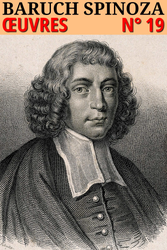
Baruch Spinoza's "Ethics (Complete Edition)" presents a groundbreaking exploration of metaphysics, epistemology, and moral philosophy, rooted in a geometric method that profoundly influenced modern thought. Spinoza's work challenges traditional religious beliefs by advocating for a rational understanding of the universe, proposing that God and Nature are one and the same (Deus sive Natura). His meticulous structure, employing definitions, axioms, and propositions, mirrors the precision of mathematical proofs, marking a distinct departure from the prevalent scholasticism of his time. The text unfolds Spinoza's vision of human beings as part of the deterministic order of the universe, promoting the cultivation of reason and the pursuit of intellectual love towards God as pathways to true happiness. Baruch Spinoza, a 17th-century Dutch philosopher often regarded as one of the early contributors to the Enlightenment, faced significant personal and professional challenges due to his radical ideas and Jewish heritage. His embrace of rationalism and rejection of anthropomorphic depictions of God were informed by his background in Jewish thought and a profound engagement with Cartesian philosophy. Spinoza's commitment to intellectual freedom and ethical living laid the groundwork for modern secularism and liberal values. "Ethics (Complete Edition)" is an essential read for anyone interested in the foundations of Western philosophy. Spinoza's insights into human nature, ethics, and the divine resonate deeply within contemporary philosophical debates and offer a compelling vision for understanding existence. Readers will find themselves challenged to reconsider the nature of reality and the pursuit of personal fulfillment through reason.

Commencez ce livre dès aujourd'hui pour 0 €

  • Accédez à tous les livres de l'app pendant la période d'essai
  • Sans engagement, annulez à tout moment
Essayer gratuitement
Plus de 52 000 personnes ont noté Nextory 5 étoiles sur l'App Store et Google Play.

  1. Traité théologico-politique : Aux origines de la laïcité moderne : comment Spinoza a révolutionné notre conception de la religion, de l'État, et de liberté de conscience

    Baruch Spinoza, Émile Saisset

  2. 1800 Citations de philosophes

    Aristote, Épicure, Platon, Thalès de Milet, – Socrate, Protagoras, Anaximandre, Épictète, Héraclite, Marc Aurèle, René Descartes, Michel de Montaigne, Alexis de Tocqueville, Voltaire, Charles De Montesquieu, Jean-Jacques Rousseau, Emmanuel Kant, Hannah Arendt, Gottfried Wilhelm Leibniz, Georg Wilhelm Friedrich Hegel, Friedrich Nietzsche, Arthur Schopenhauer, David Hume, John Locke, Francis Bacon, Thomas Hobbes, Thomas More, Confucius, Érasme, Lao Tseu, Baruch Spinoza, Søren Kierkegaard, Nicolas Machiavel, Thomas d'Aquin, Henry David Thoreau

  3. 5.0

    Comprendre Spinoza

    Baruch Spinoza

  4. Dieu, l’homme et la béatitude : supplément aux œuvres de Spinoza : traduit pour la première fois en français [sur la version allemande de C. Sigwart], et précédé d'une introduction par Paul Janet

    Baruch Spinoza

  5. 400 citations de philosophes essentiels

    Confucius, Érasme, Lao Tseu, Baruch Spinoza, Søren Kierkegaard, Nicolas Machiavel, Thomas d'Aquin, Henry David Thoreau

  6. 50 citations de Spinoza

    Baruch Spinoza

  7. Ethics

    Baruch Spinoza

  8. 400 citations des grands philosophes du 17ème siècle

    Montesquieu, Blaise Pascal, Baruch Spinoza, Voltaire

  9. 900 citations de la philosophie moderne

    Francis Bacon, Michel de Montaigne, Emmanuel Kant, Nicolas Machiavel, Montesquieu, Blaise Pascal, Jean-Jacques Rousseau, Baruch Spinoza, Voltaire

  10. 400 Quotations from the Great Philosophers of the 17th Century

    Montesquieu, Blaise Pascal, Baruch Spinoza, Voltaire

  11. 3500 citations ultimes

    Marc Aurèle, Jane Austen, Beaumarchais, Napoléon Bonaparte, Bouddha, Winston Churchill, Cicéron, Confucius, Nicolas de Chamfort, Charles de Gaulle, Antoine de Saint-Exupéry, Léonard de Vinci, Denis Diderot, Fiodor Dostoïevski, Albert Einstein, Ralph Waldo Emerson, Anne Frank, Mahatma Gandhi, Emmanuel Kant, Søren Kierkegaard, Martin Luther King, Georg Christoph Lichtenberg, Abraham Lincoln, Montesquieu, Friedrich Nietzsche, Platon, Marcel Proust, Arthur Schopenhauer, William Shakespeare, – Socrate, Baruch Spinoza, Henry David Thoreau, Lao Tseu, Voltaire, Oscar Wilde


Catégories associées