Frankenstein

"If I cannot inspire love, I will cause fear!"

Mary Shelley's immortal classic, Frankenstein, weaves together themes of ambition, responsibility, isolation and the search for identity, as Victor Frankenstein, a brilliant but obsessive scientist, is driven to create a living being from lifeless body parts as he seeks to unlock the secrets of life and death. But after animating the creature, Victor is horrified by the result and abandons it to a world which shuns it. Cast aside and tormented by isolation and loneliness, the creature embarks on a tragic journey—and unleashes a terrifying campaign of revenge against his creator.

A timeless fusion of horror and philosophical depth, Frankenstein remains a haunting reflection on what it means to be human.

The daughter of feminist writer Mary Wollstonecraft and political philosopher William Godwin, Mary Shelley (1797-1851) received a rich but informal education, often reading her parents' works and engaging with radical thinkers. In 1814, she began a romantic relationship with poet Percy Bysshe Shelley (whom she later married), a union that was both passionate and tumultuous, marked by travel, tragedy, and literary collaboration.

In 1816, while staying near Lake Geneva with Shelley and Lord Byron, Mary conceived the idea for Frankenstein during a storytelling challenge. The novel, published anonymously in 1818 and later under her own name, explores themes of creation, ambition, and the consequences of playing God. Frankenstein; or The Modern Prometheus is a classic of gothic horror and is considered one of the earliest works of science fiction. It has been widely adapted across a variety of media.

Commencez ce livre dès aujourd'hui pour 0 €

  • Accédez à tous les livres de l'app pendant la période d'essai
  • Sans engagement, annulez à tout moment
Essayer gratuitement
Plus de 52 000 personnes ont noté Nextory 5 étoiles sur l'App Store et Google Play.

  1. 4.3

    Frankenstein ou Le Prométhée moderne (nouvelle traduction)

    Mary Shelley

  2. 3.9

    Frankenstein ou le Prométhée moderne

    Mary Shelley

  3. 50 Chefs-D'œuvre Que Vous Devez Lire Avant De Mourir : Vol 1 (Golden Deer Classics)

    Mark Twain, Stendhal, Edgar Allan Poe, Victor Hugo, Gustave Flaubert, Alexandre Dumas, Arthur Conan Doyle, René Descartes, Lewis Carroll, Charles Baudelaire, Guillaume Apollinaire, Golden Deer, Alain-Fournier, Jules Amédée d'Aurevilly, Paul Bourget, Charlotte Brontë, Emily Brontë, Pierre Corneille, Nikolai Gogol, Gustave Leroux, Marquis De Sade, Jack London, Sinclair Lewis, Daniel Lesueur, Marcel Proust, Edmond Rostand, Jean-Jacques Rousseau, Mary Shelley, Bram Stoker, Sun Tzu, Rodolphe Töpffer, Vatsyayana, Jules Verne, Voltaire, H.G. Wells, Oscar Wilde, Emile Zola

  4. 4.3
    #1

    Frankenstein ou Le Prométhée moderne (Tome 1)

    Mary Shelley

  5. 3.9

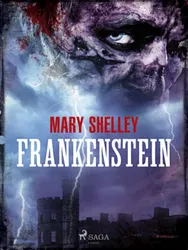
    Frankenstein

    Mary Shelley

  6. 4.2

    Frankenstein

    Mary Shelley

  7. 4.5

    Frankenstein ou le Prométhée moderne

    Mary Shelley

  8. Frankenstein : Ou le Prométhée moderne

    Mary Shelley

  9. Frankenstein and Other Stories

    Mary Shelley

  10. Frankenstein

    Mary Shelley

  11. 3.0

    Monstrueuses créatures

    William Chambers Morrow, Mary Shelley, Marc Donat, Edgar Allan Poe

  12. World's Greatest Short Stories

    Daniel Defoe, Benjamin Franklin, Washington Irving, Mateo Falcone, Charlotte Bronte, Mary Shelley, Nathaniel Hawthorne, Nikolai Gogol, Edgar Allan Poe, Fyodor Dostoyevsky, Charles Dickens, Herman Melville, Mark Twain, Guy De Maupassant, Oscar Wilde, Leo Tolstoy, H.G. Wells, Ambrose Bierce, Stephen Crane, Kate Chopin, Jack London, E. M. Forster