Évaluation de 4.0 sur 5, basée sur 1 avis
Livre audio

À propos de ce livre

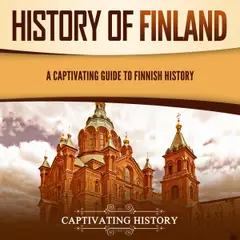
Finnish culture is centuries old, yet Finland itself has only been an independent nation for just over one hundred years.

Finland’s history is an interesting subject filled with misconceptions. Would you be surprised to learn that the Finns, for the most part, were not Vikings? Or that Finland is not part of Scandinavia? The Finns are not even related to their closest neighbors: Sweden, Norway, and Denmark.

This book pulls back the curtain so you can get a better look at Finland’s history. Its history is exciting, even without the Vikings, and its proximity to Russia is something that is still talked about in the news today.

In 2022, moves were made for the nation to join the North Atlantic Treaty Organization (NATO) in response to the Russian invasion of Ukraine. Finland has entered a new phase of its history. But wouldn’t you like to learn about its past?

In this book, you’ll learn the following:

The ancient Finnish did not worship the famous Norse gods like Thor and Odin. The national poem of Finland, the Kalevala, explores the ancient Finnish creation myth and the gods and heroes of Finland’s distant past. The history of Finland and Sweden are intertwined; Finland was part of Sweden for five hundred years! Finland was also part of the Russian Empire from 1809 to 1917. The Finns fought a heroic struggle against the Russians in 1939/40, which inspired the world and inspires Finns today. The Finn who commanded Finland’s armies during that struggle, Marshal Mannerheim, was of Swedish/German descent and did not speak Finnish particularly well. Yet, in 2004, he was voted the “greatest Finn of all time.” Finnish is one of the most unique languages in the world. And much, much more! So, what are you waiting for? Click the “add to cart” button to begin learning about Finland today!

Commencez ce livre dès aujourd'hui pour 0 €

  • Accédez à tous les livres de l'app pendant la période d'essai
  • Sans engagement, annulez à tout moment
Essayer gratuitement
Plus de 52 000 personnes ont noté Nextory 5 étoiles sur l'App Store et Google Play.

  1. 3.0

    Anglo-Saxons: A Captivating Guide to the People Who Inhabited Great Britain from the Early Middle Ages to the Norman Conquest of England

    Captivating History

  2. 5.0

    History of the Barbarians : A Captivating Guide to the Celts, Vandals, Gallic Wars, Sarmatians and Scythians, Goths, Attila the Hun, and Anglo-Saxons

    Captivating History

  3. Plantagenets: A Captivating Guide to the Plantagenet Dynasty and the Life of Edward I

    Captivating History

  4. The Great Famine: A Captivating Guide to the History of the Great Hunger in Ireland from 1845 to 1849 and How the Irish Potato Famine Was Solved

    Captivating History

  5. Homo Sapiens: A Captivating Guide to the History of Humans and Human Evolution

    Captivating History

  6. 3.0

    Las Guerras Médicas : Una Guía Fascinante de los Conflictos Entre el Imperio Aqueménide y las Ciudades-Estado Griegas, Incluida la Batalla de Maratón, Termópilas, Salamis, Platea y más

    Captivating History

  7. 3.0

    Las Guerras Púnicas : Una Guía Fascinante sobre la Primera, Segunda y Tercera Guerras Púnicas entre Roma y Cartago, incluyendo el Ascenso y la Caída de Aníbal Barca

    Captivating History

  8. Operation Fortitude : A Captivating Guide to the Deception Plan that Ensured the Success of D-Day

    Captivating History

  9. The Soviet Partisans and Espionage in Eastern Europe : A Captivating Guide to the Resistance Fighters and Spies Who Undermined Nazi Occupation

    Captivating History

  10. The Irish War of Independence : A Captivating Guide to Ireland's Struggle for Freedom from British Rule (1919–1921)

    Captivating History

  11. Aboriginal History : A Captivating Guide to the History of Indigenous Australians Called the Aborigines and Their Impact on Australia

    Captivating History

  12. History of Privateers : A Captivating Guide to the Legal Pirates Who Shaped Naval Warfare and Global Trade

    Captivating History