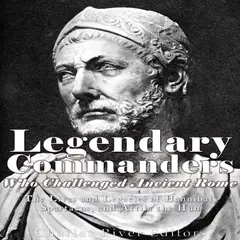
À propos de ce livre

In the history of war, only a select few men always make the list of greatest generals. Napoleon. Caesar. Alexander. They are always joined by Hannibal, who has the distinction of being the only man who nearly brought Rome to its knees before its decline almost 700 years later. Rome never suffered a more horrifying defeat in its history than at Cannae, and indeed, Hannibal nearly rewrote the course of Western history during the Second Punic War.

Spartacus is the world’s most famous slave, and one of the most notorious figures of Ancient Rome. A slave enamored of freedom and willing to fight and die for it, he became especially popular in the years following the Enlightenment, after which he was widely viewed as a poignant champion of liberty in the 18th and 19th centuries. As a result, he became a symbol during struggles like the French Revolution, the American Revolution, the American Civil War and the struggle for emancipation. Today, his dual life as a gladiator and a “freedom fighter” makes him fascinating to audiences around the world.

Attila, Emperor of the Hunnic Empire and thus most commonly known as Attila the Hun, is an idiosyncratic figure who has become more myth than man, not least because much of his life is shrouded in mystery. Perhaps the most famous “barbarian” in history, Attila was the lord of a vast empire spanning two continents, but he is best remembered for what he did not conquer. Though he seemingly had Rome at his mercy in 452, he ultimately decided not to sack the Eternal City, and a year later he had suffered a mysterious death. Naturally, the dearth of information and the passage of time have allowed myths and legends to fill in the most important details of Attila’s life. Why did a man at war with the Roman Empire for so long decide not to sack Rome in 452? Did a meeting with Pope Leo the Great convince him to spare the capital of the Western half of the empire?
Commencez ce livre dès aujourd'hui pour 0 €

  • Accédez à tous les livres de l'app pendant la période d'essai
  • Sans engagement, annulez à tout moment
Essayer gratuitement
Plus de 52 000 personnes ont noté Nextory 5 étoiles sur l'App Store et Google Play.

Livres similaires

  1. The Monterey International Pop Festival: The History and Legacy of the First Major Rock Festival in the 1960s

    Charles River Editors

  2. The 332nd Fighter Group: The History of the Tuskegee Airmen’s Fighter Unit during World War II

    Charles River Editors

  3. 5.0

    NASA’s Space Race Programs: The History and Legacy of NASA Missions in the 1950s and 1960s

    Charles River Editors

  4. 3.3

    Modern Latvia: The History and Legacy of Latvia’s Struggle for Independence in the 20th Century

    Charles River Editors

  5. 4.0

    The Eureka Rebellion: The History and Legacy of the Gold Miners’ Uprising against the British in Australia

    Charles River Editors

  6. 3.5

    Patrice Lumumba: The Life and Legacy of the Pan-African Politician Who Became Congo's First Prime Minister

    Charles River Editors

  7. 3.7

    Mustafa Kemal Atatürk and the Republic of Turkey: The History of the Ottoman Empire’s Collapse and the Establishment of a New State

    Charles River Editors

  8. 4.5

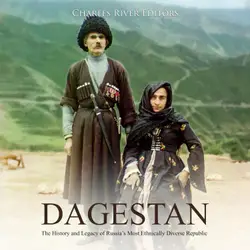
    Dagestan: The History and Legacy of Russia’s Most Ethnically Diverse Republic

    Charles River Editors

  9. 1.0

    Buzz Aldrin: The Life and Legacy of the Second Astronaut to Walk on the Moon

    Charles River Editors

  10. 4.0

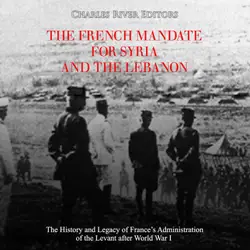
    The French Mandate for Syria and the Lebanon: The History and Legacy of France’s Administration of the Levant after World War I

    Charles River Editors

  11. 4.0

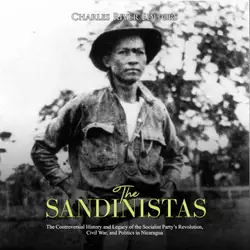
    The Sandinistas: The Controversial History and Legacy of the Socialist Party’s Revolution, Civil War, and Politics in Nicaragua

    Charles River Editors

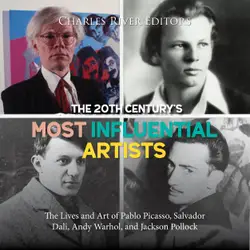
  12. The 20th Century’s Most Influential Artists: The Lives and Art of Pablo Picasso, Salvador Dali, Andy Warhol, and Jackson Pollock

    Charles River Editors