Rhetoric and Poetics

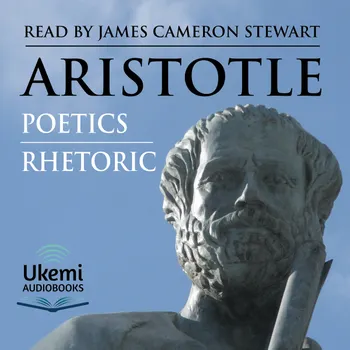
Poetics and Rhetoric are the two major works by Aristotle which, after more than 2,000 years, remain key behavioural handbooks for anyone interested in story, performance, presentation and indeed psychology.

The continuing influence of Poetics, for example, is readily discernible even among the scriptwriters of Hollywood! Poetics is the shorter work, lasting under two hours, whereas Rhetoric - the art of persuasion, an important subject, particularly in Greek and Roman times but even today - is more extensive, running to nearly nine hours.

In Poetics, Aristotle discusses the structure behind drama, comedy, tragedy and the satire plays as well as lyric poetry, epic poetry and music. The structure of a work, the plot, the characters as well as pace and rhythm are all considered. To listen to Poetics is a revelation, like going back to the source of literary theory.

Aristotle developed his view on rhetoric over a period of 40 years, and the work is now regarded as the key source on the subject. In a largely oral world, the ability to speak well and persuade by presentation was crucial to success in human affairs. All the major figures of the period studied the best ways to deliver the spoken word - a necessary skill for orators at all levels. For Aristotle, there were three major elements: ethos (the personal character of the speaker), pathos (the emotional influence of the speaker on the audience) and logos (the content and the argument). Rhetoric consists of three books, dividing the topic into the overview, the means of persuasion and the style.

A fascinating document, it remains required study in the 21st century, not only for public speakers but those involved in all circumstances where persuasion is involved. With ethos - the character of the speaker - underpinning the subject, the positive nature of art of persuasion should be paramount!

Poetics is translated by S. H. Butcher. Rhetoric is translated by W. Rhys Roberts. Both are read clearly by James Cameron Stewart.

À propos de ce livre

Poetics and Rhetoric are the two major works by Aristotle which, after more than 2,000 years, remain key behavioural handbooks for anyone interested in story, performance, presentation and indeed psychology.

The continuing influence of Poetics, for example, is readily discernible even among the scriptwriters of Hollywood! Poetics is the shorter work, lasting under two hours, whereas Rhetoric - the art of persuasion, an important subject, particularly in Greek and Roman times but even today - is more extensive, running to nearly nine hours.

In Poetics, Aristotle discusses the structure behind drama, comedy, tragedy and the satire plays as well as lyric poetry, epic poetry and music. The structure of a work, the plot, the characters as well as pace and rhythm are all considered. To listen to Poetics is a revelation, like going back to the source of literary theory.

Aristotle developed his view on rhetoric over a period of 40 years, and the work is now regarded as the key source on the subject. In a largely oral world, the ability to speak well and persuade by presentation was crucial to success in human affairs. All the major figures of the period studied the best ways to deliver the spoken word - a necessary skill for orators at all levels. For Aristotle, there were three major elements: ethos (the personal character of the speaker), pathos (the emotional influence of the speaker on the audience) and logos (the content and the argument). Rhetoric consists of three books, dividing the topic into the overview, the means of persuasion and the style.

A fascinating document, it remains required study in the 21st century, not only for public speakers but those involved in all circumstances where persuasion is involved. With ethos - the character of the speaker - underpinning the subject, the positive nature of art of persuasion should be paramount!

Poetics is translated by S. H. Butcher. Rhetoric is translated by W. Rhys Roberts. Both are read clearly by James Cameron Stewart.

Commencez ce livre dès aujourd'hui pour 0 €

  • Accédez à tous les livres de l'app pendant la période d'essai
  • Sans engagement, annulez à tout moment
Essayer gratuitement
Plus de 52 000 personnes ont noté Nextory 5 étoiles sur l'App Store et Google Play.

  1. 700 citations de la philosophie ancienne

    Aristotle, Marc Aurèle, Cicéron, Épictète, Héraclite, Platon, Sénèque .

  2. 5.0

    Nicomachean Ethics : The Blueprint for Virtue, Happiness, and the Good Life

    Aristotle, Tim Zengerink

  3. Yale Required Reading - Collected Works (Vol. 1) : Enriched edition. Exploring the Depths of Ancient Greek Thought

    Aristotle, Plato, Euripides, Gilbert Murray, Epictetus, Pindar, Theocritus, Homer, Plutarch, Aeschylus, Sophocles, - Aristophanes, Herodotus, Anacreon, Sappho -, Thucydides, Hesiod, Demosthenes, Lysias, Alcaeus, Archilochus, Theognis of Megara, Simonides of Ceos, Bacchylides, Apollonius, Callimachus

  4. 500 citations pour apprendre la sagesse avec les philosophes grecs classiques

    Aristotle, Épictète, Héraclite, Platon, – Socrate

  5. 33 Masterpieces of Philosophy and Science to Read Before You Die (Illustrated) : Utopia, The Meditations, The Art of War, The Kama Sutra, Candide

    Thomas More, Marcus Aurelius Antoninus, Sun Tzu, Vatsyayana, Voltaire, Edwin A. Abbott, Aristotle, Dale Carnegie, Gilbert Keith Chesterton, René Descartes, Epictetus, Sigmund Freud, Hermann Hesse, David Hume, Lao Tzu, David Herbert Lawrence, Niccolò Machiavelli, John Mill, Prentice Mulford, Friedrich Nietzsche, Plato, Bertrand Russell, H.G. Wells, Frances Bacon

  6. 4.0

    Politics

    Aristotle

  7. Politics

    Aristotle

  8. 4.0

    Nicomachean Ethics

    Aristotle

  9. Nicomachean Ethics

    Aristotle

  10. The complete works of Aristotle

    Aristotle

  11. The Gift of Friendship : What the Wisest Minds Said About Our Deepest Bonds Across Two Thousand Years

    Alfred H. Hyatt, Henry David Thoreau, Thomas Carlyle, Henry Mackenzie, Oliver Goldsmith, Samuel Johnson, George Berkeley, Richard Steele, Joseph Addison, Francis Bacon, Michel de Montaigne, Anthusa, Aristotle

  12. Aristotle's Nicomachean Ethics

    Aristotle