À propos de ce livre

What young man wouldn't fall in love with an elegant and beautiful older lady? When that lady is much older and married though, the situation becomes much more complicated!

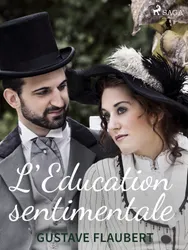
'Sentimental Education' follows the amorous adventures of young Frédéric Moreau, a law student who falls in love with Madam Arnoux, the wife of a wealthy merchant. In the dynamic atmosphere of Paris, which is shaken by social and political revolutions, the paths of Moreau and Madam Arnoux will cross and re-cross over the years, transforming him into the prisoner of a passion he could not escape.

Regarded as the pioneer of the contemporary novel, it draws a panorama of the lost dreams of a generation stuck amid the conflicts of its own time: mid-19th century France marked by political reforms and major events such as the Second Monarchy, the Revolutions of 1848, and the Second Republic. Described by Flaubert himself as 'the moral history of the men of my generation', 'Sentimental Education' is a fine blend of a love story and historical realism that has something for every reader.

Gustave Flaubert (1821-1880) was a highly influential French novelist listed among the greatest representatives of realism. He is best known for his scandalous masterpiece 'Madame Bovary' (1857) which is considered as a watershed not only in 19th-century realism but in world literature. It has been adapted for the TV many times, most notably as a three part BBC series in 2000 and a movie in 2014.

His works 'Salammbô' (1862), 'A Sentimental Education' (1869), and 'The Memoirs of a Madman' (1838) are just few examples of his literary craftsmanship. A complete perfectionist in his writing, Flaubert has been admired for his aesthetic ideals and his work influenced the development of the novel in Europe, America and around the globe.EPUB3: Reflowable
Commencez ce livre dès aujourd'hui pour 0 €

  • Accédez à tous les livres de l'app pendant la période d'essai
  • Sans engagement, annulez à tout moment
Essayer gratuitement
Plus de 52 000 personnes ont noté Nextory 5 étoiles sur l'App Store et Google Play.

  1. 50 Chefs-D'œuvre Que Vous Devez Lire Avant De Mourir : Vol 1 (Golden Deer Classics)

    Mark Twain, Stendhal, Edgar Allan Poe, Victor Hugo, Gustave Flaubert, Alexandre Dumas, Arthur Conan Doyle, René Descartes, Lewis Carroll, Charles Baudelaire, Guillaume Apollinaire, Golden Deer, Alain-Fournier, Jules Amédée d'Aurevilly, Paul Bourget, Charlotte Brontë, Emily Brontë, Pierre Corneille, Nikolai Gogol, Gustave Leroux, Marquis De Sade, Jack London, Sinclair Lewis, Daniel Lesueur, Marcel Proust, Edmond Rostand, Jean-Jacques Rousseau, Mary Shelley, Bram Stoker, Sun Tzu, Rodolphe Töpffer, Vatsyayana, Jules Verne, Voltaire, H.G. Wells, Oscar Wilde, Emile Zola

  2. 4.4

    Madame Bovary

    Gustave Flaubert

  3. 50 Chefs-D'œuvre Que Vous Devez Lire Avant De Mourir: Vol 2

    Honoré de Balzac, Alphonse Daudet, Arthur Conan Doyle, Alexandre Dumas, Gustave Flaubert, Francis Scott Fitzgerald, Nikolai Gogol, Victor Hugo, Maurice Leblanc, Jack London, Madame de La Fayette, Guy De Maupassant, Friedrich Nietzsche, Jean-Jacques Rousseau, Robert Louis Stevenson, Jules Verne, H.G. Wells, Michel de Montaigne, Golden Deer Classics

  4. 3.3

    Madame Bovary - Livre Audio

    Gustave Flaubert, Livres audio en français

  5. 4.0

    Un Cœur simple

    Gustave Flaubert

  6. L'Éducation Sentimentale

    Gustave Flaubert

  7. 5.0

    Madame Bovary - Audiobook

    Gustave Flaubert, Classic Audiobooks

  8. 3.8

    La Danse des Morts

    Gustave Flaubert

  9. #1

    Madame Bovary

    Gustave Flaubert

  10. L’éducation sentimentale

    Gustave Flaubert

  11. 3.5

    Madame Bovary

    Gustave Flaubert

  12. 50 Masterpieces you have to read before you die vol: 1

    Louisa May Alcott, Jane Austen, Joseph Conrad, D. H. Lawrence, George Eliot, Leo Tolstoy, James Joyce, Charles Dickens, Bram Stoker, Oscar Wilde, Honoré de Balzac, Edgar Rice Burroughs, Anne Brontë, Charlotte Brontë, Emily Brontë, Lewis Carroll, Willa Cather, Miguel de Cervantes, E. E. Cummings, Fyodor Dostoyevsky, Daniel Defoe, Arthur Conan Doyle, Alexandre Dumas, Gustave Flaubert, Henry James, Victor Hugo