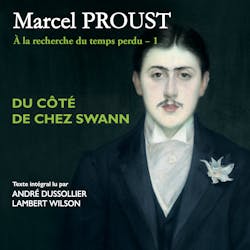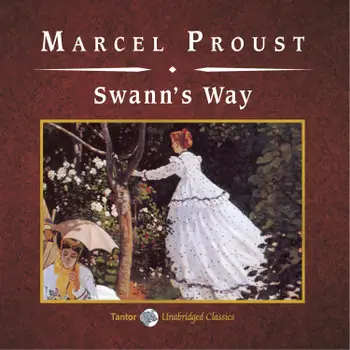
Swann's Way

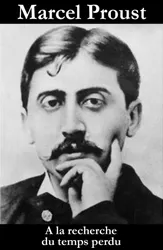
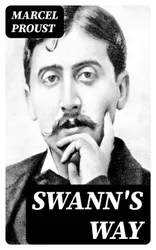
Swann's Way is the first novel of Marcel Proust's seven-volume magnum opus In Search of Lost Time. Following the narrator's opening ruminations about the nature of sleep is one of twentieth-century literature's most famous scenes: the eating of the madeleine soaked in a "decoction of lime-flowers," the associative act from which the remainder of the narrative unfurls. After elaborate reminiscences about his childhood with relatives in rural Combray and in urban Paris, Proust's narrator recalls a story regarding Charles Swann, a major figure in his Combray childhood, and his escapades in nineteenth-century privileged Parisian society, revolving around his obsessive love for young socialite Odette de Crécy.

Filled with searing, insightful, and humorous criticisms of French society, this novel showcases Proust's innovative prose style. With narration that alternates between first and third person, Swann's Way unconventionally introduces Proust's recurring themes of memory, love, art, and the human experience—and for nearly a century, audiences have deliciously savored each moment.

À propos de ce livre

Swann's Way is the first novel of Marcel Proust's seven-volume magnum opus In Search of Lost Time. Following the narrator's opening ruminations about the nature of sleep is one of twentieth-century literature's most famous scenes: the eating of the madeleine soaked in a "decoction of lime-flowers," the associative act from which the remainder of the narrative unfurls. After elaborate reminiscences about his childhood with relatives in rural Combray and in urban Paris, Proust's narrator recalls a story regarding Charles Swann, a major figure in his Combray childhood, and his escapades in nineteenth-century privileged Parisian society, revolving around his obsessive love for young socialite Odette de Crécy.

Filled with searing, insightful, and humorous criticisms of French society, this novel showcases Proust's innovative prose style. With narration that alternates between first and third person, Swann's Way unconventionally introduces Proust's recurring themes of memory, love, art, and the human experience—and for nearly a century, audiences have deliciously savored each moment.

Commencez ce livre dès aujourd'hui pour 0 €

  • Accédez à tous les livres de l'app pendant la période d'essai
  • Sans engagement, annulez à tout moment
Essayer gratuitement
Plus de 52 000 personnes ont noté Nextory 5 étoiles sur l'App Store et Google Play.

  1. 5.0

    un amour de swann

    Marcel Proust

  2. 4.8

    Du côté de chez Swann

    Marcel Proust

  3. 50 Chefs-D'œuvre Que Vous Devez Lire Avant De Mourir : Vol 1 (Golden Deer Classics)

    Mark Twain, Stendhal, Edgar Allan Poe, Victor Hugo, Gustave Flaubert, Alexandre Dumas, Arthur Conan Doyle, René Descartes, Lewis Carroll, Charles Baudelaire, Guillaume Apollinaire, Golden Deer, Alain-Fournier, Jules Amédée d'Aurevilly, Paul Bourget, Charlotte Brontë, Emily Brontë, Pierre Corneille, Nikolai Gogol, Gustave Leroux, Marquis De Sade, Jack London, Sinclair Lewis, Daniel Lesueur, Marcel Proust, Edmond Rostand, Jean-Jacques Rousseau, Mary Shelley, Bram Stoker, Sun Tzu, Rodolphe Töpffer, Vatsyayana, Jules Verne, Voltaire, H.G. Wells, Oscar Wilde, Emile Zola

  4. À l'Ombre des Jeunes Filles en Fleurs

    Marcel Proust

  5. 2.0

    Marcel Proust - Oeuvres complètes : Classcompilé n° 33

    Marcel Proust

  6. Les Beaux jours

    Marcel Proust, Alphonse Daudet, Guy De Maupassant

  7. Du côté de chez Swann (texte intégral) : Le premier épisode d'À la recherche du temps perdu de Marcel Proust

    Marcel Proust

  8. 4.2

    Du côté de chez Swann

    Marcel Proust

  9. 4.2

    Du côté de chez Swann

    Marcel Proust

  10. 3500 citations ultimes

    Marc Aurèle, Jane Austen, Beaumarchais, Napoléon Bonaparte, Bouddha, Winston Churchill, Cicéron, Confucius, Nicolas de Chamfort, Charles de Gaulle, Antoine de Saint-Exupéry, Léonard de Vinci, Denis Diderot, Fiodor Dostoïevski, Albert Einstein, Ralph Waldo Emerson, Anne Frank, Mahatma Gandhi, Emmanuel Kant, Søren Kierkegaard, Martin Luther King, Georg Christoph Lichtenberg, Abraham Lincoln, Montesquieu, Friedrich Nietzsche, Platon, Marcel Proust, Arthur Schopenhauer, William Shakespeare, – Socrate, Baruch Spinoza, Henry David Thoreau, Lao Tseu, Voltaire, Oscar Wilde

  11. À la recherche du temps perdu (Volume 3) - Le côté de Guermantes

    Marcel Proust

  12. 3.7

    À la recherche du temps perdu (Volume 1) - Du côté de chez Swann

    Marcel Proust