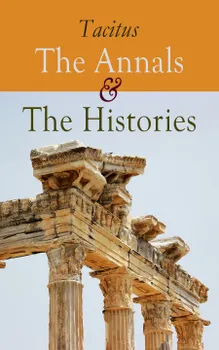
The Annals & The Histories: 2 Classics of Roman History

"The Annals" is a history of the Roman Empire from the death of Augustus to that of Nero, the years AD 14–68, covering the reigns of Tiberius, Caligula, Claudius and Nero. As a senator, Tacitus had access to Acta Senatus, the Roman senate's records, thus providing a solid basis for his work. Along with The Histories, The Annals provide a key source for modern understanding of the history of the Roman Empire during the 1st century AD.

"The Histories" is a Roman historical chronicle and it covers the Year of Four Emperors following the downfall of Nero in 68 AD, a year in the history of the Roman Empire in which four emperors ruled in succession: Galba, Otho, Vitellius, and Vespasian. The mode of their accession showed that because imperial power was based on the support of the legions, an emperor could now be chosen not only at Rome, but anywhere in the empire where sufficient legions were amassed. The style of narration is rapid, reflecting the speed of the events. The narrative rhythm leaves no space to slow down or digress. To write effectively in this style, Tacitus had to summarize substantial information from his sources.

À propos de ce livre

"The Annals" is a history of the Roman Empire from the death of Augustus to that of Nero, the years AD 14–68, covering the reigns of Tiberius, Caligula, Claudius and Nero. As a senator, Tacitus had access to Acta Senatus, the Roman senate's records, thus providing a solid basis for his work. Along with The Histories, The Annals provide a key source for modern understanding of the history of the Roman Empire during the 1st century AD.

"The Histories" is a Roman historical chronicle and it covers the Year of Four Emperors following the downfall of Nero in 68 AD, a year in the history of the Roman Empire in which four emperors ruled in succession: Galba, Otho, Vitellius, and Vespasian. The mode of their accession showed that because imperial power was based on the support of the legions, an emperor could now be chosen not only at Rome, but anywhere in the empire where sufficient legions were amassed. The style of narration is rapid, reflecting the speed of the events. The narrative rhythm leaves no space to slow down or digress. To write effectively in this style, Tacitus had to summarize substantial information from his sources.
Commencez ce livre dès aujourd'hui pour 0 €

  • Accédez à tous les livres de l'app pendant la période d'essai
  • Sans engagement, annulez à tout moment
Essayer gratuitement
Plus de 52 000 personnes ont noté Nextory 5 étoiles sur l'App Store et Google Play.

  1. A Dialogue Concerning Oratory, or the Causes of Corrupt Eloquence

    Tacitus

  2. Nouveau

    Meisterwerke des Römischen Reiches : 50 Klassiker des antiken Roms: Selbstbetrachtungen, Handbüchlein der Moral, Historien, Aeneis, Leben der großen Griechen und Römer, Der Alexanderzug, Der Gottesstaat

    Tacitus, Mark Aurel, Vergil, Cicero, Caesar, Augustus, Titus Livius, Polybios, Ammianus Marcellinus, Flavius Josephus, Ovid, Petronius, Arrian, Sueton, Plutarch, Epiktet, Lukian, Apuleius, Longos von Lesbos, Epikur, Diogenes Laërtios, Eusebius, Ignatius von Antiochien, Tertullian, Origenes, Heiliger Augustinus

  3. Nouveau

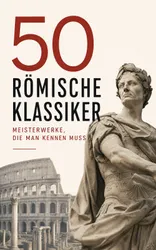
    50 Römische Klassiker - Meisterwerke, die man kennen muss : Aeneis, Gallischer Krieg, Selbstbetrachtungen, Ab Urbe Condita, Vom glückseligen Leben, Der goldene Esel, Jüdischer Krieg, Metamorphosen...

    Marcus Aurelius, Seneca, Tacitus, Plutarch, Marcus Tullius Cicero, Gaius Iulius Caesar, Titus Livius, Polybios, Flavius Josephus, Vergil, Ovid, Petronius, Arrian, Sueton, Epiktet, Lukian, Apuleius, Longos von Lesbos, Epikur, Diogenes Laërtios, Eusebius, Kaiser Augustus, Ignatius von Antiochien, Tertullian, Origenes, Augustinus von Hippo

  4. Nouveau

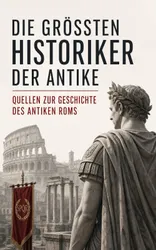
    Die größten Historiker der Antike - Quellen zur Geschichte des antiken Roms : Annalen, Ab Urbe Condita, Der Bürgerkrieg, Römische Kaiserbiographien, Leben der großen Römer, Die Germania...

    Titus Livius, Tacitus, Plutarch, Ammianus Marcellinus, Gaius Iulius Caesar, Sueton, Polybios, Diogenes Laërtios, Eusebius

  5. 100 Klassiker der Geschichtsschreibung : Die Geschichte des Alten Ägypten, Der Alexanderzug, Römische Geschichte, Herbst des Mittelalters, Die russische Revolution, Der Kampf um Europa

    Edward Gibbon, Leopold von Ranke, J. B. Bury, Theodor Mommsen, Herodot, Thukydides, Xenophon, Arrian, Titus Livius, Tacitus, Gaius Iulius Caesar, Sueton, Polybios, Ammianus Marcellinus, Plutarch, Diogenes Laërtios, Eusebius, Prokop von Cäsarea, Anna Komnena, Agathias, Marc Bloch, L. W. King, George Rawlinson, Edward Bulwer-Lytton, Jacob Burckhardt, Joseph François Michaud, Johan Huizinga, Arthur Middleton Reeves, Niccolò Machiavelli, G.K. Chesterton, Voltaire, Friedrich Schiller, Ricarda Huch, Thomas Carlyle, Charles Downer Hazen, Egon Friedell, Walter Benjamin

  6. 100 Große Geschichtsbücher - Klassiker, die man kennen muss : Der Peloponnesische Krieg, Der Alexanderzug, Ab Urbe Condita, Napoleonische Kriege, Geschichte des Ersten und Zweiten Weltkriegs

    Tacitus, Thukydides, Plutarch, Theodor Mommsen, Edward Gibbon, Leopold von Ranke, Ricarda Huch, Helmuth von Moltke, Xenophon, Arrian, Titus Livius, Gaius Iulius Caesar, Sueton, Polybios, Ammianus Marcellinus, Diogenes Laërtios, Eusebius, Prokop von Cäsarea, Anna Komnena, Agathias, Marc Bloch, George Rawlinson, Edward Bulwer-Lytton, Jacob Burckhardt, Joseph François Michaud, Johan Huizinga, Niccolò Machiavelli, G.K. Chesterton, Voltaire, Friedrich Schiller, Thomas Carlyle, Charles Downer Hazen, Egon Friedell, Walter Benjamin

  7. Die Welt der Antike in 20 Büchern : Der Alexanderzug, Die Germania, Der Peloponnesische Krieg, Gallischer Krieg, Leben der großen Griechen und Römer, Die Kriegsgeschichte, Kirchengeschichte

    Herodot, Thukydides, Arrian, Tacitus, Titus Livius, Plutarch, Gaius Iulius Caesar, Sueton, Polybios, Ammianus Marcellinus, Diogenes Laërtios, Prokop von Cäsarea, Eusebius, Xenophon

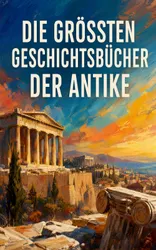
  8. Die größten Geschichtsbücher der Antike : Römische Kaiserbiographien, Der Alexanderzug, Der Bürgerkrieg, Der Peloponnesische Krieg, Ab urbe condita, Historien, Die Kriegsgeschichte, Kirchengeschichte

    Tacitus, Ammianus Marcellinus, Gaius Iulius Caesar, Plutarch, Herodot, Thukydides, Arrian, Titus Livius, Sueton, Polybios, Diogenes Laërtios, Prokop von Cäsarea, Eusebius, Xenophon

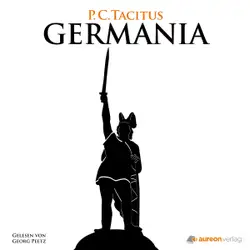
  9. Germania

    Tacitus

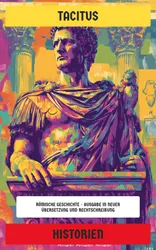
  10. Historien : Römische Geschichte - Ausgabe in neuer Übersetzung und Rechtschreibung

    Tacitus

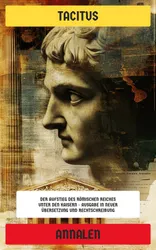
  11. Annalen : Der Aufstieg des Römischen Reiches unter den Kaisern - Ausgabe in neuer Übersetzung und Rechtschreibung

    Tacitus

  12. Die größten Klassiker der Geschichtswissenschaft : Der Peloponnesische Krieg, Römische Geschichte, Aus Zwei Jahrtausenden Deutscher Geschichte, Die Französische Revolution

    Theodor Mommsen, Herodot, Thukydides, Titus Livius, Sueton, Tacitus, Jacob Burckhardt, Niccolò Machiavelli, Ricarda Huch, Thomas Carlyle, Leopold von Ranke, Egon Friedell, Felix Salten