À propos de ce livre

Tacitus' "The Annals & The Histories" stands as a monumental chronicle of the Roman Empire's imperial governance and civil strife from the death of Augustus in AD 14 to the year 70. Written in an elegant and concise style, Tacitus employs a meticulous narrative technique, blending historical rigor with a profound psychological insight into the motivations of political actors. The text is distinguished by its moral seriousness and the keen observation of power dynamics, presenting a vivid depiction of the tumultuous period characterized by political intrigue, corruption, and the fluctuations of power, all enriched by Tacitus' distinctive prose that interweaves dramatic narrative with astute analysis, reflecting the complexities of human ambition and ethical dilemmas in governance. Tacitus, a senator and historian of the first century, was profoundly affected by the political landscape of his time, marked by the transition from the Republic to an Empire. His life immersed in political and social spheres of Rome provided him with the insights and perspectives instrumental in crafting a narrative both reflective of his society's moral decay and a cautionary tale regarding absolute power. He grappled with themes of tyranny, the loss of republican values, and the integrity of history itself, making his works both personal and profoundly political. This essential text is recommended for readers interested in the intricate workings of power and governance, historians seeking rich narratives of the past, and anyone desiring to understand the complexities of moral integrity amidst the backdrop of political ambition. Tacitus' reflections and interpretations invite readers to ponder the cyclical nature of history, establishing the significance of his work in any comprehensive study of Roman history.

In this enriched edition, we have carefully created added value for your reading experience:

- A comprehensive Introduction outlines these selected works' unifying features, themes, or stylistic evolutions.

- The Author Biography highlights personal milestones and literary influences that shape the entire body of writing.

- A Historical Context section situates the works in their broader era—social currents, cultural trends, and key events that underpin their creation.

- A concise Synopsis (Selection) offers an accessible overview of the included texts, helping readers navigate plotlines and main ideas without revealing critical twists.

- A unified Analysis examines recurring motifs and stylistic hallmarks across the collection, tying the stories together while spotlighting the different work's strengths.

- Reflection questions inspire deeper contemplation of the author's overarching message, inviting readers to draw connections among different texts and relate them to modern contexts.

- Lastly, our hand‐picked Memorable Quotes distill pivotal lines and turning points, serving as touchstones for the collection's central themes.

Commencez ce livre dès aujourd'hui pour 0 €

  • Accédez à tous les livres de l'app pendant la période d'essai
  • Sans engagement, annulez à tout moment
Essayer gratuitement
Plus de 52 000 personnes ont noté Nextory 5 étoiles sur l'App Store et Google Play.

Plus de Tacitus

  1. 100 Große Geschichtsbücher - Klassiker, die man kennen muss : Der Peloponnesische Krieg, Der Alexanderzug, Ab Urbe Condita, Napoleonische Kriege, Geschichte des Ersten und Zweiten Weltkriegs

    Tacitus, Thukydides, Plutarch, Theodor Mommsen, Edward Gibbon, Leopold von Ranke, Ricarda Huch, Helmuth von Moltke, Xenophon, Arrian, Titus Livius, Gaius Iulius Caesar, Sueton, Polybios, Ammianus Marcellinus, Diogenes Laërtios, Eusebius, Prokop von Cäsarea, Anna Komnena, Agathias, Marc Bloch, George Rawlinson, Edward Bulwer-Lytton, Jacob Burckhardt, Joseph François Michaud, Johan Huizinga, Niccolò Machiavelli, G.K. Chesterton, Voltaire, Friedrich Schiller, Thomas Carlyle, Charles Downer Hazen, Egon Friedell, Walter Benjamin

  2. Meisterwerke des Römischen Reiches : 50 Klassiker des antiken Roms: Selbstbetrachtungen, Handbüchlein der Moral, Historien, Aeneis, Leben der großen Griechen und Römer, Der Alexanderzug, Der Gottesstaat

    Tacitus, Mark Aurel, Vergil, Cicero, Caesar, Augustus, Titus Livius, Polybios, Ammianus Marcellinus, Flavius Josephus, Ovid, Petronius, Arrian, Sueton, Plutarch, Epiktet, Lukian, Apuleius, Longos von Lesbos, Epikur, Diogenes Laërtios, Eusebius, Ignatius von Antiochien, Tertullian, Origenes, Heiliger Augustinus

  3. 50 Römische Klassiker - Meisterwerke, die man kennen muss : Aeneis, Gallischer Krieg, Selbstbetrachtungen, Ab Urbe Condita, Vom glückseligen Leben, Der goldene Esel, Jüdischer Krieg, Metamorphosen...

    Marcus Aurelius, Seneca, Tacitus, Plutarch, Marcus Tullius Cicero, Gaius Iulius Caesar, Titus Livius, Polybios, Flavius Josephus, Vergil, Ovid, Petronius, Arrian, Sueton, Epiktet, Lukian, Apuleius, Longos von Lesbos, Epikur, Diogenes Laërtios, Eusebius, Kaiser Augustus, Ignatius von Antiochien, Tertullian, Origenes, Augustinus von Hippo

  4. Die größten Historiker der Antike - Quellen zur Geschichte des antiken Roms : Annalen, Ab Urbe Condita, Der Bürgerkrieg, Römische Kaiserbiographien, Leben der großen Römer, Die Germania...

    Titus Livius, Tacitus, Plutarch, Ammianus Marcellinus, Gaius Iulius Caesar, Sueton, Polybios, Diogenes Laërtios, Eusebius

  5. 100 Klassiker der Geschichtsschreibung : Die Geschichte des Alten Ägypten, Der Alexanderzug, Römische Geschichte, Herbst des Mittelalters, Die russische Revolution, Der Kampf um Europa

    Edward Gibbon, Leopold von Ranke, J. B. Bury, Theodor Mommsen, Herodot, Thukydides, Xenophon, Arrian, Titus Livius, Tacitus, Gaius Iulius Caesar, Sueton, Polybios, Ammianus Marcellinus, Plutarch, Diogenes Laërtios, Eusebius, Prokop von Cäsarea, Anna Komnena, Agathias, Marc Bloch, L. W. King, George Rawlinson, Edward Bulwer-Lytton, Jacob Burckhardt, Joseph François Michaud, Johan Huizinga, Arthur Middleton Reeves, Niccolò Machiavelli, G.K. Chesterton, Voltaire, Friedrich Schiller, Ricarda Huch, Thomas Carlyle, Charles Downer Hazen, Egon Friedell, Walter Benjamin

  6. Die Welt der Antike in 20 Büchern : Der Alexanderzug, Die Germania, Der Peloponnesische Krieg, Gallischer Krieg, Leben der großen Griechen und Römer, Die Kriegsgeschichte, Kirchengeschichte

    Herodot, Thukydides, Arrian, Tacitus, Titus Livius, Plutarch, Gaius Iulius Caesar, Sueton, Polybios, Ammianus Marcellinus, Diogenes Laërtios, Prokop von Cäsarea, Eusebius, Xenophon

  7. Die größten Geschichtsbücher der Antike : Römische Kaiserbiographien, Der Alexanderzug, Der Bürgerkrieg, Der Peloponnesische Krieg, Ab urbe condita, Historien, Die Kriegsgeschichte, Kirchengeschichte

    Tacitus, Ammianus Marcellinus, Gaius Iulius Caesar, Plutarch, Herodot, Thukydides, Arrian, Titus Livius, Sueton, Polybios, Diogenes Laërtios, Prokop von Cäsarea, Eusebius, Xenophon

  8. Germania

    Tacitus

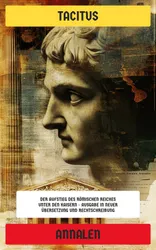
  9. Annalen : Der Aufstieg des Römischen Reiches unter den Kaisern - Ausgabe in neuer Übersetzung und Rechtschreibung

    Tacitus

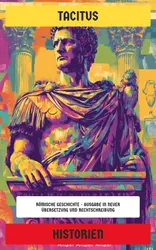
  10. Historien : Römische Geschichte - Ausgabe in neuer Übersetzung und Rechtschreibung

    Tacitus

  11. Die größten Geschichtsbücher - Klassiker, die man kennen muss : Der Peloponnesische Krieg, Römische Geschichte, Aus Zwei Jahrtausenden Deutscher Geschichte, Die Französische Revolution

    Tacitus, Leopold von Ranke, Theodor Mommsen, Herodot, Thukydides, Titus Livius, Sueton, Jacob Burckhardt, Niccolò Machiavelli, Ricarda Huch, Thomas Carlyle, Egon Friedell, Felix Salten

  12. Die größten Klassiker der Geschichtswissenschaft (Kommentiert) : Erweiterte Ausgabe. Der Peloponnesische Krieg, Römische Geschichte, Aus Zwei Jahrtausenden Deutscher Geschichte, Die Französische Revolution

    Theodor Mommsen, Herodot, Thukydides, Titus Livius, Sueton, Tacitus, Jacob Burckhardt, Niccolò Machiavelli, Ricarda Huch, Thomas Carlyle, Leopold von Ranke, Egon Friedell, Felix Salten