4.0(1)

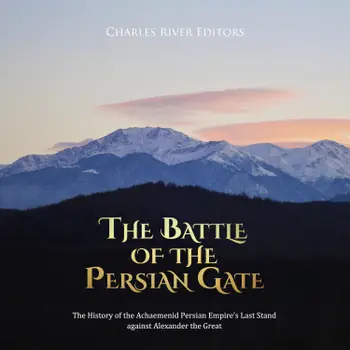
The Battle of the Persian Gate: The History of the Achaemenid Persian Empire’s Last Stand against Alexander the Great

Over the last 2,000 years, ambitious men have dreamed of forging vast empires and attaining eternal glory in battle, but of all the conquerors who took steps toward such dreams, none were ever as successful as antiquity’s first great conqueror. Leaders of the 20th century hoped to rival Napoleon’s accomplishments, while Napoleon aimed to emulate the accomplishments of Julius Caesar. But Caesar himself found inspiration in Alexander the Great (356-323 BCE), the Macedonian king who managed to stretch an empire from Greece to the Himalayas in Asia by the age of 30. It took less than 15 years for Alexander to conquer much of the known world.

Ever since the famous Persian invasions that had been repelled by the Athenians at Marathon and then by the Spartans at Thermopylae and Plataea, Greece and Persia had been at odds. For the past few years they had enjoyed an uneasy peace, but that peace was shattered when, in 334 BCE, Alexander crossed the Hellespont into Persia. He brought with him an army of 50,000 infantry, 6,000 cavalry and a navy of over 100 ships, a mixed force of Macedonians, Greeks, Thracians and Illyrians, all chosen for their specific strengths (the Thessalians, for example, were famous cavalrymen). He was still just 22.

Darius III, king of Persia at the time of Alexander’s invasion, was no tactical genius, but he was an intelligent and persistent enemy who had been handed the throne just before the arrival of the indomitable Alexander. His misfortune was to face an enemy at the forefront of military innovation and flexibility, a fighting force that he was not equipped to handle, and the unconquerable will of the Macedonian army, fueled by devotion to their daring and charismatic king.


À propos de ce livre

Over the last 2,000 years, ambitious men have dreamed of forging vast empires and attaining eternal glory in battle, but of all the conquerors who took steps toward such dreams, none were ever as successful as antiquity’s first great conqueror. Leaders of the 20th century hoped to rival Napoleon’s accomplishments, while Napoleon aimed to emulate the accomplishments of Julius Caesar. But Caesar himself found inspiration in Alexander the Great (356-323 BCE), the Macedonian king who managed to stretch an empire from Greece to the Himalayas in Asia by the age of 30. It took less than 15 years for Alexander to conquer much of the known world.

Ever since the famous Persian invasions that had been repelled by the Athenians at Marathon and then by the Spartans at Thermopylae and Plataea, Greece and Persia had been at odds. For the past few years they had enjoyed an uneasy peace, but that peace was shattered when, in 334 BCE, Alexander crossed the Hellespont into Persia. He brought with him an army of 50,000 infantry, 6,000 cavalry and a navy of over 100 ships, a mixed force of Macedonians, Greeks, Thracians and Illyrians, all chosen for their specific strengths (the Thessalians, for example, were famous cavalrymen). He was still just 22.

Darius III, king of Persia at the time of Alexander’s invasion, was no tactical genius, but he was an intelligent and persistent enemy who had been handed the throne just before the arrival of the indomitable Alexander. His misfortune was to face an enemy at the forefront of military innovation and flexibility, a fighting force that he was not equipped to handle, and the unconquerable will of the Macedonian army, fueled by devotion to their daring and charismatic king.

Commencez ce livre dès aujourd'hui pour 0 €

  • Accédez à tous les livres de l'app pendant la période d'essai
  • Sans engagement, annulez à tout moment
Essayer gratuitement
Plus de 52 000 personnes ont noté Nextory 5 étoiles sur l'App Store et Google Play.

  1. 1.0

    The Battle of Ia Drang: The History and Legacy of the Vietnam War’s First Major Battle

    Charles River Editors

  2. The Moors of Andalusia: The History of the Muslims in the Iberian Peninsula during the Middle Ages

    Charles River Editors

  3. La Guerra Civil española: La historia y el legado del controversial conflicto que estableció la dictadura de Francisco Franco en España

    Charles River Editors

  4. La Capilla Sixtina: Historia y legado de la capilla más famosa del mundo

    Charles River Editors

  5. France in World War II: The History of Nazi Germany’s Conquest of France and Its Liberation By the Allies

    Charles River Editors

  6. 2.0

    The Portuguese Inquisition: The History of the Portuguese Empire’s Religious Persecution of Non-Christians in Portugal and Asia

    Charles River Editors

  7. France in the Early Middle Ages: The History of the Dynasties that Brought about the Kingdom of France

    Charles River Editors

  8. The Executions of British and French Royalty: The Lives of the Royals Who Were Put to Death in England and France

    Charles River Editors

  9. The Velociraptor: The History of the Popular but Misunderstood Dinosaur Genus

    Charles River Editors

  10. The Rise and Fall of the Stuart Dynasty in Britain: The History of the Stuarts from the Tudor Era to the Glorious Revolution and the Jacobites

    Charles River Editors

  11. 4.0

    Medieval England: The History of England from the Fall of Rome to the Rise of the Tudor Dynasty

    Charles River Editors

  12. 3.5

    The Battle of Sekigahara: The History and Legacy of the Battle that Unified Japan under the Tokugawa Shogunate

    Charles River Editors