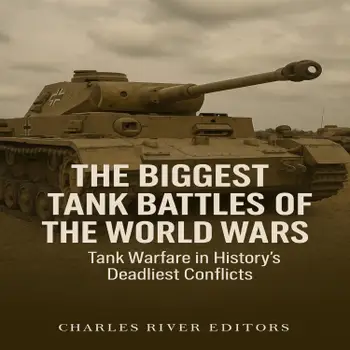
The Biggest Tank Battles of the World Wars: Tank Warfare in History’s Deadliest Conflicts

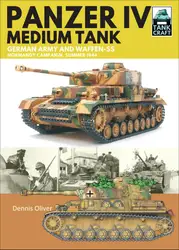
World War I was the first truly industrial war, and it created a paradigm which reached its zenith with World War II and towards which virtually all equipment, innovation and training were dedicated throughout the Cold War and the remainder of the 20th century. To this day, modern warfare remains synonymous with tanks and mass infantry battles, although a confrontation of this nature has not occurred (except briefly during Operation Desert Storm) since World War II.

One of the most important breakthroughs in military technology associated with World War I, and certainly the one that continues to capture the public imagination, was the introduction of a war machine that came to dominate the face of land battles throughout most of the 20th century: the tank. As a concept, it was not revolutionary; in fact, it harkened back to classical antiquity and to the Middle Ages, such as the covered battering rams and testudos which had made frequent appearances on ancient battlefields. In essence, it was designed to solve the age-old problem of protecting infantry from enemy projectiles while remaining mobile.

The development of both modern artillery and machine guns, as well as the stalemate engendered by heavy fortifications and entrenchments, had hamstrung the mobility of infantry and cavalry and also left them both utterly vulnerable to defensive firepower. Since they were incapable of replying in kind, the tank was designed to bridge that gap. The tank’s armor, thick enough to withstand lateral fragmentation from exploding shells (although not direct hits) also made it virtually invulnerable to enemy rifle and machine gun fire, and its large tread meant that it could bridge trenches which would, at the very least, have delayed infantry substantially. As for the barbed wire entanglements and obstacles that severely delayed infantry and exposed them to enemy fire, tanks could simply drive right through it.

À propos de ce livre

World War I was the first truly industrial war, and it created a paradigm which reached its zenith with World War II and towards which virtually all equipment, innovation and training were dedicated throughout the Cold War and the remainder of the 20th century. To this day, modern warfare remains synonymous with tanks and mass infantry battles, although a confrontation of this nature has not occurred (except briefly during Operation Desert Storm) since World War II.

One of the most important breakthroughs in military technology associated with World War I, and certainly the one that continues to capture the public imagination, was the introduction of a war machine that came to dominate the face of land battles throughout most of the 20th century: the tank. As a concept, it was not revolutionary; in fact, it harkened back to classical antiquity and to the Middle Ages, such as the covered battering rams and testudos which had made frequent appearances on ancient battlefields. In essence, it was designed to solve the age-old problem of protecting infantry from enemy projectiles while remaining mobile.

The development of both modern artillery and machine guns, as well as the stalemate engendered by heavy fortifications and entrenchments, had hamstrung the mobility of infantry and cavalry and also left them both utterly vulnerable to defensive firepower. Since they were incapable of replying in kind, the tank was designed to bridge that gap. The tank’s armor, thick enough to withstand lateral fragmentation from exploding shells (although not direct hits) also made it virtually invulnerable to enemy rifle and machine gun fire, and its large tread meant that it could bridge trenches which would, at the very least, have delayed infantry substantially. As for the barbed wire entanglements and obstacles that severely delayed infantry and exposed them to enemy fire, tanks could simply drive right through it.

Commencez ce livre dès aujourd'hui pour 0 €

  • Accédez à tous les livres de l'app pendant la période d'essai
  • Sans engagement, annulez à tout moment
Essayer gratuitement
Plus de 52 000 personnes ont noté Nextory 5 étoiles sur l'App Store et Google Play.

  1. Persepolis and Susa: The History of the Achaemenid Persian Empire’s Capitals

    Charles River Editors

  2. The Ottoman Empire’s Greatest Sultans: The Lives and Legacies of Osman I, Mehmed II, and Suleiman the Magnificent

    Charles River Editors

  3. The Anglo-Ashanti Wars and the Anglo-Zulu War: The History of the British Empire’s Costliest Campaigns against Indigenous Africans

    Charles River Editors

  4. The Velociraptor: The History of the Popular but Misunderstood Dinosaur Genus

    Charles River Editors

  5. The Ottoman Empire’s Most Important Battles: The History and Legacy of the Ottomans’ Biggest Victories and Defeats

    Charles River Editors

  6. Manichaeism: The History and Legacy of the Ancient Persian Religion

    Charles River Editors

  7. Douglas Bader: The Life and Legacy of One of the Royal Air Force’s Most Famous Fighter Aces

    Charles River Editors

  8. The Ottoman Empire’s Worst Defeats: The History and Legacy of the Decisive Battles that Checked the Ottomans’ Expansion into Europe

    Charles River Editors

  9. Ellington and Armstrong: The Lives and Careers of America’s Most Famous Jazz Performers

    Charles River Editors

  10. 5.0

    The Evolution of Modern Mathematics: The Lives of Influential Mathematicians Who Helped Bring Math into the Computer Age Kindle

    Charles River Editors

  11. The Executions of British and French Royalty: The Lives of the Royals Who Were Put to Death in England and France

    Charles River Editors

  12. 2.0

    The Portuguese Inquisition: The History of the Portuguese Empire’s Religious Persecution of Non-Christians in Portugal and Asia

    Charles River Editors